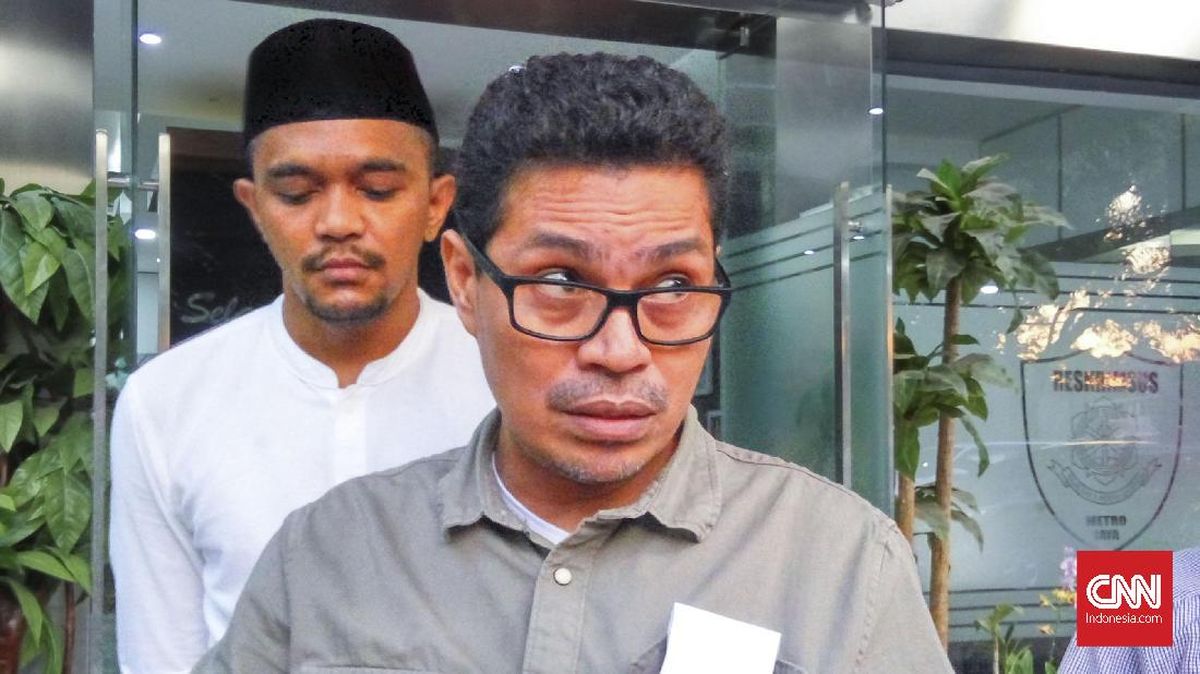
The Corruption Eradication Commission (KPK) has revealed the seizure of crucial electronic evidence from Faizal Assegaf, the President Director of PT Sinkos Multimedia Mandiri, which is believed to be directly linked to an ongoing corruption investigation within the Directorate General of Customs and Excise. This development has ignited a legal and ethical dispute, as Assegaf has subsequently filed reports against KPK spokesperson Budi Prasetyo for alleged defamation and ethical violations.
The seized items, detailed by the KPK, include an Apple Mac computer complete with its Magic Keyboard and Magic Mouse, a Lumix S5IIX mirrorless camera with spare batteries, a monitor, and a Boss WL-30XLR Wireless System microphone. These devices, high-end electronic equipment often used for communication, data storage, and media production, are now in the custody of KPK investigators, undergoing forensic analysis to uncover any connections to the alleged illicit activities within the customs apparatus. Budi Prasetyo, speaking from the KPK headquarters in Jakarta on Wednesday evening, April 15, 2026, confirmed the nature of the seized items, stating, "The items confiscated by investigators are electronic goods such as monitors, cameras, and several other electronic devices." He further clarified that the total monetary value of these seized items had not yet been assessed by the investigative team. "No, we have not received that information yet," Budi stated when asked about the estimated value of the evidence.
Escalating Legal Battle: Defamation and Ethics Complaints
The seizure and the subsequent public statement by Budi Prasetyo have triggered a swift and assertive response from Faizal Assegaf, who has initiated counter-legal actions. Assegaf filed a report against Budi Prasetyo with the Polda Metro Jaya, accusing the KPK spokesperson of defamation. The report is officially registered under the number: LP/B/2592/IV/2026/SPKT/POLDA METRO JAYA. Concurrently, on the same day, Assegaf escalated his complaints by reporting Budi Prasetyo to the KPK Supervisory Board (Dewas KPK) for alleged breaches of the anti-graft body’s code of ethics. These actions underscore the increasingly contentious nature of high-profile corruption investigations in Indonesia, where individuals implicated, even as witnesses, are utilizing legal avenues to challenge the actions and statements of anti-corruption officials.
The basis for Assegaf’s complaints appears to stem from the public disclosure of his identity and the specifics of the seized electronic items by the KPK spokesperson, which Assegaf may perceive as prejudicial to his reputation or an overreach of the KPK’s public communication policy. Defamation laws in Indonesia, particularly Article 310 of the Criminal Code (KUHP), criminalize statements that attack a person’s honor or good name. While public officials often have a higher threshold for proving defamation, such reports can lead to lengthy legal processes and divert resources. The complaint to Dewas KPK, an independent body established to oversee the ethical conduct of KPK personnel, suggests a challenge to the procedural integrity and professional conduct of the spokesperson during the investigation.
The Underlying Corruption Scandal at Customs and Excise
Faizal Assegaf’s involvement in this investigation began when he was summoned as a witness on April 7, 2026, to provide testimony regarding the alleged corruption at the Directorate General of Customs and Excise. Alongside him, two Customs officials, Muhammad Mahzun and Rahmat, were also called in for questioning. Their testimonies are crucial for strengthening the case files against seven individuals who have already been named suspects in a complex web of alleged bribery related to goods importations and gratification.
The seven suspects, all of whom are currently detained at the KPK’s detention facility, represent a mix of high-ranking Customs officials and private sector individuals. They include:
- Rizal: Former Director of Investigation & Enforcement at the Directorate General of Customs and Excise, serving from 2024 to January 2026. His position suggests potential involvement in overseeing or manipulating enforcement actions related to imports.
- Sisprian Subiaksono: Head of the Sub-directorate of Intelligence for Enforcement and Investigation (Kasubdit Intel P2 DJBC). Individuals in this role are responsible for gathering intelligence on customs violations, making their alleged involvement particularly concerning for the integrity of enforcement.
- Orlando: Head of the Intelligence Section at the Directorate General of Customs and Excise (Kasi Intel DJBC). Similar to Subiaksono, his position would grant him access to sensitive information and influence over investigative priorities.
- Andri: Team Leader of Import Documentation at PT Blueray. His role would involve managing the paperwork for imports, a critical juncture where bribery can occur to facilitate illicit goods or reduce duties.
- Budiman Bayu Prasojo: An employee of the Directorate General of Customs and Excise. His specific role is not detailed, but his inclusion indicates a broader network of complicity within the institution.
- John Field: Owner of PT Blueray. As the principal of a company involved in imports, his alleged role would be central to initiating or facilitating the bribery schemes.
- Dedy Kurniawan: Operational Manager of PT Blueray. Like Andri, his operational role would place him at the heart of the import process, where illicit transactions could be executed.
The KPK has indicated that for the suspects associated with PT Blueray (John Field, Andri, and Dedy Kurniawan), their case files have already been handed over to the Public Prosecutor (JPU), signaling that the investigation phase is nearing completion for these individuals and trials are expected to commence soon. This progression highlights the gravity of the allegations and the KPK’s commitment to bringing these cases to court.
Chronology of Events
- April 7, 2026: Faizal Assegaf, President Director of PT Sinkos Multimedia Mandiri, along with Customs officials Muhammad Mahzun and Rahmat, are summoned by the KPK to provide testimony as witnesses in the ongoing corruption investigation at the Directorate General of Customs and Excise.
- April 15, 2026 (Wednesday evening): KPK spokesperson Budi Prasetyo publicly confirms the seizure of electronic evidence from Faizal Assegaf, linking it to the Customs corruption case. The seized items include an Apple Mac computer, a Lumix S5IIX camera, a monitor, and a Boss wireless microphone system.
- Post-April 15, 2026: Faizal Assegaf files a formal report against Budi Prasetyo with the Polda Metro Jaya, alleging defamation. The report is registered under LP/B/2592/IV/2026/SPKT/POLDA METRO JAYA.
- Same Day as Polda Report: Faizal Assegaf also reports Budi Prasetyo to the KPK Supervisory Board (Dewas KPK) for alleged violations of the KPK’s code of ethics, likely related to the public disclosure of information regarding the seizure.
- Ongoing: The seven primary suspects in the Customs corruption case remain in detention at the KPK Rutan. The case files for suspects linked to PT Blueray have been transferred to the Public Prosecutor, indicating impending trials.
Broader Context: Corruption in Customs and Anti-Graft Efforts
Corruption within customs agencies is a perennial challenge globally, and Indonesia is no exception. The Directorate General of Customs and Excise, responsible for collecting import duties, controlling goods movement, and combating smuggling, operates at a critical nexus of trade and national revenue. Its functions inherently involve high-value transactions, complex regulations, and discretionary powers, making it susceptible to bribery, illicit facilitation, and various forms of malfeasance. Such corruption can severely undermine state revenue, distort fair trade practices, and facilitate the entry of illegal or harmful goods.
The KPK’s sustained focus on customs corruption reflects a broader national commitment to enhancing transparency and accountability in public service. Over the years, the KPK has handled numerous high-profile cases involving customs officials, ranging from individual officers to high-ranking directorate members, underscoring the systemic nature of the problem. These investigations often involve intricate networks connecting public officials with private sector entities seeking to exploit loopholes or bypass regulations for financial gain.
The establishment of the KPK Supervisory Board (Dewas KPK) in 2019 was intended to strengthen internal oversight and ensure the ethical conduct of KPK personnel, providing an avenue for citizens and officials alike to report alleged ethical breaches. While Dewas aims to maintain the integrity of the anti-corruption body, its existence also introduces a new layer of scrutiny that can sometimes be leveraged by individuals under investigation to challenge the process.
Implications and Future Outlook
The current developments present several key implications. For the KPK, the dual reports from Faizal Assegaf pose a challenge on multiple fronts. The defamation report to the police requires the agency to defend its spokesperson’s actions in a separate legal forum, potentially diverting resources and attention from the core corruption investigation. Simultaneously, the ethics complaint to Dewas KPK demands an internal review of the spokesperson’s conduct, which, if found to be in violation, could impact the agency’s public image and the morale of its officers. The KPK must navigate these challenges while steadfastly pursuing its anti-corruption mandate, demonstrating adherence to both legal procedures and ethical standards.
For Faizal Assegaf, the decision to file these reports signifies a determined legal defense strategy. By challenging the KPK’s actions and statements, he aims to assert his rights, potentially question the legitimacy of the evidence collection, and perhaps cast doubt on the overall investigative process. His actions highlight the right of individuals to seek legal recourse against perceived injustices, even when facing powerful state institutions. The outcome of these complaints will be closely watched, as they could set precedents for how KPK spokespersons communicate about ongoing investigations and how individuals under scrutiny interact with the anti-graft body.
More broadly, this case underscores the persistent and complex struggle against corruption in Indonesia. It demonstrates the critical role of electronic evidence in modern investigations, the interconnectedness of public and private sector corruption, and the increasing sophistication of legal challenges faced by anti-corruption agencies. The ultimate resolution of both the bribery and gratification case within the Directorate General of Customs and Excise and the subsequent complaints against the KPK spokesperson will be vital for reinforcing public trust in legal institutions and the nation’s commitment to good governance. The legal proceedings are expected to be lengthy and intricate, unfolding in the public eye as Indonesia continues its long-term battle against corruption.