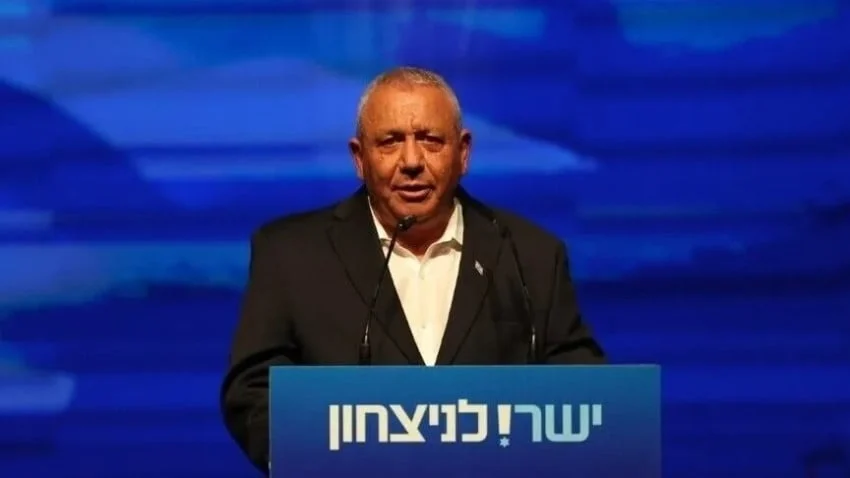
RAMALLAH — Senior Palestinian authorities have issued a categorical denial regarding recent Israeli media reports alleging that clandestine communications have taken place between Palestinian representatives and political allies of Israeli opposition politician Gadi Eisenkot. The reports, which surfaced amid intense political maneuvering within the Israeli Knesset, suggested that informal channels had been established to explore potential diplomatic alignments or coalition scenarios. However, official Palestinian bodies have stepped forward to dismiss these claims as entirely baseless, emphasizing the absence of any dialogue with Eisenkot, his parliamentary staff, or designated intermediaries.
The refutation highlights the delicate and highly sensitive nature of political reporting involving Israeli-Palestinian dynamics, particularly during periods of governmental transition and coalition building. As various factions within the Israeli political landscape compete for influence, external speculation regarding backchannel diplomacy frequently emerges. Palestinian leadership, through official news agency channels, has urged international and regional media outlets to exercise heightened editorial caution, demanding strict adherence to factual accuracy and responsible journalism before publishing unverified claims regarding official positions.
Background Context of Israeli Political Shifts and Coalition Dynamics
The recent controversy unfolds against the backdrop of significant turbulence within the Israeli political arena. Gadi Eisenkot, a prominent figure within the Israeli political landscape and a former Chief of Staff of the Israel Defense Forces (IDF), has found himself at the center of legislative restructuring. Following a series of parliamentary deadlocks and shifts in public sentiment, political mandates have been distributed in attempts to secure a stable governing coalition capable of commanding a parliamentary majority in the Knesset.
Eisenkot’s entry into the higher echelons of political leadership follows a distinguished military career. Known for his strategic background and pragmatic reputation within security circles, his political trajectory has been closely watched by both domestic constituents and international observers. The process of forming an Israeli government inherently involves complex negotiations among diverse political parties, ranging from center-left factions to nationalist and religious groups. Within this framework, rumors regarding outreach to external entities—including Palestinian authorities—often circulate within domestic media circles, reflecting the profound impact that any prospective government’s policies would inevitably have on the occupied territories and regional stability.
Chronology of Events and the Genesis of the Allegations
The sequence of events leading to the official Palestinian denial began with reports broadcast by various Israeli news organizations. These reports asserted that emissaries acting on behalf of Eisenkot had initiated discreet, informal contacts with Palestinian officials to gauge potential diplomatic postures or policy directions should a new administration come to power under his guidance.
The timeline of the current political cycle intensified markedly when President Isaac Herzog formally engaged in consultations with parliamentary faction leaders to assess coalition prospects. On November 8, political developments reached a crucial juncture as mandates and governmental formation efforts were set into motion, prompting a surge in investigative journalism and political speculation across Hebrew-language media.
As these reports gained traction, they drew immediate attention within Ramallah. Recognizing the potential for diplomatic misunderstanding and domestic political fallout, Palestinian authorities acted swiftly to investigate the origins of the claims. Finding no record or evidence of such communications at any level of the administration, the decision was made to issue a formal, unambiguous public refutation through official state information channels.
Official Palestinian Response and Demands for Media Responsibility
The official response was disseminated through the official Palestinian news agency, WAFA, quoting a high-ranking Palestinian official who spoke on condition of anonymity due to the diplomatic sensitivities involved. The source stated unequivocally that no form of contact—direct, indirect, formal, or informal—had taken place between Palestinian representatives and Eisenkot, his aides, or his political associates.
The statement went beyond a mere denial, serving as a stern admonition to media organizations regarding the dissemination of unverified information. The Palestinian official underscored that attributing specific diplomatic positions, secret initiatives, or clandestine meetings to Palestinian authorities without robust corroboration from credible, designated sources undermines journalistic integrity. Furthermore, the official reiterated that any authentic diplomatic outreach or official communication channel would invariably be conducted through recognized, transparent protocols rather than anonymous leaks or speculative reporting.
Broader Implications for Regional Diplomacy and Governance
The swift and decisive Palestinian denial underscores the profound sensitivity surrounding any perceived engagement between Palestinian leadership and Israeli political figures who are actively attempting to form a government. In the context of the ongoing Israeli-Palestinian conflict, the composition of an incoming Israeli administration is a matter of intense strategic interest. Any shift in governance holds immediate implications for security coordination, economic policies, settlement expansion, and the broader horizon of the peace process.
Analysts note that rumors of backchannel communications, while common during coalition formations, can complicate an already volatile political environment. For the Palestinian leadership, maintaining a clear and transparent public posture is essential to prevent misinterpretations by domestic publics, regional allies, and the international community. Speculative reports suggesting unauthorized or secret dialogues can generate unwarranted political friction and complicate official diplomatic stances.
Moreover, the incident highlights the critical role of rigorous fact-checking in contemporary political journalism. As information travels rapidly across digital platforms, unverified claims can quickly take on a life of their own, influencing public perception and political calculus. By issuing an immediate and forceful correction, Palestinian authorities sought to close off avenues of speculation and reaffirm that official diplomatic positions remain strictly aligned with established institutional frameworks.
Looking forward, as the political landscape in Israel continues to evolve and coalition negotiations persist, observers anticipate heightened scrutiny from media outlets on both sides of the Green Line. However, the unequivocal stance articulated by Ramallah serves as a clear reminder that substantive diplomatic engagement requires formal authorization, verifiable channels, and transparent communication, rather than reliance on unconfirmed media reports.