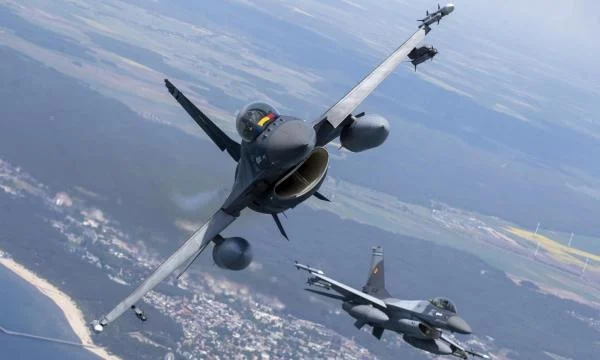
The Islamic Revolutionary Guard Corps (IRGC) has issued a formal statement claiming that its integrated air defense systems nearly engaged a United States Air Force F-16 fighter jet as it approached Iranian sovereign airspace. According to reports broadcast by the state-run Islamic Republic of Iran Broadcasting (IRIB) on Saturday, November 28, 2026, the incident occurred on the morning of Friday, November 27, in the vicinity of Hengam Island, situated in the strategic waters of the Persian Gulf. The IRGC asserts that the American aircraft was forced to execute a high-speed evasive maneuver and deviate from its original flight path after Iranian surface-to-air defense batteries locked onto the target and issued a warning.
Chronology of the Incident
The encounter unfolded on Friday, November 27, 2026, in the highly contested airspace above the Strait of Hormuz. According to the IRGC, the F-16 was operating in a combat air patrol capacity, purportedly providing escort and protection to commercial and naval vessels moving through the waterway. Tehran maintains that the flight path of the U.S. aircraft constituted a deliberate encroachment on its Air Defense Identification Zone (ADIZ).
The IRGC statement detailed that as the jet approached the southeastern coast of Hengam Island, Iranian radar systems tracked the aircraft’s movement. Following standard operational protocols, Iranian military personnel initiated electronic lock-on procedures, signaling an active engagement threat. The IRGC reported that the F-16 immediately banked away from the restricted area, retreating into international airspace to avoid a kinetic escalation. This event serves as the latest in a series of intensifying interactions between Iranian and American forces in the Persian Gulf, a region that serves as the world’s most critical chokepoint for global energy supplies.
Strategic Importance of the Strait of Hormuz
The Strait of Hormuz is a narrow waterway connecting the Persian Gulf with the Gulf of Oman and the Arabian Sea. It is arguably the most significant maritime choke point in the world, with roughly 20 to 30 percent of the world’s total oil consumption passing through the strait daily. For Iran, the strait represents a vital component of its national security architecture. Tehran has frequently utilized the threat of closing the strait or disrupting traffic as a primary geopolitical lever against Western sanctions and military pressure.
The United States maintains a robust naval presence in the region, primarily through the U.S. Fifth Fleet, based in Bahrain. The U.S. mission in the region—often cited as "Operation Prosperity Guardian" or similar maritime security initiatives—aims to ensure the freedom of navigation and the safety of commercial shipping. However, the overlap of U.S. surveillance flights and Iranian defense patrols creates a constant risk of miscalculation, where a tactical error could trigger a broader regional conflict.
Contextualizing the Current Tensions
The incident occurs against a backdrop of deeply polarized relations between Washington and Tehran, further complicated by the political rhetoric surrounding the transition of power in the United States. Recent reports indicate that political leaders, including President-elect Donald Trump, have engaged in aggressive posturing regarding Iran’s military capabilities and regional influence.
Earlier this week, statements emerged from the U.S. side regarding the allocation of military funding aimed at curbing Iranian regional activities through January 2027. Conversely, Iranian military officials, including high-ranking commanders within the IRGC, have adopted an increasingly combative stance. In recent public addresses, Iranian generals have characterized the ongoing pressure from the U.S. and its allies, particularly Israel, as a "declining force" whose military setbacks are "only the beginning." This ideological friction has translated into a higher frequency of "close encounters" between military assets in the air and at sea.

Analysis of the Engagement and Military Posture
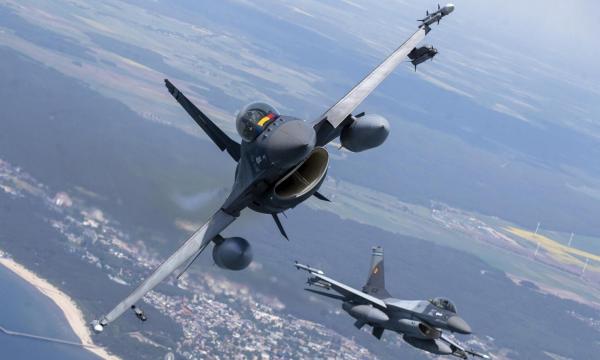
From a technical perspective, the deployment of an F-16 in such proximity to Iranian air defenses suggests a deliberate effort by the U.S. to monitor Iranian maritime movements or to assert freedom of navigation rights. The F-16, a versatile multi-role fighter, is frequently used in the Middle East for power projection.
However, the IRGC’s claim that it "nearly" shot down the aircraft implies that the Iranian side is shifting toward a "shoot-first" policy regarding airspace violations. During the incident, the IRGC emphasized that "any attempt to avoid regulations governing the control and management of maritime traffic in the Strait of Hormuz is unacceptable." By framing the flight of the F-16 as a violation of "maritime traffic" rules, Iran is attempting to assert legal jurisdiction over the airspace above the international waters of the strait, a claim that is consistently rejected by the United States and international maritime law.
Official Responses and International Silence
As of Saturday, November 28, 2026, the United States Department of Defense has remained silent regarding the specific details of the incident. In typical military practice, the U.S. often refrains from confirming individual incidents involving tactical aircraft unless there is a clear strategic advantage in doing so, or if the encounter results in a verifiable loss of equipment or life.
International observers are viewing this silence as a calculated move to avoid further legitimizing Iran’s narrative. By not responding, Washington avoids a public "he-said, she-said" debate, which could potentially embolden local Iranian factions. However, analysts warn that the lack of direct communication channels between the U.S. and the IRGC significantly raises the risk of a accidental collision or a misjudged engagement that could spiral into a localized war.

Broader Implications for Global Energy Markets
The recurrence of such incidents carries severe economic implications. Even the threat of restricted navigation in the Strait of Hormuz causes immediate volatility in global oil markets. Traders monitor these interactions closely; any sign that the U.S. and Iran are moving closer to a direct military confrontation typically results in a sharp increase in the price of crude oil futures.
The international community, including regional powers like Saudi Arabia, the United Arab Emirates, and Qatar, is monitoring the situation with increasing concern. These nations, while aligned with the U.S. in many defense matters, are also cautious about being caught in the crossfire of a direct confrontation between the U.S. and Iran. The diplomatic challenge remains the creation of a de-confliction mechanism—an "air-to-air" or "sea-to-sea" hotline—that would allow military commanders from both sides to communicate in real-time, preventing incidents from escalating due to misinterpretation.
Future Outlook
As the calendar turns toward 2027, the geopolitical climate in the Middle East appears increasingly precarious. The rhetoric from both Tehran and Washington suggests that neither side is currently interested in a de-escalation of the status quo.
The IRGC’s warning that it will provide a "decisive defense response" to any future violations serves as a clear signal that the threshold for Iranian military intervention is lowering. Conversely, the U.S. mission to safeguard transit in the Persian Gulf remains a non-negotiable policy goal. The near-miss involving the F-16 is a microcosm of a much larger struggle for regional hegemony. With the current administration in the U.S. nearing the end of its term and a new one preparing to take office, the next few months are expected to be characterized by high-stakes brinkmanship.

In conclusion, while the incident on November 27 did not result in a direct engagement, it underscores the fragility of the peace in the Persian Gulf. Whether through accidental pilot error or a deliberate test of resolve, the proximity of these military assets remains a ticking clock for regional stability. Global markets and diplomatic entities alike remain on high alert, waiting for official confirmation from the Pentagon and watching for any further shifts in the tactical behavior of the IRGC in the coming days. The standoff continues, with the Strait of Hormuz remaining a volatile epicenter of international military friction.