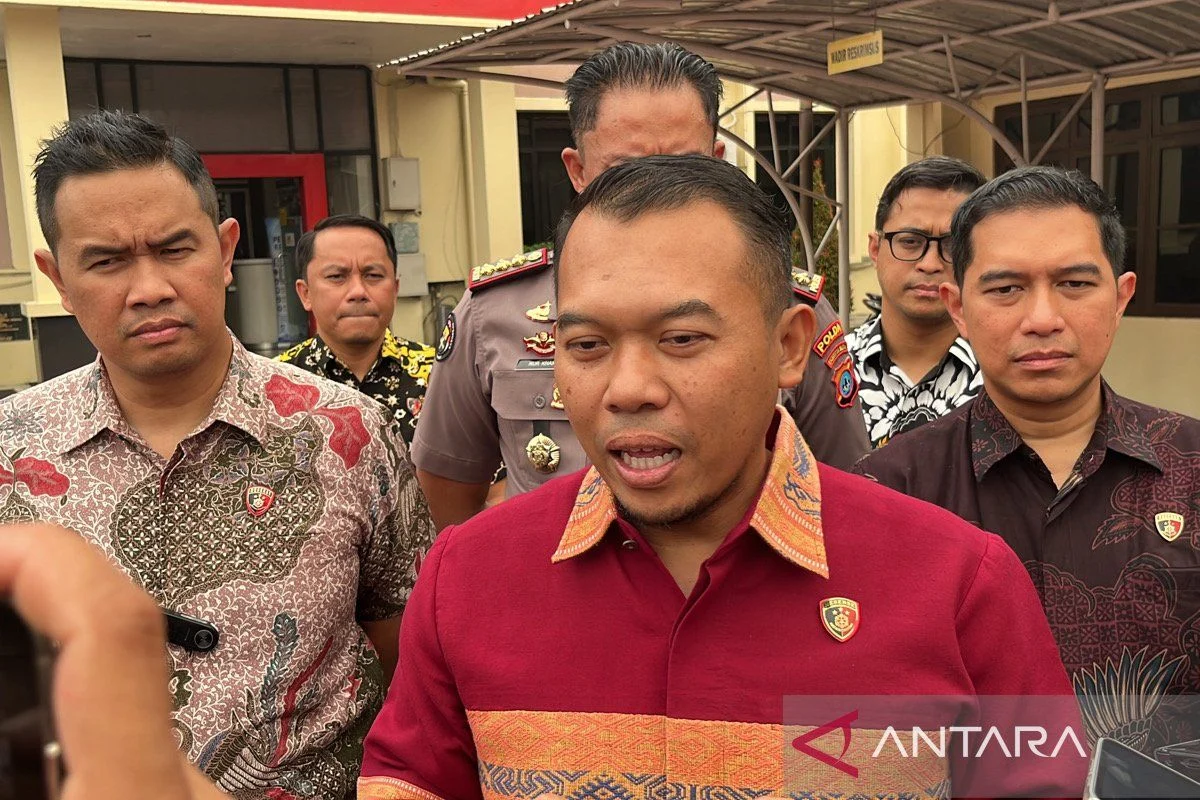
The South Kalimantan Regional Police (Polda Kalsel) have significantly intensified their offensive against the burgeoning threat of online gambling, successfully blocking 427 illicit websites between January and November 2026. This extensive digital cleanup, spearheaded by the Sub-Directorate V of the Cyber Crime Division (Ditreskrimsus), represents a strategic maneuver to dismantle the infrastructure supporting illegal wagering within the province. By coordinating directly with the Ministry of Communication and Digital, law enforcement has established a rapid-response mechanism to ensure that identified platforms containing gambling content are promptly removed from the internet ecosystem.
Director of Special Criminal Investigation at Polda Kalsel, Senior Commissioner Sigit Haryono, confirmed the figures on Friday, emphasizing that the department’s commitment to cleaning the digital space remains a top priority. This initiative is not an isolated effort but a localized execution of the national 100-day program mandated by National Police Chief General Suyudi Ario Seto. The program explicitly prioritizes the eradication of online gambling, which the government has identified as a major socioeconomic disruptor contributing to rising household debt, criminal activity, and the exploitation of vulnerable populations.
The Chronology of Enforcement and Cyber Patrols
The enforcement efforts throughout 2026 have been characterized by a dual approach: proactive digital surveillance and reactive criminal investigations. From the beginning of the year, the Cyber Crime unit has employed sophisticated monitoring tools to identify patterns of gambling advertisements and server traffic originating from, or targeting, residents in South Kalimantan.
In the final two months of this period alone, the unit intensified its ground operations, resulting in the apprehension of five suspects across three distinct regions: Banjarmasin, Barito Kuala, and Hulu Sungai Tengah. These arrests serve as the culmination of surveillance efforts that tracked the digital footprints of individuals acting as conduits for illegal gambling operations.
According to Kompol Yafet Efraim, the Head of the Cyber Sub-Directorate, the investigation revealed that these suspects operated under two primary business models. The first involved individuals who acted as "promoters," utilizing their personal social media presence to broadcast links to gambling portals in exchange for monetary compensation. This method relies on the high reach of influencers or local micro-celebrities to normalize gambling behavior among the youth and marginalized communities. The second, more traditional but digitized, modus operandi involved the collection of "angka tebakan" (guessed numbers) for illegal lottery (toto gelap/togel) schemes, which were then channeled into digital platforms.
Legislative Framework and Legal Implications
The suspects currently in custody are facing severe legal consequences under the Indonesian penal framework. The police have invoked Article 45, Paragraph (3), in conjunction with Article 27, Paragraph (2) of Law Number 1 of 2024, which serves as the Second Amendment to Law Number 11 of 2008 concerning Information and Electronic Transactions (ITE).
This legislation carries substantial penalties, underscoring the government’s stance that online gambling is not merely a moral issue but a criminal offense that threatens the stability of electronic transactions and public order. Legal experts suggest that the strict enforcement of these articles is designed to serve as a deterrent, not just for the operators, but for the "affiliates" and "promoters" who have become increasingly prevalent on platforms like Instagram, TikTok, and Telegram.
The Broader Context: A National Crisis
The situation in South Kalimantan reflects a wider national crisis. Throughout 2026, the Indonesian government has faced mounting pressure to address the proliferation of online gambling, which has seen an explosion in accessibility due to the widespread adoption of smartphones and digital payment gateways. The Ministry of Communication and Digital has been tasked with managing an unprecedented volume of site take-downs, often battling a "whack-a-mole" scenario where blocked domains are quickly replaced by mirror sites.
The economic implications are profound. Reports from financial intelligence units suggest that online gambling has led to significant capital flight, as many of these operations are hosted on offshore servers, while the domestic population—often those with the lowest disposable income—suffers the financial fallout. In South Kalimantan, the police have specifically warned the public against the dangerous practice of "lending out" personal bank accounts. Many suspects, as revealed in investigations, use the accounts of unsuspecting citizens to launder gambling proceeds. Once an account is linked to illegal gambling, it is flagged by financial authorities, leading to the freezing of assets and potential criminal investigation for the account holder.
Community Engagement and Public Responsibility
Beyond the tactical raids and server blocks, Polda Kalsel is shifting its focus toward preventative public education. The police have launched a campaign encouraging citizens to act as the eyes and ears of the authorities. Residents who observe suspicious digital activities, or individuals who are being coerced into participating in gambling operations, are urged to report these instances through the official police communication channels.
"The public must remain vigilant," noted Commissioner Sigit Haryono. "Lending your bank account to a stranger, or even an acquaintance, for the purpose of receiving transfers from unknown sources is a primary gateway to being implicated in a crime you did not intend to commit."
This community-based approach aims to shrink the "recruitment pool" for gambling syndicates. By educating the public on the dangers of digital financial footprints, the police hope to mitigate the harm caused by gambling before it reaches the stage of formal criminal prosecution.
Analysis of the Effectiveness of Digital Take-downs
The blocking of 427 sites in eleven months is a significant achievement, yet security analysts note that such actions are only one part of a multi-faceted solution. While blocking a domain restricts easy access for casual users, professional gamblers and operators often use Virtual Private Networks (VPNs) and encrypted messaging apps to circumvent these blocks.
Therefore, the success of the Polda Kalsel operation rests as much on the arrests of the local promoters as it does on the technical blocking of the sites. By dismantling the "last mile" of the gambling operation—the local agents who bridge the gap between global servers and local players—the police effectively break the cycle of trust and recruitment that keeps these sites profitable.
Furthermore, the integration of data from the Ministry of Communication and Digital ensures that the police are not working in a vacuum. This inter-agency synergy is critical in the modern digital age, where the speed of information necessitates a real-time response. As the 100-day program of the National Police Chief progresses, it is expected that the pressure on gambling networks will continue to mount, potentially leading to a decline in the visibility of these platforms in the South Kalimantan region.
Future Outlook and Sustained Vigilance
Looking toward the remainder of the year and into 2027, the focus of the Sub-Directorate V Cyber Crime unit is expected to remain on intelligence-led policing. This involves not only reactive site blocking but also deep-dive investigations into the financial structures that power these platforms. The rise of cryptocurrency as a medium for gambling transactions has introduced new complexities, requiring the police to enhance their forensic capabilities in tracking digital assets.
The crackdown in South Kalimantan serves as a case study for other provincial police units. The combination of legislative enforcement, community awareness, and technical inter-agency cooperation is seen as the most viable path forward. As the digital landscape continues to evolve, the authorities recognize that the battle against online gambling is an ongoing endurance test rather than a singular event. The commitment of Polda Kalsel to this cause underscores a broader national realization: that the integrity of the digital economy and the protection of the citizenry from predatory online practices are essential pillars of public security in the 21st century.
For the residents of Banjarmasin, Barito Kuala, and Hulu Sungai Tengah, the message from the authorities is clear: the digital realm is not a lawless space, and the consequences of participating in, promoting, or facilitating online gambling will be met with the full force of the law. As the investigation continues, the police remain hopeful that these efforts will not only reduce the number of active gamblers but also provide a safer environment for the digital integration of the region’s economy.