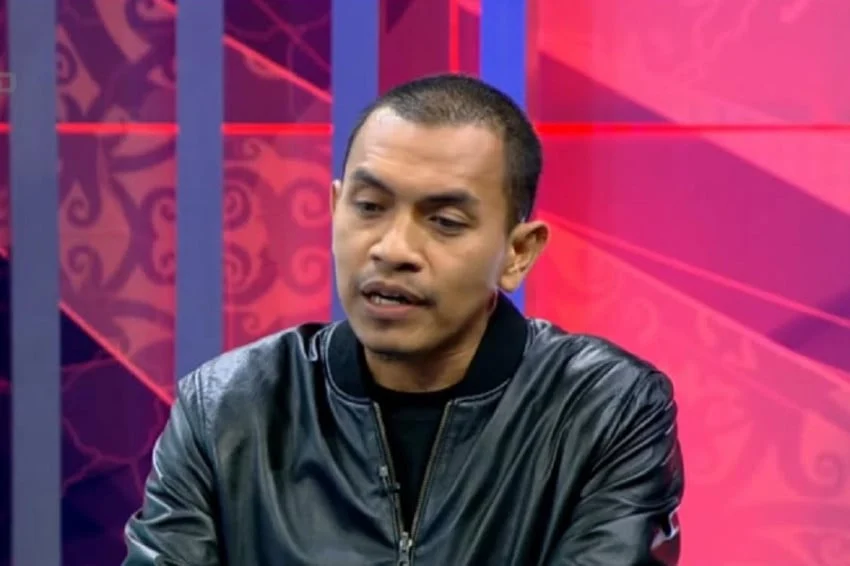
The pursuit of legal accountability surrounding the controversial KM 50 incident has resurfaced in the national discourse as representatives of the former Front Pembela Islam (FPI) reaffirm their dedication to uncovering the full truth. Aziz Yanuar, acting as both the legal representative for the victims’ families and a spokesperson for the organization, has formally stated that the faction strongly backs any legitimate governmental or judicial initiatives aimed at reopening the investigation. The core argument presented by the legal team centers on the necessity of elevating the case from a standard criminal proceeding to a specialized tribunal capable of addressing large-scale systemic violations—specifically, a dedicated Human Rights Court.
This renewed advocacy highlights an ongoing chapter in one of Indonesia’s most scrutinized security-related controversies in recent years. The tragic event, which resulted in the deaths of six members of the unorthodox Islamic organization along the Jakarta-Cikampek Toll Road, continues to polarize public opinion, legal experts, and human rights watchdogs. As calls for transparency and comprehensive justice persist, understanding the foundational facts, the historical chronology, the judicial outcomes thus far, and the broader implications of reopening the inquiry remains vital for assessing the current state of law enforcement and human rights protection in the country.
Background and Context of the KM 50 Incident
The designation "KM 50" refers to Kilometer 50 of the Jakarta-Cikampek Toll Road, the specific geographic location where a deadly confrontation occurred in the early hours of December 7, 2020. At the time of the incident, Indonesia was navigating complex socio-political tensions, compounded by public health restrictions associated with the COVID-19 pandemic and high-profile legal matters involving the leadership of the now-disbanded FPI.
According to initial official reports released by the Indonesian National Police, officers from the Jakarta Metro Police were conducting a surveillance operation tracking vehicles associated with controversial cleric Rizieq Shihab. The police stated that their unmarked vehicles were intercepted and attacked by supporters of the cleric, prompting officers to take defensive measures. This narrative asserted that an ensuing physical struggle inside one of the vehicles forced the police to use lethal force in self-defense, resulting in the deaths of the six individuals.
Conversely, representatives of the FPI, independent civil society organizations, and the families of the deceased immediately contested the official police version of events. They maintained that the victims were subjected to extrajudicial execution without adequate justification, arguing that the circumstances pointed to a disproportionate and unlawful deployment of state power. The stark divergence between the official police account and the allegations made by the victims’ advocates created an immediate legitimacy crisis, prompting widespread demands for an independent, transparent investigation into the exact sequence of events that transpired on that fateful night.
Chronology of Key Events and Investigations
To fully grasp the complexity of the KM 50 tragedy, it is necessary to examine the timeline of investigative milestones, institutional findings, and judicial proceedings that have unfolded since December 2020:
December 7, 2020: The violent confrontation occurs along the Jakarta-Cikampek Toll Road, leading to the deaths of six FPI members: Faiz Ahmad Syukur, Andi Oktiawan, Muhammad Reza, Ahmad Sofiyan, Lutfi Hakim, and Muhammad Suci Khadavi Poetra.
December 8–9, 2020: The National Commission on Human Rights (Komnas HAM) announces the formation of an independent fact-finding team to investigate the incident, signaling an institutional commitment to parallel oversight alongside official police channels.
January 8, 2021: Komnas HAM publishes its preliminary findings and official report. The commission concludes that the deaths constituted a violation of human rights, specifically identifying the incident as an unlawful killing (unlawful killing of citizens by law enforcement personnel). Komnas HAM recommends that the legal process be elevated to a criminal court to try the specific officers involved, rather than treating the incident merely as a standard operational defense.
March 2021: Following the recommendations of Komnas HAM and mounting public pressure, the Attorney General’s Office (AGO) appoints a team of prosecutors to review the case dossiers prepared by the National Police’s Criminal Investigation Agency (Bareskrim).
November–December 2021: The legal process reaches the courtroom stage through a conventional criminal trial at the South Jakarta District Court. Two police officers—Briptu Fikri Ramadhan and IPDA Mohammad Yusmin Awutar—are formally charged with criminal negligence resulting in death (under Articles 338 and 351 of the Indonesian Criminal Code).
March 2022: The South Jakarta District Court issues its verdict. The panel of judges rules that the two police officers acted in self-defense during a life-threatening situation and therefore acquits them of criminal liability, declaring their actions to have been justified under the circumstances of an alleged assault by the suspects.
November 2026: Amid ongoing discussions and statements from high-ranking military and security officials regarding transparency and accountability, legal representatives and family members formally renew their push to have the case reclassified as a gross human rights violation, advocating for a trial under the Human Rights Court mechanism.
Legal Arguments and the Demand for a Human Rights Court
The central contention raised by Aziz Yanuar, speaking on behalf of the victims’ families and the broader FPI network, focuses on the inadequacy of the previous judicial process. According to the legal team, the initial trial at the South Jakarta District Court addressed the incident merely as an ordinary criminal matter involving individual actions, thereby failing to capture the systemic and institutional dimensions of the event.
Aziz argued that the core substance of the tragedy—specifically whether there was a systematic pattern of abuse or a violation of international human rights standards regarding the right to life—remained unaddressed by the conventional court system. In statements made during a media program, he emphasized that the families do not recognize the previous ordinary court ruling as a definitive resolution of justice.
From a legal standpoint, classifying an event as a gross human rights violation (pelanggaran HAM berat) under Indonesian Law No. 26 of 2000 on Human Rights Courts requires meeting specific statutory thresholds, including establishing that the acts were committed as part of a widespread or systematic attack directed against a civilian population. Proponents of reopening the case argue that the involvement of state apparatuses in executing citizens outside the bounds of due process warrants this higher level of judicial scrutiny. If successfully elevated to a Human Rights Court, the case would be investigated by the National Human Rights Commission with prosecutorial powers held exclusively by the Attorney General, allowing for broader command responsibility to be examined.
Official Responses, Military and Police Stances, and Political Implications
The debate surrounding the KM 50 incident has historically involved various branches of the security apparatus, reflecting the high stakes of accountability and public trust in law enforcement agencies. Notably, discussions concerning transparency have occasionally drawn comments from high-ranking military and defense figures, particularly given the intersection of national security narratives and civil liberties during the period when the FPI was active.
Statements from key military figures—such as former senior officials expressing a willingness to submit to scrutiny if any institutional involvement is proven—have periodically revitalized public discourse. While the Indonesian National Police maintained throughout the 2021 trial that their personnel acted in accordance with standard operating procedures under duress, independent oversight bodies like Komnas HAM have consistently maintained that the excessive use of lethal force represents an unacceptable breach of constitutional protections.
The political and social implications of reopening the KM 50 case are multifaceted. For the administration and the judiciary, revisiting a closed high-profile case presents both a challenge to legal finality (the principle of legal certainty) and an opportunity to demonstrate institutional integrity and responsiveness to public demands for transparency. For civil society groups and human rights organizations, the case serves as a crucial litmus test for the enforcement of accountability within state institutions, particularly concerning the monopoly on the legitimate use of force by law enforcement officers.
Challenges to Reopening the Case
Navigating the legal pathways to reopen the KM 50 inquiry involves significant procedural hurdles. Under Indonesian criminal procedure, extraordinary legal remedies such as a Judicial Review (Peninjauan Kembali) or the formal initiation of a Human Rights Court tribunal require robust, novel evidence that was not presented during the original trial, or a formal determination by the legislature and the National Human Rights Commission that the incident meets the stringent legal definition of a gross human rights violation.
Furthermore, legal experts note that balancing the principle of legal finality—which ensures that verdicts once finalized cannot be indefinitely challenged—with the imperative of achieving substantive justice for victims of human rights abuses requires exceptional judicial prudence. Any move by the Attorney General’s Office or the judiciary to revisit the matter would necessitate overwhelming evidentiary support and a broad consensus among institutional stakeholders.
Conclusion and Future Outlook
The persistent campaign by the legal representatives and families of the six deceased FPI members underscores that the closure of the official criminal trial in 2022 did not extinguish public and familial demands for what they consider true justice. By advocating for the case to be transferred to a Human Rights Court, proponents aim to shift the legal paradigm from individual criminal negligence to a broader examination of state accountability and human rights standards.
As discussions surrounding transparency, institutional reform, and historical accountability continue to evolve in Indonesia, the KM 50 tragedy remains a poignant touchstone in contemporary legal discourse. Whether the formal legal system will ultimately accommodate these demands and pave the way for a renewed judicial inquiry remains one of the most critical questions facing the nation’s legal and human rights architecture in the years ahead.