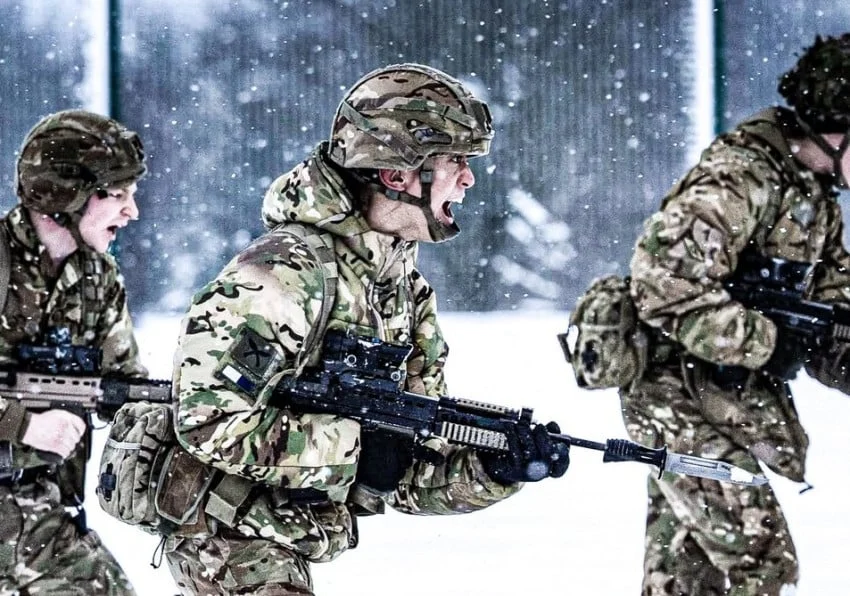
The geopolitical architecture of the trans-Atlantic alliance is facing its most significant transformation since the conclusion of the Cold War. The United States, under the conceptual framework termed "NATO 3.0," is actively pressuring its European allies to accelerate rearmament efforts and assume the primary burden for the continent’s conventional defense. This shift, championed by influential foreign policy strategists including former Deputy Assistant Secretary of Defense for Strategy and Force Development Elbridge Colby, marks a departure from the traditional post-WWII security umbrella that has defined Western military cooperation for decades. As Washington increasingly prioritizes the challenges posed by China in the Indo-Pacific, the message to European capitals is clear: the era of American-led, resource-intensive European security is evolving into a model of shared, regionalized responsibility.
The Genesis of NATO 3.0: Redefining American Interests
The term "NATO 3.0" serves as a shorthand for a fundamental recalibration of US foreign policy. According to proponents of this shift, the historical reliance of European nations on US military logistics, intelligence, and force projection is no longer sustainable in a world of finite American resources and rising systemic threats in Asia.
The concept is rooted in the principle of "flexible realism." This doctrine posits that the United States must align its international commitments strictly with its available national resources and the evolving realities of global power competition. Elbridge Colby, a key architect of this thinking, argues that for too long, the US has overextended itself, acting as the primary guarantor of European security while neglecting the burgeoning challenge posed by the People’s Republic of China. Under this framework, the US intends to move from being the "first responder" in Europe to a "second-tier" partner, serving as a backstop rather than the frontline force.
Historical Context and the Evolution of the Alliance
To understand the gravity of this shift, one must analyze the progression of NATO through the decades. NATO 1.0 was the post-WWII containment entity, focused on deterring Soviet expansionism in Europe. NATO 2.0, which followed the collapse of the Berlin Wall, saw the alliance expand its footprint eastward, focusing on crisis management, peacekeeping in the Balkans, and counter-terrorism operations in the Middle East.
Throughout these iterations, the United States maintained a massive military presence across the Atlantic. However, the 21st-century reality—marked by the return of great-power competition—has altered the calculus. Since the 2008 financial crisis and intensified by the 2022 invasion of Ukraine, the debate over "burden-sharing" has dominated the NATO agenda. Former President Donald Trump’s frequent criticism of NATO allies failing to meet the 2% GDP spending target for defense laid the political groundwork for the current push toward NATO 3.0. What was once a political grievance has now hardened into a strategic necessity as the Pentagon focuses on the "pacing challenge" of China.
Supporting Data: The Defense Spending Gap
The push for NATO 3.0 is underpinned by stark statistical realities regarding military spending and capability. For years, the United States has accounted for roughly 70% of total NATO defense expenditure. While European members have increased their spending in the wake of the war in Ukraine, the gap remains substantial.
According to 2023 and 2024 NATO reports, while many nations—including Poland, the Baltic states, and Germany—have made significant strides in increasing their defense budgets, the total volume of European industrial capacity remains insufficient to sustain a high-intensity, long-term conventional conflict without massive US intervention.
For instance, Europe’s current stocks of artillery shells, air defense systems, and precision-guided munitions are currently ill-equipped to handle a peer-level confrontation on the scale seen in Eastern Europe. NATO 3.0 demands that Europe not only increase spending but also consolidate its defense industrial base to ensure self-sufficiency. This includes the development of indigenous command-and-control structures that do not rely entirely on American satellite and communications networks.
Chronology of the Strategic Pivot
The transition toward this new posture has been incremental but steady:
- 2011: The "Pivot to Asia" under the Obama administration signals the first major recognition that the US military must shift focus away from the Middle East and Europe toward the Indo-Pacific.
- 2014: The annexation of Crimea by Russia forces a brief, albeit limited, re-focusing on European territorial defense.
- 2017–2021: The Trump administration aggressively pushes for increased defense spending from NATO allies, framing the alliance’s existing structure as inequitable to US taxpayers.
- 2022: The Russian invasion of Ukraine serves as a catalyst for a massive increase in European defense spending, with Germany announcing a €100 billion "Zeitenwende" (turning point) fund.
- 2023–2024: The emergence of the NATO 3.0 concept enters mainstream policy discourse, with US officials signaling that the US "strategic focus" must transition to the Pacific, leaving Europe to manage its own "first-line" defense.
Official Responses and International Skepticism
The reception of the NATO 3.0 concept among European allies has been mixed. In the Baltic states and Poland—nations that perceive Russia as an existential threat—there is significant apprehension that a reduced US presence could embolden Moscow. These nations argue that the US security umbrella is the only factor preventing a broader escalation and that "strategic autonomy" for Europe remains a distant prospect due to fragmented defense industries.
Conversely, officials in Paris and Berlin have long flirted with the idea of "European Strategic Autonomy." While they generally support the call for increased independence, they are wary of a total US withdrawal, fearing that it could lead to a decoupling of trans-Atlantic security interests.
In Washington, the consensus is increasingly bipartisan. Both Democratic and Republican strategists acknowledge that the US cannot simultaneously fight a high-intensity war in the Pacific and maintain a massive military presence in Europe indefinitely. As one high-ranking Pentagon official noted under anonymity, "The math of modern warfare simply doesn’t support the current level of US involvement in every theater."
Broader Implications: A Changing Global Order
The shift toward NATO 3.0 carries profound implications for global stability. First, it requires a complete reorganization of European military command structures. Currently, the Supreme Allied Commander Europe (SACEUR) is always an American general. A transition to a 3.0 model might necessitate a European officer in that role, a move that would represent a symbolic and practical shift in power.
Second, the shift forces European nations to engage in deeper defense integration. The current model of "national champions"—where each country develops its own tanks, aircraft, and missile systems—is inefficient. NATO 3.0 will likely force the consolidation of the European defense industry, a process that will be politically difficult given the national interests involved in arms manufacturing.
Third, the impact on Russia and China is significant. Moscow may view the US withdrawal as a window of opportunity to exert influence over its neighbors, testing the resolve of a European-only defense coalition. China, meanwhile, may view the US pivot as a sign that the Western alliance is fracturing, potentially emboldening its posture in the Taiwan Strait and the South China Sea.
Analysis: The Risks of Strategic Realignment
The strategy of NATO 3.0 is not without significant risk. The primary danger is a "deterrence gap." If Europe is unable to ramp up its industrial capacity and military readiness quickly enough to fill the void left by a shifting US focus, the resulting power vacuum could be catastrophic. History has shown that regional conflicts in Europe have a tendency to spiral into global confrontations; therefore, the US withdrawal must be carefully managed to ensure that deterrence remains intact.
Furthermore, the economic impact on the US cannot be ignored. While the shift is intended to save American resources, a full-scale regional war in Europe would still require US intervention, regardless of the "3.0" doctrine. Critics of the plan argue that "flexible realism" is merely a rebranding of isolationism, which could leave the United States isolated in a world where its primary trade partners are under threat.
Conclusion: The Future of the Trans-Atlantic Link
As the concept of NATO 3.0 gains traction, the coming decade will be defined by how effectively Europe manages this transition. The onus is now on European capitals to prove that they can act as a unified, credible, and capable military power. For Washington, the challenge will be to execute this shift without triggering the very instability it seeks to avoid. The alliance is not collapsing, but it is undergoing a painful, necessary, and inevitable evolution. Whether this leads to a more balanced and resilient global security architecture or a more fractured and vulnerable one remains the defining question of current international relations. The success of NATO 3.0 will depend on a delicate balance: maintaining the trans-Atlantic bond while acknowledging that the center of gravity in global politics has fundamentally moved eastward.