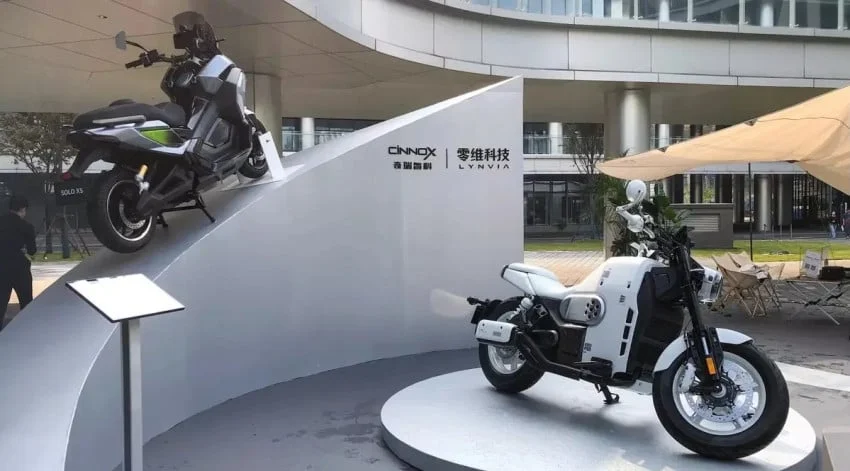
Beijing—The automotive landscape is undergoing a profound transformation as Chery, the Chinese industrial giant renowned for its aggressive global expansion of the Omoda and Jaecoo automotive brands, has officially signaled its entry into the motorcycle manufacturing sector. The move marks a strategic pivot for the company, which seeks to leverage its extensive research and development in electrification and powertrain systems to disrupt the two-wheeled vehicle market. Under a newly established sub-brand identified as Cinnox, Chery has unveiled two prototype models, headlined by the Grow C3, an electric cruiser that integrates sophisticated range-extender technology, and an accompanying adventure-styled electric scooter.
This transition from four-wheel automotive dominance to two-wheeled mobility is not merely a diversification of product lines but a calculated response to the surging global demand for sustainable urban and recreational transportation. By applying the principles of the Extended Range Electric Vehicle (EREV) architecture to a motorcycle platform, Chery is positioning itself at the vanguard of a niche, yet potentially high-growth, segment of the powersports industry.
The Technological Evolution: From EREV Cars to Motorcycles
The core innovation within the Cinnox Grow C3 lies in its propulsion system. Unlike traditional battery-electric vehicles (BEVs) that rely solely on grid-charged energy storage, the Grow C3 employs a hybrid approach. The rear wheel is driven exclusively by an electric motor, ensuring the instantaneous torque and linear acceleration characteristic of electric propulsion. However, the system is augmented by a compact internal combustion engine that functions strictly as a generator.
This generator does not provide direct torque to the wheels; instead, it maintains the state of charge for the onboard battery pack, effectively eliminating the "range anxiety" that has long plagued pure electric motorcycles. This technology, which Chery has successfully implemented in its premium automotive offerings, allows the Grow C3 to offer the efficiency of an electric drivetrain with the logistical convenience of fossil fuel refueling for long-distance touring.
Strategic Timeline and Brand Development
Chery’s entry into the motorcycle market did not occur in a vacuum. Industry analysts have tracked the company’s internal restructuring over the past twenty-four months, noting a deliberate push toward multi-modal mobility solutions. The timeline for this entry began with the conceptualization of the Cinnox brand, a project shielded from public view until the recent unveiling in Beijing.
The development phase focused heavily on integrating the EREV system into a smaller, more space-constrained chassis. While the automotive industry has adopted EREV technology with relative ease due to the larger dimensions of passenger vehicles, packaging an engine, a generator, and a battery within the frame of a cruiser motorcycle presented significant engineering challenges. The success of the Grow C3 prototype indicates that Chery has likely achieved a breakthrough in power-to-weight ratios and thermal management systems, both of which are critical for motorcycle reliability.
Design Philosophy and Recreational Utility
Beyond the powertrain, the Grow C3 distinguishes itself through its focus on versatility. While most electric motorcycles are marketed toward urban commuters or short-range hobbyists, the Grow C3 is explicitly designed for adventure and long-haul touring.
A standout feature is the inclusion of Vehicle-to-Load (V2L) capability. This allows the motorcycle to serve as a mobile power station, enabling owners to draw electricity from the bike’s high-capacity battery to power camping equipment, lights, or digital devices. This functionality suggests that Chery is targeting the "moto-camping" demographic—a growing segment of the enthusiast market that values both mobility and off-grid infrastructure. By bridging the gap between a vehicle and a utility power source, the Grow C3 is repositioned from a simple mode of transport to an integrated lifestyle tool.
Integrating Artificial Intelligence
In addition to its hybrid drivetrain, Chery has announced that the Cinnox line will feature advanced Artificial Intelligence (AI) integration. While specific technical specifications remain proprietary, industry experts suggest that this AI will likely focus on three core pillars: battery management optimization, predictive maintenance, and rider-assist safety systems.
In the context of EREV motorcycles, AI can play a critical role in managing the activation cycles of the combustion generator. By analyzing terrain data via GPS and monitoring battery health in real-time, the onboard AI can optimize when the generator should engage to maximize fuel efficiency. Furthermore, the inclusion of AI-driven safety systems—potentially including radar-based collision warnings and adaptive traction control—would place the Cinnox brand in direct competition with established premium motorcycle manufacturers that have only recently begun to implement such advanced rider-assistance systems (ARAS).
Market Context and Industry Implications
The global motorcycle market is currently navigating a delicate transition. With tightening emissions regulations in the European Union and parts of Asia, traditional manufacturers are under immense pressure to decarbonize. However, the lack of charging infrastructure remains a significant barrier to the mass adoption of pure electric motorcycles.
Chery’s EREV approach offers a pragmatic solution to this stalemate. By providing a vehicle that can be fueled at any existing gas station while retaining the benefits of an electric motor, the Grow C3 effectively circumvents the current limitations of charging networks.
From a competitive standpoint, the entry of a major automotive manufacturer into the motorcycle space signals a shift in power dynamics. Automotive manufacturers possess distinct advantages in economies of scale, supply chain management, and high-volume electronics procurement that traditional motorcycle manufacturers may struggle to match. If Chery can achieve similar manufacturing efficiencies with the Cinnox brand as it has with its Omoda and Jaecoo automotive lines, the company could rapidly gain market share, particularly in emerging markets where infrastructure is still developing.
Official Responses and Industry Outlook
While Chery has maintained a disciplined silence regarding the full technical specifications or potential release dates for the Cinnox lineup, industry spokespersons and automotive analysts have offered preliminary interpretations of the move.
"Chery’s strategy is clearly to leverage their existing R&D pipeline to disrupt the two-wheeled sector," says automotive consultant Marcus Thorne. "By utilizing the EREV architecture, they are offering a bridge technology that addresses the primary consumer concerns regarding electric motorcycles. It is a calculated, low-risk entry into a high-potential market."
There has been no official statement regarding the price point of the Grow C3, though observers expect it to be positioned competitively against mid-range internal combustion cruisers from major Japanese and European manufacturers. The global launch strategy is expected to follow the company’s recent pattern of prioritizing markets with high adoption rates for new energy vehicles (NEVs), such as Southeast Asia, parts of South America, and Europe.
Broad Economic and Technological Impact
The impact of the Cinnox Grow C3 extends beyond the individual product. It represents a potential convergence of the motorcycle and automotive supply chains. As more automotive companies explore two-wheeled mobility to mitigate urban congestion and meet carbon neutrality goals, we may see a surge in cross-industry innovation.
Furthermore, the emphasis on V2L technology and AI integration marks a shift in how motorcycles are viewed by the average consumer. The bike is no longer just a vessel for transport; it is becoming an interconnected node in a larger digital ecosystem. Whether the Grow C3 succeeds in capturing a significant portion of the market will ultimately depend on its reliability, the longevity of its EREV system, and the retail price. However, the mere fact that a Tier-1 automotive manufacturer is dedicating significant resources to this segment suggests that the future of motorcycling will be inextricably linked to the advancements made in automotive electrification.
As the industry looks toward the next decade, the Cinnox brand will serve as a bellwether for how legacy vehicle manufacturers can pivot toward diverse mobility platforms. The successful integration of an internal combustion generator with an electric drivetrain—packaged within a cruiser aesthetic—is an ambitious undertaking that reflects Chery’s broader global strategy: to define, rather than merely participate in, the future of personal mobility. The arrival of the Grow C3 may well be the first of many steps in a broader transition that redefines the relationship between power, portability, and the modern rider.