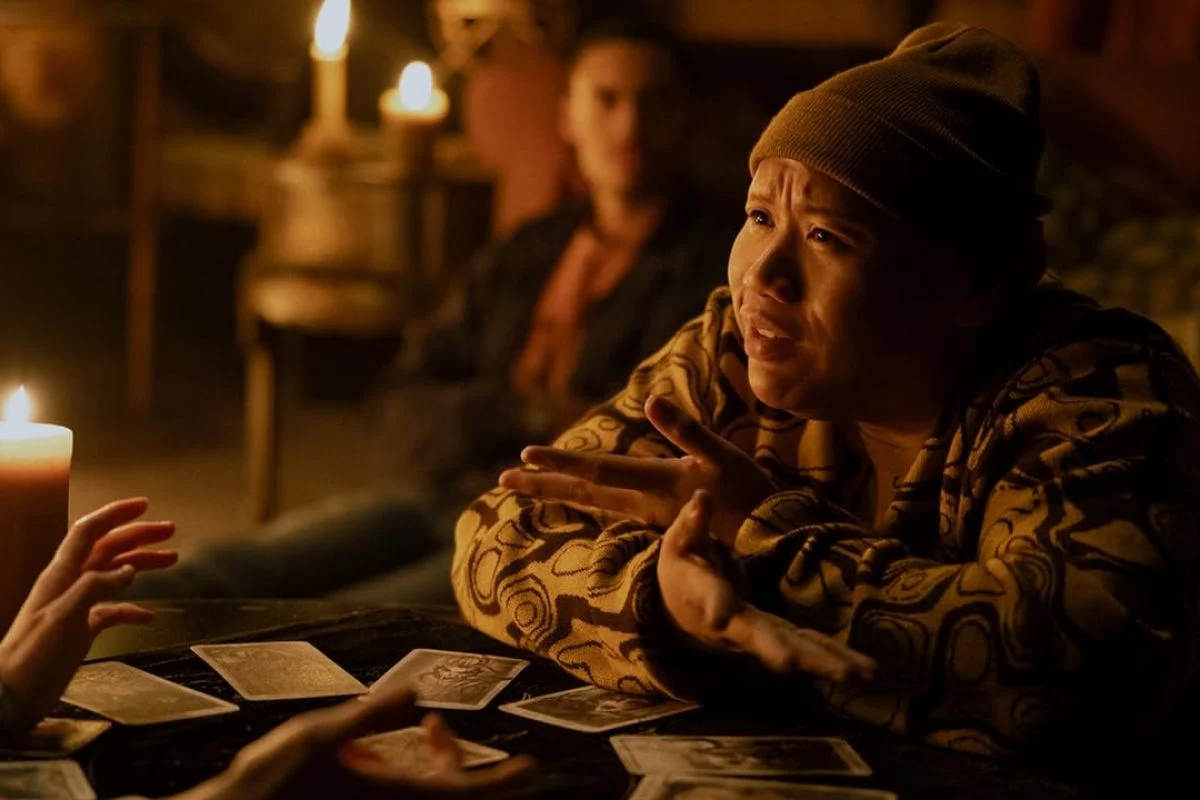
The rise of digital culture has democratized access to various esoteric practices, with tarot reading emerging as a prominent trend across social media platforms like TikTok, Instagram, and YouTube. What was once considered an underground or specialized activity has now permeated the mainstream, with influencers and independent practitioners offering readings on everything from romantic entanglements and career trajectories to complex financial decisions and predictions about the national political climate. While many consumers of these services view them as harmless entertainment or tools for self-reflection, the growing reliance on card-based predictions for life-altering decisions has prompted a necessary debate within the Islamic community regarding the theological implications of seeking knowledge of the unseen.
The core of this debate rests on the Islamic doctrine of Al-Ghayb, or the unseen, which holds that knowledge of the future and the hidden realm is the exclusive prerogative of Allah SWT. As these practices gain visibility, religious scholars and institutional bodies have begun to re-evaluate the impact of tarot on individual faith and communal stability, highlighting the fine line between psychological introspection and the forbidden practice of divination.
Historical Context and Evolution of Tarot
Historically, the tarot deck originated in 15th-century Italy, where it was initially utilized for a trick-taking card game known as tarocchini. It was not until the late 18th century that occultists began associating the cards with mystical properties and fortune-telling. This transition transformed a standard deck of cards into a symbolic language intended to map the human psyche and, eventually, to predict future events.
In the contemporary era, the digitization of tarot has significantly accelerated its reach. Algorithms on social media platforms often push "pick-a-card" videos to users, creating a personalized feedback loop that can make vague, archetypal interpretations feel strikingly specific. This psychological phenomenon, known as the Barnum effect—where individuals believe generic personality descriptions apply specifically to them—is a primary driver of the industry’s success. However, for those grounded in Islamic theology, the perceived accuracy of these readings does not mitigate the religious prohibition against seeking hidden knowledge.
The Theological Framework: Understanding Al-Ghayb
In Islamic jurisprudence, the act of predicting the future is categorically categorized as kahanah (soothsaying) or irafah (divination). The foundational basis for this prohibition is found in Surah An-Naml, verse 65: "Say, ‘None in the heavens and earth knows the unseen except Allah, and they do not perceive when they will be resurrected.’"
Islamic scholars argue that by consulting tarot readers—even those who claim to provide only "guidance" or "counseling"—the seeker is implicitly validating the practitioner’s claim to possess knowledge that belongs only to the Divine. This is not merely a procedural concern but a matter of akidah (creed). If a person believes that a set of printed cards can unveil the secrets of their future, they risk undermining the fundamental Islamic concept of Tawakkul (trust in God) and the belief in divine decree (Qadar).
Chronology of Religious Guidance and Fatwas
The discussion regarding tarot is not new; it is an extension of long-standing prohibitions against horoscopes, palmistry, and other forms of fortune-telling.
- Pre-modern Era: Classic Islamic texts, including the works of Imam Ahmad and various Hadith compilations, established a hard line against the kahin (the diviner). The Prophet Muhammad (SAW) explicitly warned that those who approach a seer and verify their claims have effectively disbelieved in the message revealed to Muhammad.
- Late 20th Century: As psychological counseling gained traction, many scholars began to distinguish between therapy and divination. They emphasized that while counseling relies on evidence-based dialogue, divination relies on superstition and occult symbols.
- 2010s to Present: The emergence of digital tarot forced institutions like the Nahdlatul Ulama (NU) and the Muhammadiyah Tarjih Council to address the issue more frequently. While formal, localized fatwas are still evolving, the consensus remains consistent: any practice that claims to bridge the gap between the known and the unseen via ritualistic symbols is contrary to Islamic principles.
The Severity of Seeking Knowledge: The 40-Day Rule
One of the most cited warnings regarding the curiosity surrounding divination is found in the Sahih Muslim collection (Hadith No. 2230). The Prophet (SAW) stated that the prayer of a person who visits a soothsayer and asks about something will not be accepted for forty nights.
Theologians have provided critical nuance to this ruling. The invalidation of the prayer does not mean that the individual is exempt from the obligation to perform Salah. Rather, it signifies that the act of seeking divination is a major sin that strips the prayer of its spiritual reward and blessings. This serves as a strong deterrent for those who might otherwise approach tarot reading out of simple curiosity or "just for fun." The implication is clear: in Islam, the intent to seek forbidden knowledge is treated with the same seriousness as the act itself.
Distinguishing Between Play and Divination
A recurring question in modern discourse is whether owning or playing with tarot cards is inherently prohibited, provided the user does not believe in the divination aspect.
The consensus suggests a distinction based on intent and usage. If the cards are used purely as a board game—much like playing cards used for bridge or poker—the activity may fall into a neutral category, provided it does not lead to prohibited behavior. However, because tarot is inherently linked to esoteric symbolism, many scholars advise caution. If the user engages with the cards to "read" their life or interpret the future, the activity crosses the threshold into the prohibited realm of tathayyur (superstition) and divination. Given the potential for spiritual harm, many Islamic counselors advise avoiding the cards entirely to prevent the "slippery slope" of developing an emotional or spiritual dependence on them.
Societal Implications and the Path Forward
The popularity of tarot is often a symptom of underlying societal anxiety. In an increasingly uncertain world characterized by economic volatility, political instability, and social isolation, people are naturally drawn to systems that offer a sense of control or clarity. The tarot reader provides a structured narrative that helps the individual cope with the ambiguity of the future.
However, the reliance on such tools can have negative implications for mental health and decision-making. Relying on symbols to dictate career choices or romantic partnerships can lead to "learned helplessness," where an individual stops exercising their own agency and critical thinking, waiting instead for the next "spread" to tell them how to act.
Instead of seeking answers in symbols, Islamic teachings emphasize the process of Istikharah (seeking guidance through prayer) and Shura (consultation). When faced with a life-altering decision, Muslims are encouraged to:
- Conduct Due Diligence: Research the facts and understand the tangible variables of the situation.
- Consult Experts: Seek advice from people who possess real-world knowledge and wisdom in the relevant field.
- Perform Istikharah: Turn to Allah for guidance, asking for the best outcome in one’s affairs.
- Practice Tawakkul: Accept that while humans can plan, the final outcome remains in the hands of the Creator.
Conclusion
As digital media continues to blur the lines between entertainment and belief, the need for religious literacy becomes increasingly urgent. Tarot reading, despite its aesthetic appeal and popularity on social media, sits in direct opposition to the Islamic worldview regarding the nature of reality and the limits of human knowledge. By prioritizing empirical action and spiritual trust in God over the interpretations of cards, the Islamic tradition offers a robust framework for navigating uncertainty. Ultimately, the discourse serves as a reminder that true peace of mind is not found in uncovering the future, but in trusting the One who holds it.