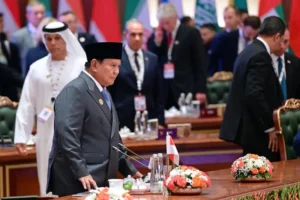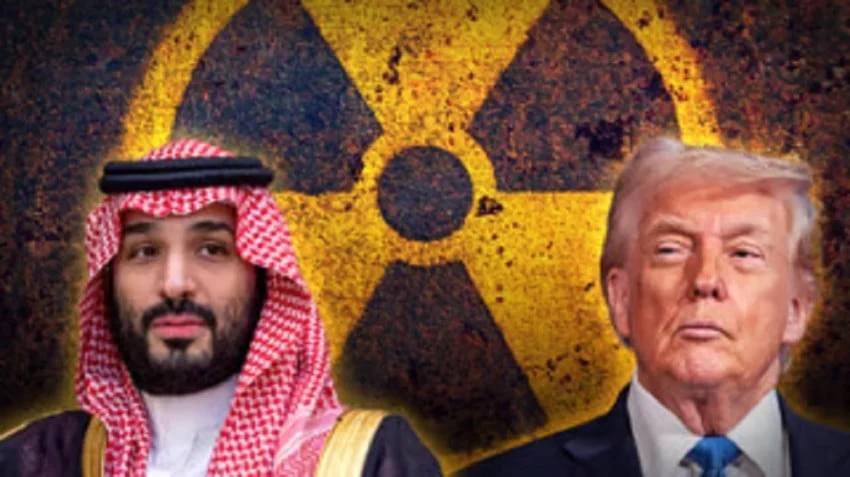
RIYADH — In a significant realignment of geopolitical strategy in the Middle East, United States President Donald Trump has offered staunch backing to Saudi Crown Prince Mohammed bin Salman (MBS) regarding ongoing military operations in Yemen. According to high-ranking diplomatic and intelligence sources familiar with the discussions, the two leaders have engaged in multiple high-level phone calls over the past few days. These conversations have established a deeply coordinated framework between Washington and Riyadh aimed at curbing the escalating influence of the Houthi movement along Yemen’s critical Red Sea coastline.
The renewed alliance comes at a precarious moment for regional security. Houthi forces, widely documented to receive substantial financial, logistical, and military backing from Iran, have made alarming territorial gains along the strategic Bab el-Mandeb strait and adjacent maritime corridors. In response to these advances, the United States has not only offered verbal encouragement but tangible operational assets, signaling a robust return to active containment strategies in the southern Arabian Peninsula.
Intelligence Sharing and Direct Military Coordination
According to exclusive insights provided to regional media outlets by sources with direct knowledge of the diplomatic exchanges, President Trump explicitly assured Crown Prince Mohammed bin Salman that the United States military would actively support Saudi operations. This assistance will manifest primarily through advanced intelligence sharing, surveillance, reconnaissance data, and precise target acquisition capabilities.
By providing crucial targeting metrics, the United States aims to neutralize Houthi missile batteries, drone launch sites, and coastal radar installations that have consistently threatened international commercial shipping and regional stability. This intelligence support is designed to multiply the effectiveness of the Royal Saudi Air Force and allied coalition strikes, ensuring that Houthi supply lines and offensive staging grounds are systematically dismantled.
The diplomatic outreach has rapidly translated into boots-on-the-ground military diplomacy. In a related development underscoring the urgency of the situation, the head of the United States Central Command (CENTCOM), Admiral Brad Cooper, has arrived in the Saudi capital of Riyadh. Admiral Cooper’s high-stakes itinerary includes a series of closed-door meetings with senior Saudi military commanders, defense ministers, and government officials. The primary agenda of these talks centers on synchronizing joint defensive operations, optimizing the exchange of real-time battlefield data, and fortifying maritime choke points against asymmetric warfare tactics.
CENTCOM has repeatedly underscored that safeguarding the freedom of navigation and maintaining unhindered maritime commerce through regional waterways remain paramount national security priorities for the United States and its allies. The Red Sea handles a significant percentage of global trade, making the security of its waters an economic imperative that extends far beyond the immediate geography of the Middle East.
Official Washington Position and Regional Strategy
Articulating the strategic framework guiding the current administration’s actions, a senior official within the Trump administration emphasized that Washington’s primary focus remains the absolute protection of vital national security interests. Chief among these objectives is the guarantee of unrestricted freedom of navigation across the Red Sea and the Gulf of Aden, while simultaneously empowering regional partners to assume a leadership role in neutralizing local security threats.
"We continue to maintain an open, rigorous, and continuous dialogue with the Kingdom of Saudi Arabia and the internationally recognized Government of the Republic of Yemen regarding long-term regional stability," the senior administration official stated, speaking on the condition of anonymity due to the sensitive nature of ongoing military planning.
This policy reflects a calculated shift toward a partnership model wherein Washington provides the technological and intelligence backbone—such as satellite surveillance, electronic warfare support, and precision-guidance systems—while regional actors execute the kinetic operations on the ground and in the air. By adopting this division of labor, the United States seeks to mitigate its own direct troop exposure while aggressively checking the expansion of Iranian proxy networks across the Arabian Peninsula.
Historical Context and Background of the Yemen Conflict
To understand the gravity of the current U.S.-Saudi coordination, one must examine the complex trajectory of the Yemeni civil war and its regional dimensions. The conflict erupted in late 2014 when the Houthi movement—formally known as Ansar Allah—launched a sweeping insurgency from their northern stronghold of Saada, ultimately capturing the capital city of Sanaa and ousting the internationally recognized government led by President Abdrabbuh Mansur Hadi.
Alarmed by the establishment of a hostile, Iran-aligned regime directly on its southern border, Saudi Arabia formed a multi-nation coalition in March 2015—Operation Decisive Storm—to roll back Houthi territorial gains and restore the legitimate government. Over the subsequent decade, the conflict devolved into a devastating humanitarian crisis, characterized by widespread food insecurity, the collapse of civil infrastructure, and immense civilian casualties resulting from both ground fighting and coalition air raids.
Despite numerous diplomatic initiatives, United Nations-brokered ceasefires, and backchannel negotiations between Riyadh and Sanaa, a permanent political settlement has remained elusive. The conflict took a dramatic global turn in late 2023 and throughout 2024, when the Houthis began launching a sustained campaign of anti-ship ballistic missiles, cruise missiles, and one-way attack drones against commercial vessels transiting the Red Sea. The group framed these maritime assaults as a direct expression of solidarity with Palestinians in the Gaza Strip, though Western intelligence agencies and maritime security analysts point out that the attacks indiscriminately targeted ships bearing little or no connection to Israel.
The resultant disruption to global supply chains forced major international shipping conglomerates to reroute their vessels around the Cape of Good Hope at the southern tip of Africa, adding weeks to transit times and driving up fuel and insurance costs globally. It was this direct economic pressure, coupled with the persistent strategic threat posed by Iran’s "Axis of Resistance," that compelled Washington and Riyadh to cement their renewed operational partnership.
Chronology of Escalation and Recent Diplomatic Pivots
The intensification of the U.S.-Saudi security architecture did not happen in a vacuum. It represents the culmination of a rapid sequence of events over the past several months:
- Late 2023 to Mid-2024: Houthi forces expand their asymmetric warfare capabilities, deploying sophisticated anti-ship weaponry and unmanned surface vessels to disrupt commercial traffic in the southern Red Sea and the Bab el-Mandeb strait, prompting initial Western naval responses such as Operation Prosperity Guardian.
- Late 2024: Diplomatic channels between Washington and Riyadh experience a revitalization following high-level political transitions in the United States, with both capitals recognizing the urgent necessity of a unified front against advancing militant factions in Yemen.
- Early Days of the Current Administration: President Donald Trump engages in direct telephone consultations with Saudi Crown Prince Mohammed bin Salman, solidifying a mutual understanding regarding intelligence sharing, targeting assistance, and regional containment.
- Recent Days: CENTCOM Commander Admiral Brad Cooper arrives in Riyadh for crucial face-to-face strategic military consultations with senior Saudi defense officials to implement the newly agreed-upon intelligence and targeting framework.
Fact-Based Analysis of Implications
The renewed alignment between the United States and Saudi Arabia carries profound implications for the geopolitical landscape of the Middle East, with both positive potentials and inherent risks.
On the strategic front, the provision of advanced American intelligence and targeting data significantly enhances the operational capacity of the Saudi-led coalition. The Houthis have historically relied on rugged terrain, decentralized command structures, and concealed mobile launchers to evade aerial detection. By integrating high-altitude surveillance, signals intelligence, and real-time satellite telemetry provided by the United States, coalition forces possess a drastically improved capability to degrade Houthi military infrastructure before offensive operations can be launched against maritime lanes or neighboring territories.
Furthermore, this visible display of mutual commitment serves as a powerful deterrent against further Iranian encroachment in the region. Tehran has long sought to project power through its network of regional proxies, utilizing groups like the Houthis to pressure international adversaries and secure geopolitical leverage. By signaling that Washington will unreservedly back its primary Gulf allies in neutralizing these threats, the alliance reinforces the credibility of Western security guarantees in the Middle East.
However, analysts also caution that intensified military coordination carries distinct risks. A significant escalation in airstrikes and kinetic engagement along the Red Sea coast could complicate fragile, ongoing localized peace talks between Riyadh and the Houthi leadership, potentially reigniting a full-scale conventional war inside Yemen. Additionally, heightened military actions often carry the inherent risk of civilian casualties and further humanitarian strain within a population already suffering from years of protracted conflict.
Moreover, Iran and its allied regional networks may perceive the expanded U.S.-Saudi cooperation as a direct provocation, leading to symmetrical or asymmetrical retaliatory actions against regional energy infrastructure, shipping assets, or diplomatic outposts. Navigating this delicate balance will require immense diplomatic finesse alongside military firmness.
Conclusion
As the geopolitical situation in the southern Arabian Peninsula continues to evolve at a rapid pace, the partnership between Washington and Riyadh has entered a critical new phase. President Donald Trump’s decisive backing of Crown Prince Mohammed bin Salman, coupled with active on-the-ground military coordination led by CENTCOM, demonstrates a clear resolve to secure vital international shipping lanes and check militant expansionism. While the path forward involves navigating complex regional tensions and inherent security risks, the immediate priority for both nations remains clear: the restoration of regional stability and the absolute defense of global maritime commerce.