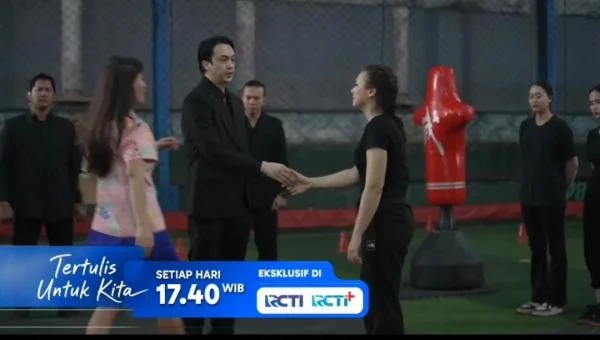
Tertulis Untuk Kita, the latest high-octane drama series airing on RCTI (Channel 28), has solidified its position as a flagship production for the network by weaving a complex narrative of betrayal, clandestine agendas, and the relentless pursuit of justice. As the series progresses, the plot delves deeper into the dark history of its central characters, moving beyond standard soap opera tropes to incorporate elements of thriller and action-oriented storytelling. The production, which premiered to significant anticipation, continues to unfold its intricate layers during today’s broadcast, promising audiences a gripping exploration of loyalty and long-buried secrets.
An Ensemble Cast and Narrative Scope
The success of Tertulis Untuk Kita is anchored by a diverse ensemble cast, blending veteran performers with rising stars in the Indonesian television industry. Stefan William takes on the lead role of Glen Raditya, a character whose moral ambiguity adds weight to the show’s core conflict. Alongside him, Angela Gilsha portrays Kencana, whose tactical intelligence serves as the primary engine for the show’s suspenseful sequences. The supporting cast, including Indra Barasco as the formidable antagonist Hardiman Kuswardono, Dimas Andrean as Bagas, Hannah Hannon as Alicia Kuswardono, Patty Patria as Rahayu, Raya Adena as Satin, Sonya Pandarmawan as Valerie, and Galih Leo as Gading, provides the necessary friction to sustain the show’s intense pacing.
The narrative architecture of the series is designed to appeal to a broad demographic, effectively balancing the emotional resonance of romantic subplots with the adrenaline of action-heavy sequences. By casting actors with established track records in both drama and action genres, the production team has ensured that the character dynamics remain compelling even during moments of exposition.
Chronology of Conflict: The Decade-Old Conspiracy
The current narrative arc centers on a critical revelation regarding a violent event that occurred ten years prior. Through a series of well-placed flashbacks, the show has begun to peel back the layers of a conspiracy orchestrated by Hardiman Kuswardono. According to the unfolding plot, Bagas was tasked by Hardiman a decade ago with the extrajudicial elimination of two individuals, Nahar and Pram.
The timeline of this incident is pivotal to the show’s current developments:
- The Incident (T-minus 10 years): Bagas executes the order to eliminate Nahar and Pram. During this operation, Rahayu witnesses the murder of Pram and becomes a victim herself, though she narrowly survives the encounter.
- The Aftermath: Following the success of the mission, Hardiman promotes Bagas to his inner circle, establishing him as his most trusted right-hand man.
- The Present Day: Kencana, having navigated a complex web of deception, successfully misdirects Bagas by posing as Gading’s biological sister. This tactical maneuver allows her to maintain a front while she investigates the "Secawan" organization. Her suspicion is further piqued by the discovery of a "101" tattoo on the hand of a character named Beno, a link she believes connects the past murders to current operations.
Strategic Implications and Plot Analysis
The current developments in Tertulis Untuk Kita serve as a masterclass in tension building. Kencana’s decision to confide her suspicions to Gading, while simultaneously demanding that the identity and location of Rahayu be kept strictly confidential, adds a layer of vulnerability to her character. This move is not merely a plot device; it underscores the precarious nature of their alliance.
From an analytical perspective, the inclusion of the "101" tattoo as a central mystery element serves as a narrative anchor, providing viewers with a recurring visual motif that connects disparate storylines. In the genre of investigative drama, such motifs are essential for maintaining audience engagement, as they provide a sense of tangible progress in an otherwise opaque mystery. The power struggle between Hardiman’s faction and the protagonists reflects the classic "truth versus power" archetype, which remains a staple of successful television dramas globally.
Industry Context and Audience Reception
The Indonesian television industry has seen a notable shift toward high-production-value dramas that emphasize narrative complexity. RCTI, as one of the country’s most prominent networks, has invested heavily in the technical aspects of Tertulis Untuk Kita, particularly in the choreography of action sequences. Unlike traditional "sinetron" productions that rely heavily on static dialogue, this series utilizes dynamic camerawork and location-based shooting to heighten the sense of urgency.
Market research indicates that audiences are increasingly drawn to content that rewards consistent viewing. By establishing a lore-heavy backstory that requires attention to detail—such as the specific history of the "101" organization and the hierarchy within Hardiman’s circle—Tertulis Untuk Kita encourages a dedicated viewership. The series has become a subject of discussion on social media platforms, where fans actively theorize about the potential outcomes of the ongoing investigation into the murder of Pram.
The Role of Character Development in Long-Form Storytelling
The character of Kencana is arguably the most dynamic figure in the current narrative. Her ability to manipulate Bagas—a man who is both highly trained and deeply dangerous—highlights her role as the series’ strategic protagonist. The tension between her need to expose the truth and her obligation to protect Rahayu creates a classic "dilemma-driven" narrative.
Furthermore, the performance of Indra Barasco as Hardiman Kuswardono provides the necessary gravitas for the antagonist. A compelling villain is essential for the success of any action-drama, and Barasco’s portrayal of a cold, calculating mastermind creates a high-stakes environment for the protagonists. The psychological warfare between Hardiman and those attempting to dismantle his influence forms the backbone of the series’ tension.
Broader Impact on Domestic Television
The success of programs like Tertulis Untuk Kita has broader implications for the creative direction of Indonesian media. By successfully merging action and drama, the show demonstrates that domestic productions can compete with international standards of pacing and narrative depth. The technical execution—from the lighting design in the suspense sequences to the pacing of the reveals—sets a benchmark for future projects in the genre.
As the series moves toward its mid-season climaxes, the focus remains on the synthesis of the past and the present. The audience is invited to solve the mystery alongside the characters, a technique that has proven highly effective in maintaining viewership numbers. The decision to air at the 17:30 WIB slot places the show in a competitive bracket, yet its distinct genre blend allows it to stand out among its peers.
Conclusion and Future Outlook
As the investigation into the shadowy Secawan organization deepens, the stakes for Kencana and her allies will undoubtedly rise. The upcoming episodes are expected to address the significance of the "101" tattoo and the potential for a confrontation between the protagonists and the Hardiman faction.
For viewers following the series, the current trajectory suggests that the truth about the events of ten years ago is merely the tip of the iceberg. As Rahayu’s safety remains compromised and Kencana continues to walk a thin line between deception and discovery, the narrative momentum is set to accelerate. Tertulis Untuk Kita continues to demonstrate that a well-crafted story, supported by a talented cast and strong production values, remains the cornerstone of successful prime-time television. With the show airing daily on RCTI, the unfolding drama remains a central focus for those interested in the evolution of modern Indonesian narrative television. The series not only offers entertainment but also serves as a reflection of the creative ambition currently driving the local entertainment sector toward more sophisticated, multi-layered storytelling.