
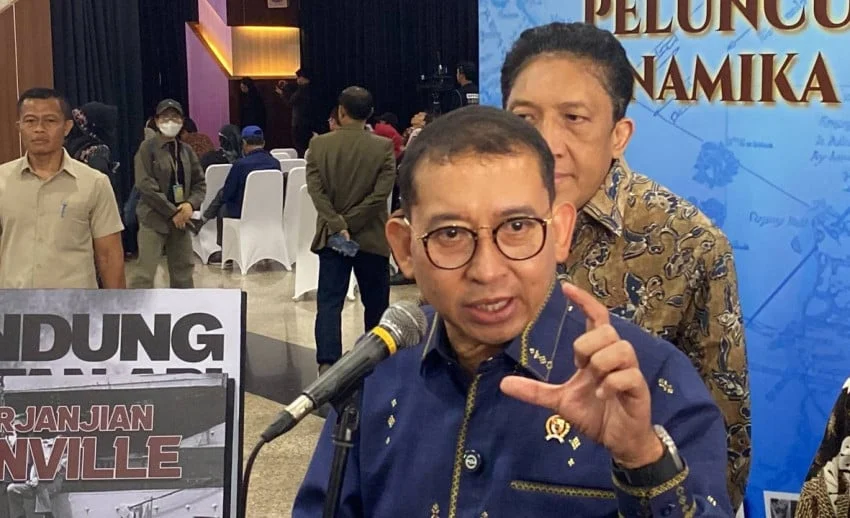
The landscape of Indonesian politics has been rocked by a sweeping cyber-security scandal following official confirmations that several high-ranking state officials, political figures, and national leaders were subjected to unauthorized and systematic electronic surveillance. Minister of Culture and senior Gerindra Party politician Fadli Zon has emerged as one of the primary victims in this sprawling criminal conspiracy. The revelations came to light after the Indonesian National Police’s Criminal Investigation Agency (Bareskrim Polri) initiated formal legal proceedings, uncovered sophisticated interception networks, and subsequently named high-profile suspects within the security apparatus.
The gravity of the situation escalated significantly when investigations revealed that the unlawful wiretapping operations were not isolated incidents targeting low-level bureaucrats, but rather extensive campaigns directed at the highest levels of the Indonesian government, including President Prabowo Subianto. As state investigators work to untangle the web of illicit surveillance, illegal data removal, and unauthorized network access, the broader implications for national security, institutional trust, and democratic governance in Indonesia have become a matter of intense public and political debate.
Fadli Zon Confirms Five-Year Surveillance Campaign
Minister Fadli Zon publicly acknowledged his victimhood via a statement published on his official account on the social media platform X, formerly known as Twitter. According to the Minister, law enforcement authorities summoned him on multiple occasions over the course of several days to provide official clarifications and detailed statements as a registered victim of illegal interception.
"A few days ago, I was asked for clarification and statements twice by the police as one of the individuals who was illegally wiretapped by parties currently under police investigation," Fadli stated in his post.
Further detailing the duration and scope of the intrusion, the Minister revealed that his primary mobile telephone number had been compromised and monitored continuously over a multi-year span. Investigators informed him that the unauthorized surveillance on his device began in 2021 and was programmed to persist through 2026. This timeline places him among the longest-targeted individuals in the entire criminal operation.
Fadli noted that the perpetrators likely targeted him due to his strategic positioning within the political hierarchy. At the time the surveillance commenced and continued, he held pivotal leadership roles within the Gerindra Party, serving concurrently as the Vice Chairman of the Board of Patrons (Dewan Pembina) and the Vice Chairman of the Central Executive Board (DPP Gerindra). The targeting of a senior political figure heading a vital government ministry underscores the deeply sensitive nature of the security breach.
Bareskrim Polri Crackdown and High-Profile Suspects
The revelations surrounding Fadli Zon’s wiretapping are part of a broader, highly sensitive criminal case currently being handled by Bareskrim Polri. The national police’s investigative arm has taken decisive action, formally naming several high-ranking active and former law enforcement officials as suspects in connection with the illegal wiretapping of President Prabowo Subianto, unauthorized data manipulation, electronic data deletion, and illegal system access.
Among the individuals designated as suspects by Bareskrim Polri are prominent figures within the Indonesian security apparatus, including former high-ranking police officials. The list of suspects encompasses former National Police Chief figures and high-ranking generals such as General Listyo Sigit Prabowo, Inspector General Eko Hadi Santoso, Inspector General Ahrie Sonta Nasution, and Inspector General Slamet Uliandi.
The handling of the suspects reflects the immense gravity and institutional sensitivity of the case. In accordance with standard detention protocols and judicial procedures for major criminal investigations, Bareskrim Polri placed three of the primary suspects—Listyo Sigit Prabowo, Eko Hadi Santoso, and Ahrie Sonta—under formal detention at the Mobile Brigade (Mako Brimob) Detention Center in Kelapa Dua, Depok. Meanwhile, Inspector General Slamet Uliandi was granted house arrest status, with law enforcement citing specific medical and health reasons for this provisional accommodation.
Broader National Security Implications and Institutional Reactions
Legal experts, constitutional scholars, and political analysts have expressed profound concern over the nature of the surveillance operations. The involvement of top-tier security personnel in intercepting the communications of a sitting head of state and key cabinet ministers transcends standard criminal infractions, entering the territory of severe national security threats.
Coordinating Minister for Legal, Human Rights, Immigration, and Corrections Yusril Ihza Mahendra provided critical legal insight into the gravity of the case. In earlier statements addressing the wider investigation, Yusril emphasized that the unauthorized interception targeting President Prabowo Subianto could not be categorized as a routine or standard intelligence-gathering operation. Instead, he characterized the sophisticated breach as an action that directly threatens the stability of the state, suggesting that the systematic nature of the surveillance and subsequent data tampering points toward activities closely aligned with subversion or acts of treason (makar).
The revelation that civilian political leaders, including Minister Fadli Zon, were monitored alongside the nation’s chief executive points to a coordinated effort to harvest intelligence on key decision-makers during sensitive political transitions. Political observers note that the 2021–2026 timeline of the wiretapping coincides with a period of intense political maneuvering leading up to the national elections and the subsequent formation of the current administration. Consequently, the illegal access to private communications channels of key coalition architects and party leaders raises critical questions about political espionage and the potential weaponization of state intelligence apparatuses for partisan or factional gains.
Chronology of the Investigation and Enforcement Actions
The unfolding scandal represents one of the most complex cyber-crime and official misconduct cases in modern Indonesian legal history. While Bareskrim Polri has maintained a rigorous and largely confidential investigative posture due to the involvement of national security assets, a clear sequence of events has emerged from official disclosures and public statements:
- Initial Detection and Forensic Audits: Cybersecurity experts and specialized internal oversight units within the state apparatus detect anomalous digital traffic, unauthorized data packet routing, and suspicious interception nodes targeting high-level communication devices used by senior state officials.
- Formal Police Reports and Case Escalation: Law enforcement agencies formally register reports concerning illegal access, electronic data destruction, and unauthorized interception (wiretapping) under the relevant provisions of the Electronic Information and Transactions (ITE) Law and the Criminal Code (KUHP).
- Summons and Victim Clarification: Victims of the illicit surveillance, including senior politicians and cabinet members such as Minister of Culture Fadli Zon, are summoned by Bareskrim investigators to verify communication logs, device histories, and provide formal victim testimony.
- Identification and Detainee Processing of Suspects: Bareskrim Polri formally names high-ranking officials—including General Listyo Sigit Prabowo, Irjen Eko Hadi Santoso, Irjen Ahrie Sonta Nasution, and Irjen Slamet Uliandi—as suspects. Executing swift legal measures, authorities secure the detention of three suspects at Mako Brimob while granting house arrest to one suspect on medical grounds.
- Ongoing Expansion of the Inquiry: Investigators continue to scour digital footprints, server logs, and communication networks to identify any secondary conspirators, domestic or foreign collaborators, and the ultimate dissemination pathways of the intercepted data.
Legal Framework and Penalties for Illegal Interception
Under Indonesian law, unauthorized wiretapping and electronic surveillance are treated as severe offenses against personal privacy and state security. The primary legal framework governing these actions is rooted in Law Number 11 of 2008 concerning Electronic Information and Transactions (UU ITE), as amended by Law Number 1 of 2024, alongside provisions within the Indonesian Criminal Code (KUHP) concerning state secrets and official misconduct.
Article 31 of the ITE Law explicitly prohibits any person or entity from intentionally and without authority or against the law intercepting electronic information and/or electronic documents within a specific electronic system belonging to another person. Violations of this provision carry stringent criminal penalties, including substantial multi-year prison sentences and heavy financial fines. Furthermore, when such illegal acts are perpetrated by law enforcement or state officials utilizing institutional authority and state-funded surveillance technology, the legal ramifications involve aggravated charges of abuse of power, breach of oath of office, and treasonous disruption of constitutional government functions.
Expert Analysis: Safeguarding State Infrastructure and Democratic Norms
Civil society organizations focusing on digital rights, transparency, and governance have weighed in on the Bareskrim investigation, pointing out the urgent need for comprehensive institutional reform within Indonesia’s intelligence and law enforcement communities. Analysts emphasize that while state-sanctioned wiretapping is occasionally permitted under strict legal frameworks for counter-terrorism, major criminal investigations, and national security defense, such measures must be subjected to rigorous judicial oversight and independent parliamentary accountability.
The fact that top security figures are currently detained on allegations of running unauthorized surveillance programs highlights a critical vulnerability in the country’s institutional check-and-balances framework. If law enforcement and intelligence tools can be subverted to monitor cabinet ministers and the head of state, the fundamental privacy rights of ordinary citizens are placed in an even more precarious position.
As the legal proceedings led by Bareskrim Polri progress, public and political stakeholders continue to demand complete transparency regarding the extent of the compromised communications, the specific technologies employed by the perpetrators, and the ultimate motives behind the multi-year surveillance campaign. For Minister Fadli Zon and other affected officials, the ongoing investigation marks a crucial step toward establishing accountability and restoring institutional integrity within Indonesia’s security architecture. The outcomes of these trials are expected to set a definitive legal precedent for how the state addresses digital espionage, abuse of official authority, and the protection of constitutional leadership in the digital era.
