
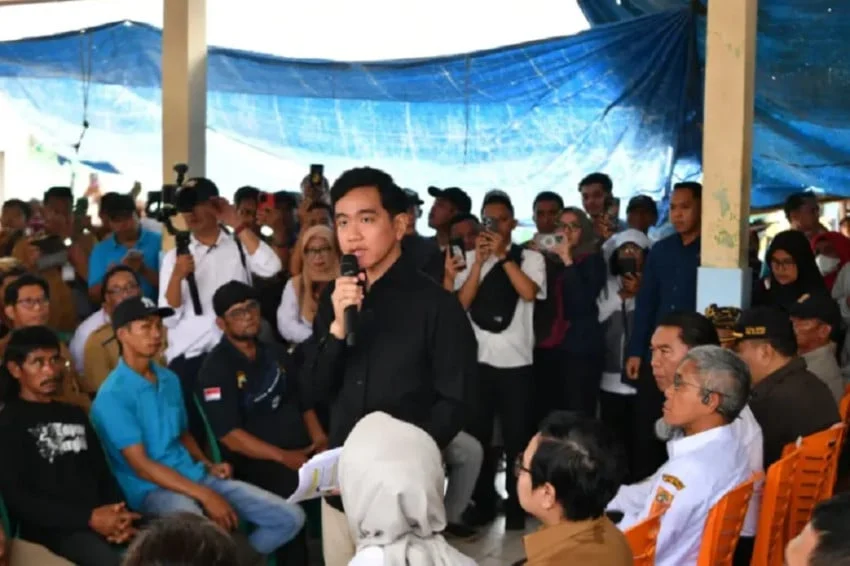
Vice President Gibran Rakabuming Raka’s recent working visit to Cilacap, Central Java, has emerged as a significant focal point in the current administration’s efforts to bridge the gap between central government policy and the grassroots economic realities of Indonesia’s coastal communities. By prioritizing direct engagement with the fishing community at the Tegalkatilayu Fish Auction Place (TPI), the Vice President sought to gain firsthand insight into the structural impediments hindering the productivity of local maritime sectors. While analysts have praised the visibility of this diplomatic gesture, the broader discourse now centers on the necessity of translating these grassroots dialogues into sustainable policy frameworks and tangible economic relief for fishermen.
Contextualizing the Visit: The Economic Vitality of Cilacap
Cilacap occupies a strategic position in the national maritime economy. As one of the largest coastal districts in Central Java, it serves as a primary hub for both industrial shipping and traditional artisanal fishing. The region is characterized by a complex ecosystem where thousands of families rely exclusively on the sea for their livelihoods. However, this sector has been historically plagued by systemic inefficiencies, including volatile fuel prices, infrastructure bottlenecks, and shifting climate patterns that affect fish migration.
The Vice President’s decision to visit this specific location on October 26, 2026, was not merely a ceremonial act but a calculated move to address the grievances of a sector that often feels marginalized by urban-centric development agendas. By choosing a fish auction site as the venue for engagement, the administration signaled a willingness to confront the realities of the "blue economy" directly.
Chronology of the Engagement
The itinerary of the Vice President’s visit was marked by a shift from high-level observation to granular problem-solving:
- Arrival and Site Inspection: Upon arrival in Cilacap, the Vice President conducted a walkthrough of the Tegalkatilayu TPI, inspecting the physical condition of the facilities and the operational workflow of the fish landing processes.
- Direct Dialogue Session: The core of the visit involved a roundtable discussion with local fishermen. During this session, participants were encouraged to present their challenges without intermediaries.
- Articulation of Grievances: Fishermen voiced concerns regarding two critical issues: the insufficiency of subsidized fuel quotas and the severe siltation of the Kaliyasa River, which has significantly hampered the ability of larger fishing vessels to navigate safely to and from the auction site.
- Assessment and Closing: Following the dialogue, the Vice President engaged with local government officials to discuss the technical requirements for dredging the river and adjusting fuel distribution logistics.
The Problem of Infrastructure and Fuel Accessibility
The grievances presented by the Cilacap fishing community reflect a national struggle. For many coastal districts, the cost of diesel fuel accounts for nearly 60% to 70% of total operational costs per fishing trip. When fuel distribution is inefficient or when quotas are restricted, small-scale fishermen are forced to either remain idle or risk operating at a financial loss.
Furthermore, the issue of siltation in the Kaliyasa River is a classic example of infrastructure neglect impeding economic growth. When river channels become shallow due to sedimentation, vessel turnaround times increase, and the risk of hull damage rises. This limits the volume of catch that can be processed at the TPI, effectively capping the income potential of the local fleet. Experts suggest that if these logistical barriers are not addressed through mechanical dredging and a revamped fuel distribution network, the economic output of the Cilacap maritime sector will remain stagnant regardless of global market prices for seafood.
Expert Analysis: The Need for Concrete Implementation
Icuk Rangga Bawono, a Professor at Universitas Jenderal Soedirman (Unsoed), has been vocal in his assessment of the Vice President’s approach. According to Professor Bawono, the "bottom-up" approach is theoretically sound, but its success will ultimately be measured by its longevity.

"We view the Vice President’s approach as highly constructive, provided that it serves as a catalyst for a multi-stakeholder implementation framework," Professor Bawono stated. He emphasized that the government must move beyond the rhetoric of "listening" and toward the establishment of a task force that coordinates between the Ministry of Marine Affairs and Fisheries, the Ministry of Energy and Mineral Resources, and local authorities.
The analytical consensus suggests that the "strategic value" mentioned in official circles is currently latent. To realize this value, the government must provide a roadmap—with clear timelines and budget allocations—to address the specific complaints voiced by the community. Failure to deliver on these expectations could lead to "engagement fatigue," where the local community becomes skeptical of political visits that yield no measurable change.
The Broader Political and Economic Implications
The visit occurs against a backdrop of wider national scrutiny regarding the current administration’s efficacy. In an era of digital transparency, the public is increasingly sensitive to the difference between performative politics and policy impact. The Vice President’s strategy of field visits and direct citizen engagement is a recognized political tool intended to build public trust and demonstrate a hands-on leadership style.
From an economic perspective, the intervention in Cilacap is part of a larger, ongoing effort to revitalize the nation’s rural economies. The maritime sector is a vital component of the government’s food security strategy, as it directly impacts the availability and affordability of protein for the population. If the issues faced by Cilacap fishermen—such as fuel scarcity and navigation hazards—are resolved, it could serve as a pilot model for similar interventions in other coastal regencies across the Indonesian archipelago.
Stakeholder Reactions and Future Outlook
Local government leaders in Cilacap have expressed optimism, noting that the Vice President’s presence has brought an unprecedented level of urgency to the local bureaucracy. Officials are now under pressure to expedite the procurement of dredging equipment and to finalize a more transparent database for fuel distribution, ensuring that subsidies actually reach the intended recipients rather than being diverted.
Meanwhile, the fishermen themselves remain cautiously optimistic. While they appreciate the acknowledgment of their plight, the prevailing sentiment is one of "wait and see." They are looking for the arrival of equipment, the implementation of more flexible fuel quota policies, and a sustained effort to maintain the river channels.
Conclusion: Measuring Success
The strategic value of Vice President Gibran’s visit to Cilacap will be defined by the upcoming quarter’s results. The event has successfully highlighted the intersection of infrastructure development, energy policy, and the livelihoods of the informal labor sector. By centering his agenda on these practical concerns, the Vice President has opened a window of opportunity to implement long-term structural reforms.
As the administration moves forward, the challenge will be to maintain this momentum. The success of this visit will not be found in the speeches given at the fish auction site, but in the operational efficiency of the port and the improved financial stability of the fishing households in the coming months. If the government can successfully integrate the feedback from the Tegalkatilayu dialogue into the national budget and operational policy, it will have established a significant precedent for how the executive branch interacts with the most vulnerable sectors of the national economy. The eyes of the public, and particularly those of the coastal communities, remain fixed on whether this strategic engagement will indeed lead to the structural changes the region so desperately requires.
