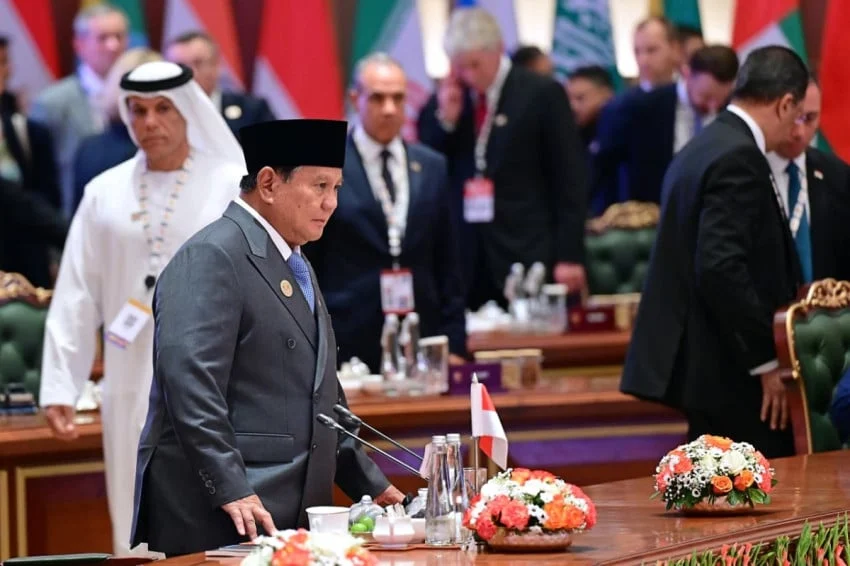
NEW DELHI — Indonesian President Prabowo Subianto delivered a powerful call for solidarity among emerging economies during the 18th BRICS Summit held in New Delhi, India, on Saturday, September 12, 2026. Addressing global leaders, President Prabowo invoked a traditional Indonesian proverb to underscore the critical importance of unity in navigating complex geopolitical and economic landscapes. His address resonated deeply with the core philosophy of the Global South, emphasizing collective resilience, historical ties, and mutual prosperity in an increasingly fragmented international order.
The Indonesian leader’s participation in the high-profile summit marks a significant diplomatic milestone for Jakarta as it actively engages with major emerging economies to shape a more inclusive multilateral architecture. By drawing parallels between contemporary geopolitical challenges and the historic 1955 Asia-Africa Conference in Bandung, President Prabowo positioned Indonesia as a consistent advocate for equitable global governance, sovereignty, and South-South cooperation.
Arrival and Official Reception in New Delhi
President Prabowo Subianto touched down in the Indian capital earlier in the week, receiving a formal and warm reception from Indian Prime Minister Narendra Modi. The bilateral greeting set a cooperative tone for the summit, highlighting the robust diplomatic and economic relations between Jakarta and New Delhi.
Upon his arrival at the venue, the Indonesian head of state was greeted by senior Indian government officials and summit organizers before proceeding to the leaders’ lounge. The diplomatic choreography surrounding the reception underscored India’s strategic outreach to Southeast Asia and underscored Indonesia’s growing stature as a pivotal middle power capable of bridging diverse economic blocs.
The summit, hosted by India under the broader theme of strengthening multilateralism for inclusive development and security, gathered heads of state, government officials, and international delegates from across the globe. Against the backdrop of shifting global supply chains, inflationary pressures, and geopolitical tensions, the presence of Indonesian leadership added substantial weight to discussions centered on economic independence and equitable trade frameworks.
Invoking the Spirit of Bandung and Indonesian Proverbial Wisdom
At the heart of President Prabowo’s address to the plenary session was a poignant reflection on solidarity, utilizing both local Indonesian wisdom and historical diplomatic milestones to articulate a universal message.
"There is an old proverb in Indonesia: ‘United we stand, divided we fall,’" President Prabowo stated to the assembly of international leaders. He emphasized that this adage extends far beyond a simple rhetorical flourish about unity; rather, it serves as a foundational operational principle for nations seeking to protect their sovereignty and economic well-being against external pressures.
Expanding on this theme, the Indonesian president linked the proverb to the historic legacy of the 1955 Bandung Conference, where newly independent nations of Asia and Africa first articulated a collective vision for self-determination, non-alignment, and mutual respect.
"This simple wisdom reflects the spirit that united the nations of the Global South, nations from Asia and Africa, decades ago in Bandung," Prabowo noted. By evoking the Bandung Spirit, the president reminded the international community of the enduring struggle of developing nations to stand on an equal footing with traditional Western powers, determine their own political and economic trajectories, and secure a greater voice in global financial and political institutions.
Background and Evolution of the BRICS Bloc
The 18th BRICS Summit takes place at a critical juncture for the intergovernmental organization. Originally comprising Brazil, Russia, India, China, and South Africa, the bloc has undergone a major expansion phase, welcoming new members and establishing itself as a formidable counterweight to traditional Western-led multilateral institutions.
BRICS economies now account for a significant portion of global gross domestic product (GDP), global trade, and population. The inclusion of new emerging market economies in recent years has amplified the collective voice of the Global South, transforming BRICS from a primarily economic acronym into a comprehensive geopolitical platform.
For Indonesia, engagement with BRICS represents a pragmatic extension of its independent and active foreign policy doctrine (politik luar negeri bebas aktif). While Jakarta has historically maintained non-alignment—avoiding formal military alliances while pursuing broad economic partnerships—its participation in platforms like BRICS allows it to advocate for reforms within international financial institutions, promote local currency settlements, and secure sustainable development financing free from restrictive conditionalities.
Chronology of the 2026 Summit Engagement
The diplomatic sequence leading up to and during President Prabowo’s address followed a structured timeline designed to maximize bilateral and multilateral outcomes:
- Arrival and Bilateral Talks (Mid-September 2026): President Prabowo arrived in New Delhi, where he held closed-door consultations with Prime Minister Narendra Modi to discuss bilateral trade, defense cooperation, and joint technological initiatives.
- Opening Plenary Session (Saturday, September 12, 2026): The official inauguration of the 18th BRICS Summit commenced with keynote addresses from founding and expanded member states, focusing on economic resilience, supply chain security, and reform of the United Nations Security Council.
- Presidential Address: President Prabowo delivered his intervention during the main plenary session, centering his remarks on Global South solidarity, historical continuity from the Bandung Conference, and the application of cooperative frameworks.
- Subsequent Multilateral Engagements: Following the plenary, the Indonesian delegation participated in roundtable discussions regarding sustainable energy transitions, digital public infrastructure, and food security initiatives.
Data and Economic Imperatives for the Global South
The context of President Prabowo’s remarks is grounded in tangible economic realities facing developing nations. According to data from international financial monitors, emerging markets and developing economies (EMDEs) continue to bear the brunt of global economic shocks, including high borrowing costs, currency volatility, and disruptions in commodity markets.
The collective GDP of the expanded BRICS bloc surpasses that of the G7 on a purchasing power parity (PPP) basis, making it an indispensable engine of global economic growth. However, despite generating a vast share of global output, developing nations have historically been underrepresented in key governance bodies such as the International Monetary Fund (IMF), the World Bank, and the Financial Stability Board.
By aligning with the broader discourses within BRICS, Indonesia aims to champion several key data-driven economic priorities:
- Financial Architecture Reform: Advocating for fairer voting shares and more responsive emergency lending facilities within international financial institutions.
- Trade Diversification: Encouraging resilient supply chains and exploring mechanisms to reduce reliance on single-currency settlement systems, thereby mitigating exposure to external monetary policy shifts.
- Sustainable Development Financing: Seeking accessible, low-interest funding options for green energy transitions that do not compromise national fiscal sovereignty.
Official Responses and Diplomatic Receptions
Reactions to President Prabowo’s address from fellow delegates and international observers have been largely positive, particularly among representatives from African and Latin American nations who share similar developmental aspirations.
Diplomatic analysts note that Indonesia’s balanced approach—engaging actively with BRICS while maintaining robust economic and diplomatic ties with Western nations—reinforces its credibility as a constructive middle power. Indian officials expressed appreciation for President Prabowo’s historical references, noting that the shared legacy of the Non-Aligned Movement and the Bandung Conference provides a strong ideological bridge between New Delhi and Jakarta.
Furthermore, economic commentators highlighted the timeliness of Prabowo’s emphasis on unity. In an era marked by rising protectionism, tariff disputes, and technological decoupling, the call for coordinated multilateral action serves as a vital reminder of the interdependence of modern economies.
Broader Impact and Geopolitical Implications
President Prabowo’s participation at the 18th BRICS Summit and his articulation of Global South unity carry several long-term implications for Indonesia’s foreign policy and global standing:
First, it signals continuity and dynamism in Indonesia’s foreign affairs under the current administration. By stepping onto the BRICS stage and addressing global leaders directly, Prabowo projects national confidence and demonstrates that Indonesia is prepared to shoulder greater responsibilities in shaping international norms.
Second, the emphasis on the Bandung Spirit anchors modern economic diplomacy in historical legitimacy. By reminding global powers of the historic struggles for equality, Indonesia reinforces the moral authority of developing nations in demanding structural reforms of the global economic architecture.
Third, practical cooperation stemming from summit dialogues could yield tangible benefits for Indonesia’s domestic development goals. Enhanced cooperation in critical minerals processing, agricultural technology transfer, and digital infrastructure development aligns directly with Jakarta’s national industrialization strategies.
As the 18th BRICS Summit concludes in New Delhi, the echoes of President Prabowo’s invocation of "Bersatu kita teguh, terpecah kita runtuh" serve as both a cautionary tale against fragmentation and an aspirational blueprint for cooperative multilateralism in the decades ahead.