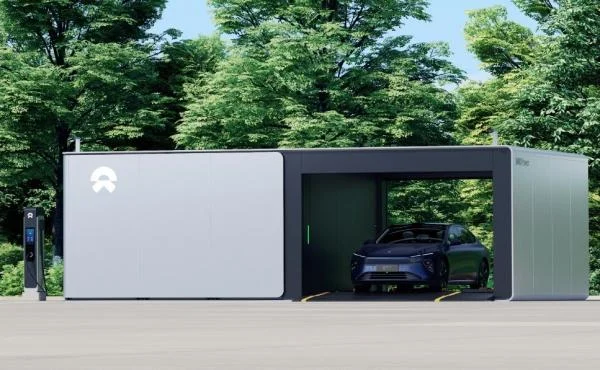
The automotive landscape in China is undergoing a seismic shift as two of its most prominent electric vehicle (EV) manufacturers, Geely Holding Group and Nio, have officially entered into a transformative strategic partnership. Announced on September 28, 2026, the collaboration focuses on the deep integration of battery swapping networks and high-speed charging infrastructure. This alliance, marked by significant cross-shareholding agreements and technology sharing, signals a concerted effort by both companies to standardize EV energy solutions and address one of the industry’s most persistent pain points: range anxiety and the prolonged downtime associated with conventional charging.
The agreement represents a multifaceted deal that involves Geely’s acquisition of a 30 percent stake in Nio Power, alongside the integration of Geely’s dedicated battery-swapping subsidiary, Yiyi Power, into the Nio ecosystem. Simultaneously, Nio will acquire a 10 percent stake in Haohan Energy, Geely’s power-charging division. By merging these critical energy assets, the companies aim to create a unified, interoperable network that will benefit not only their own product lineups but potentially the broader Chinese EV market.
Chronology and the Path to Integration
The genesis of this partnership lies in the evolving maturity of the Chinese EV market. For years, Nio has been the industry’s primary proponent of battery swapping—a system where a depleted battery pack is exchanged for a fully charged one at an automated station in less than five minutes. While Nio has invested billions in building an extensive "Power Swap" network, the cost of scaling this infrastructure has remained a significant financial burden.
Geely, a global automotive giant with a portfolio including Volvo, Polestar, and Zeekr, has pursued a dual strategy of fast charging and battery swapping, particularly through its Yiyi Power brand, which caters largely to commercial logistics fleets and ride-hailing services.
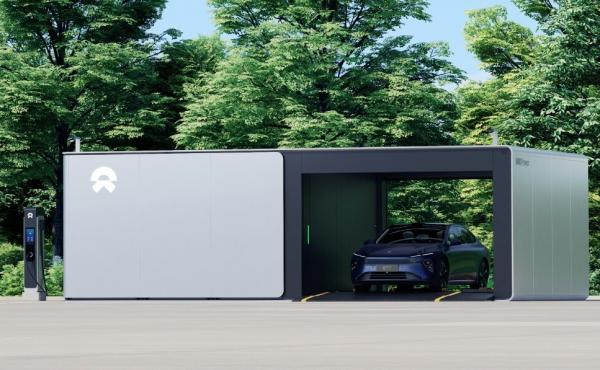
The timeline leading to the September 2026 announcement reflects months of rigorous negotiations. Sources indicate that the talks began in early 2026, driven by the Chinese government’s push for industry-wide standardization of EV components to reduce waste and improve energy efficiency. By late summer 2026, the technical teams from both Geely and Nio had completed feasibility studies regarding the interoperability of their proprietary battery architectures. With the deal now formalized, the next phase involves the physical integration of station management software and the physical retrofitting of specific vehicle models to accept compatible battery packs.
Financial Dynamics of the Partnership
The financial architecture of the deal underscores the high stakes involved for both parties. Geely Holding Group’s investment in Nio Power totals approximately 640 million yuan (roughly $94.1 million USD) in cash, supplemented by the total equity transfer of Yiyi Power. By folding Yiyi Power’s commercial operations into the Nio Power framework, the companies are creating a dominant player in the energy-as-a-service (EaaS) sector.
For Nio, the cash infusion provides much-needed liquidity to expand its footprint in lower-tier Chinese cities, where the density of charging stations remains suboptimal. For Geely, the partnership allows its diverse brands to bypass the capital-intensive process of building a proprietary swapping network from scratch, instead leveraging Nio’s established technological lead.
Furthermore, Nio’s acquisition of a 10 percent stake in Haohan Energy is equally strategic. Haohan Energy has been at the forefront of high-voltage fast-charging technology. By securing a stake, Nio gains access to Geely’s expertise in ultra-fast charging, which is essential for its luxury sedan and SUV models that utilize higher battery capacities.
Addressing the Infrastructure Bottleneck
The fundamental challenge for global EV adoption remains the "refueling" experience. While plug-in charging has become the standard in Europe and North America, China’s high-density urban environment makes home charging difficult for a significant portion of the population. Battery swapping is increasingly viewed by the Chinese government as a viable solution to this problem, provided that manufacturers can agree on a set of common standards.

The Geely-Nio deal is expected to accelerate the development of "unified battery standards." If the industry can align on dimensions, connector types, and communication protocols between the battery and the vehicle, it could lead to a future where a single swapping station serves multiple brands. This move is particularly impactful for the logistics and ride-hailing sectors, where vehicle downtime equates to direct financial loss. By integrating Yiyi Power’s commercial fleet experience with Nio’s consumer-facing network, the partnership is set to optimize energy utilization across these segments.
Industry Implications and Broader Market Impact
Analysts suggest that this collaboration is a defensive and offensive maneuver against intensifying competition from international legacy automakers and domestic rivals like BYD. As EV profit margins tighten, manufacturers are looking for ways to monetize the energy ecosystem. By controlling the infrastructure, Geely and Nio are positioning themselves to capture recurring revenue from battery-as-a-service (BaaS) subscriptions and fleet energy management services.
From a policy perspective, the partnership aligns with China’s "New Energy Vehicle" (NEV) development plan, which encourages companies to share charging and swapping resources. This reduces redundant investment and helps meet the national target of carbon neutrality by 2060. Furthermore, by pooling their R&D efforts, the two companies can focus on next-generation solid-state battery integration, a technology that is notoriously difficult to standardize across different vehicle platforms.
Official Perspectives and Future Outlook
While neither Geely nor Nio has released a detailed roadmap of the joint venture’s daily operations, industry experts note that the cultural and technical integration will be the most significant hurdle. Geely is a massive, multi-brand conglomerate, while Nio is a more agile, tech-focused startup. Bridging these corporate cultures will require careful management.
However, the potential for success is high. "This is a pivotal moment for the industry," says Dr. Wei Chen, a senior analyst at a Shanghai-based automotive consultancy. "By combining the sheer scale of Geely’s vehicle production with the sophisticated, proven swapping infrastructure of Nio, they are creating an ecosystem that is essentially ‘future-proof.’ Even if the market shifts toward faster charging in the next decade, the swap-ready architecture remains a valuable asset for commercial logistics."

The impact on the consumer will be gradual but noticeable. In the coming 12 to 18 months, owners of certain Geely-affiliated electric vehicles may begin to see their cars becoming compatible with Nio’s Power Swap stations. This effectively increases the value of their vehicles, as it expands their range of options for energy replenishment.
Conclusion: A New Era of Collaboration
The Geely-Nio partnership marks the beginning of a new era of cooperation in the Chinese EV sector. Moving away from the "siloed" development approach that characterized the early years of the electric transition, this deal underscores a shift toward cooperative infrastructure development.
As the global automotive industry watches closely, the success of this integration could serve as a blueprint for other manufacturers worldwide. Should this partnership achieve its goals of lowering costs and increasing the efficiency of energy replenishment, it will likely prompt similar alliances among global automakers in the United States and Europe.
In the immediate term, the industry awaits the first public demonstration of a Geely-branded vehicle utilizing an Nio battery-swapping station. This milestone will provide the definitive proof of concept for a partnership that has the potential to redefine how electric vehicles are powered, maintained, and driven across the world’s largest automotive market. The integration of technology, capital, and infrastructure is not just a business deal; it is a fundamental reconfiguration of the electric vehicle experience for millions of drivers.