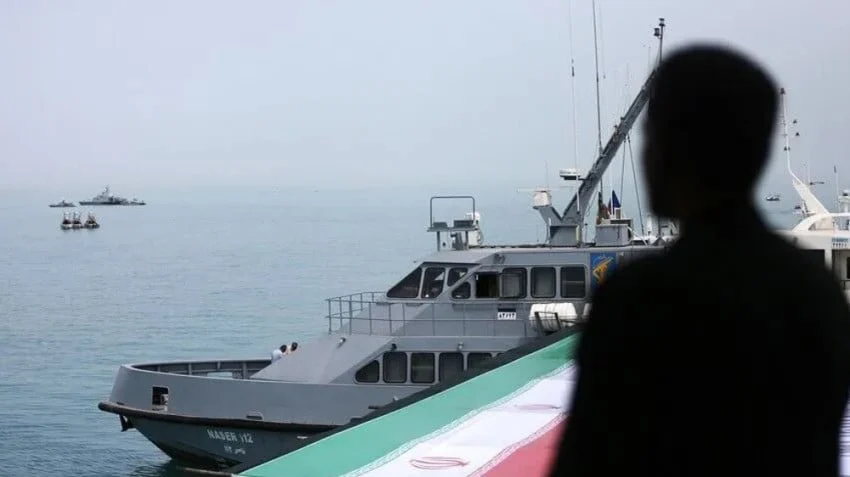
WASHINGTON — The outcome of the United States midterm elections has reverberated far beyond domestic political circles, emerging as a significant strategic validation for Tehran’s long-term maritime pressure campaign in the vital Strait of Hormuz. According to prominent political analysts, the shift in legislative power on Capitol Hill underscores a growing voter fatigue driven directly by the severe economic fallout of prolonged foreign policy confrontations in the Middle East.
The realignment of congressional power, marked by significant Democratic gains in key states traditionally viewed as political bellwethers, has dealt a severe political blow to the ruling administration’s foreign policy apparatus. As policymakers in Washington grapple with the new legislative reality, international observers are reassessing how domestic electoral outcomes in the United States continue to directly influence geopolitical dynamics, energy security, and maritime commerce in one of the world’s most critical geopolitical chokepoints.
Electoral Shift and Domestic Discontent
The sweeping changes across the legislative landscape of the United States became apparent as the final tallies from the midterm elections confirmed a major shift in congressional control. The Democratic Party successfully wrested control of key seats from the incumbent Republican party across several crucial battleground states, including Texas, South Carolina, Iowa, Michigan, and Kansas. This legislative reversal stripped the administration of its unbroken majority in both chambers of Congress, fundamentally altering the federal policymaking process and setting the stage for intensified legislative oversight.
Behind this dramatic political realignment lay profound economic anxieties among the American electorate. Surging inflation, volatile energy markets, and the tangible financial costs associated with aggressive foreign interventions coalesced into widespread voter dissatisfaction. Analysts note that everyday citizens increasingly connected their rising household expenses—particularly at the fuel pump—to escalating tensions abroad and the subsequent disruptions in global petroleum supply chains.
The frustration of the American public with prolonged economic strain provided a fertile ground for shifting political loyalties. As voters evaluated the administration’s handling of both domestic stewardship and international confrontations, the cumulative weight of economic pressures translated directly into significant electoral losses for the governing party.
Strategic Perspectives from Tehran
Weighing in on the domestic political upheaval in Washington, Mohammad Eslami, a researcher at the Department of Middle Eastern and North African Studies at the University of Tehran, offered a stark assessment of the election results during an interview with Al Jazeera. Eslami characterized the outcome as a substantial "victory" for the Islamic Republic’s calculated strategy of leveraging maritime security in the Strait of Hormuz to apply sustained pressure on the United States government.
"This is a massive development for the Iranian government. It can certainly be framed as a strategic victory," Eslami stated. He elaborated that Tehran’s adherence to a policy of regional resistance and controlled maritime friction has effectively imposed costs on Washington, which in turn fractured domestic political support for the administration’s hardline posture.
Eslami emphasized that the election results serve as a clear indicator of the American public’s mood regarding foreign entanglements. "It is evident that the American populace at large is deeply unhappy with the sacrifice of their national and economic interests by the administration in what is perceived as an unnecessary campaign against the Iranian people," he noted. From the perspective of Iranian strategists, the disruption of shipping lanes and the resulting spike in global energy prices successfully generated internal political friction within the United States, culminating in the recent electoral rebuke.
Chronology of the Strait of Hormuz Crisis
To understand the weight of the recent midterm results on international relations, it is essential to examine the historical trajectory of tensions in the Strait of Hormuz. The waterway, through which roughly a fifth of the world’s petroleum passes daily, has long served as a primary geopolitical lever for Tehran.
Historical Precedents and Escalation Timeline
- May–July 2019: A series of unexplained attacks on commercial oil tankers near the Fujairah anchorage and subsequent seizures of international vessels by Iranian Islamic Revolutionary Guard Corps (IRGC) naval forces heightened regional tensions.
- January 2020: The targeted assassination of Iranian General Qasem Soleimani in Baghdad dramatically escalated hostilities, prompting direct missile retaliations and heightened threats regarding the closure of Gulf shipping routes.
- 2021–2022: As diplomatic efforts to revive the Joint Comprehensive Plan of Action (JCPOA) stalled, Iran adopted a pattern of intermittent maritime harassment, detaining foreign-flagged tankers in response to Western economic sanctions and the seizure of Iranian oil cargo abroad.
- 2023–Present: Ongoing proxy conflicts and sustained naval posturing in the region have maintained a high-threat environment for commercial shipping, keeping global insurance premiums elevated and directly impacting international energy markets.
Throughout this timeline, the primary objective of Tehran’s maritime strategy has been to demonstrate the vulnerability of global energy supply chains to U.S.-led economic pressure campaigns. By intermittently restricting or threatening commercial navigation in the Persian Gulf and the Gulf of Oman, Iran sought to impose economic penalties on Western economies, banking on the eventual exhaustion of the American electorate.
Supporting Data and Economic Impact
The intersection of foreign policy decisions and domestic economic strain is deeply rooted in empirical data concerning energy markets and inflation. The Strait of Hormuz is a critical artery for global commerce, connecting major Middle Eastern oil producers to international markets across Asia, Europe, and North America.
According to data compiled by the U.S. Energy Information Administration (EIA), petroleum flow through the Strait of Hormuz averaged roughly 21 million barrels per day in recent years, accounting for approximately 21 percent of globally traded liquid petroleum. Any credible threat to navigation in this narrow passage—which is merely 21 miles wide at its narrowest point, with shipping lanes only two miles wide in each direction—immediately triggers speculative spikes in international crude oil benchmarks such as Brent and West Texas Intermediate (WTI).
The direct correlation between maritime tensions in the Persian Gulf and retail fuel prices in the United States has historically presented a formidable political challenge for sitting administrations. Economic studies demonstrate that sustained increases in gasoline prices disproportionately impact lower- and middle-class American households, serving as a primary driver of voter sentiment during midterm election cycles.
During periods of heightened naval friction in the Gulf, retail gasoline prices in the U.S. experienced notable surges, compounding existing inflationary pressures stemming from post-pandemic supply chain disruptions. This economic squeeze directly eroded consumer confidence and provided opposition political figures with a potent narrative regarding the tangible domestic costs of foreign policy missteps.
Official Responses and International Reactions
The outcome of the U.S. midterm elections and the subsequent commentary from academic and political circles in Tehran have prompted varied responses from international capitals and multilateral organizations.
In Washington, administration officials have sought to downplay the connection between domestic electoral outcomes and foreign policy strategies, emphasizing the enduring bipartisan commitment to maintaining freedom of navigation and protecting international commerce. A State Department spokesperson reiterated that the United States remains steadfast in its alliances in the Middle East and will continue to deter destabilizing activities by state and non-state actors in maritime domains.
However, behind closed doors, diplomatic analysts in European capitals have expressed growing concern regarding the polarization of U.S. foreign policy. European partners, who are equally dependent on stable energy flows from the Persian Gulf, have long advocated for a balanced diplomatic approach that avoids military escalation while addressing regional security concerns. The electoral shift in Congress is viewed by some European diplomats as a potential catalyst for a more introspective foreign policy debate in Washington, potentially opening doors for renewed diplomatic engagement or, conversely, resulting in legislative gridlock that hinders decisive executive action.
Meanwhile, regional powers in the Persian Gulf, including Saudi Arabia and the United Arab Emirates, are closely monitoring the political realignment in the United States. Gulf capitals have increasingly sought to balance their traditional security partnerships with Washington through independent diplomatic outreach to Tehran and other regional stakeholders, seeking to insulate their economies from the collateral damage of protracted U.S.-Iran confrontations.
Fact-Based Analysis of Broader Implications
The interpretation of the U.S. midterm results as a strategic victory for Iran highlights several critical implications for future geopolitical developments in the Middle East and beyond.
1. The Weaponization of Interdependence
Tehran’s ability to leverage global economic dependence on Middle Eastern energy supplies has demonstrated the efficacy of asymmetric deterrence. By imposing economic costs on Western consumers through maritime friction, regional actors can exploit democratic vulnerabilities, utilizing domestic electoral cycles as a mechanism to pressure opposing governments.
2. Congressional Oversight and Executive Power
The transfer of congressional control to the opposition party ensures that future foreign policy initiatives, particularly those involving military commitments or economic sanctions enforcement, will face rigorous legislative scrutiny. This dynamic limits the executive branch’s flexibility and increases the likelihood of protracted domestic debates over resource allocation and strategic priorities in the Middle East.
3. Energy Security and Market Resilience
The episode underscores the vulnerability of global supply chains to localized geopolitical disputes. As long as the Strait of Hormuz remains a flashpoint, international energy markets will price in a persistent "geopolitical risk premium," ensuring that consumers worldwide remain susceptible to price shocks driven by maritime security dynamics.
4. Future Diplomatic Calculus
For the international community, the unfolding situation suggests that future containment or negotiation strategies must account for the domestic political resilience of target nations. While economic sanctions remain a primary instrument of Western foreign policy, their unintended domestic blowback—manifested through electoral shifts and voter dissatisfaction—remains a significant variable that can alter strategic outcomes on the ground.
As the new congressional session convenes and the geopolitical landscape continues to evolve, the interplay between American domestic politics and Middle Eastern maritime security will remain a central focus of international relations, shaping the strategic calculus of both Washington and Tehran for years to come.