
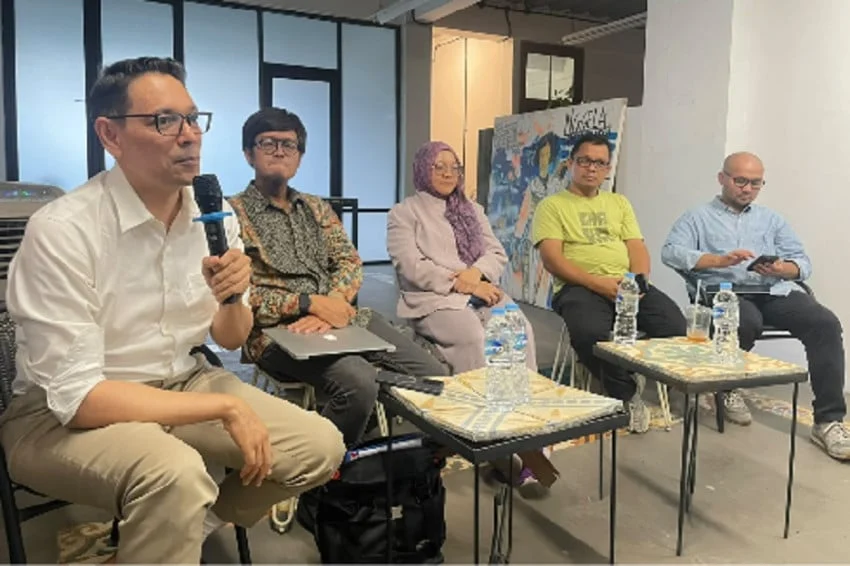
As the city of Tangerang Selatan (Tangsel) commemorates its 18th anniversary, a critical dialogue has emerged regarding its trajectory, governance, and long-term sustainability. The discourse, centered on the provocative theme of whether the city is operating on "autopilot," was facilitated by Malika for Urban Studies on Friday, November 20, 2026. This gathering served as a crucible for urban planners, policy experts, academics, and government representatives to dissect the efficacy of local governance since the city’s inception as an autonomous region in 2008.
The Genesis and Evolution of Tangerang Selatan
Tangerang Selatan was officially established on November 26, 2008, following the enactment of Law Number 51 of 2008, separating it from the Tangerang Regency. Since its formation, the city has undergone a rapid metamorphosis from a suburban extension of Jakarta into a self-contained urban powerhouse. Characterized by high-density residential developments, premium commercial zones, and a burgeoning service sector, Tangsel has positioned itself as a magnet for the middle-to-upper-class population.
However, the rapid influx of private property developments has created a bifurcated urban landscape. On one hand, the city boasts master-planned communities with robust infrastructure; on the other, older, organic neighborhoods often struggle with inadequate drainage, waste management challenges, and fragmented connectivity. This duality is precisely what prompted the "autopilot" critique—a term suggesting that while the city grows due to market forces and private sector investment, the strategic hand of government planning may be lagging behind the pace of spontaneous development.
Assessing the Fiscal Capacity and Governance
Armand Suparman, Executive Director of the Committee for Monitoring the Implementation of Regional Autonomy (KPPOD), provided a sobering analysis of the city’s fiscal standing. According to current financial data, Tangerang Selatan maintains a strong fiscal capacity compared to many other regions in Indonesia. Its high reliance on local revenue (PAD), largely driven by property taxes and business licensing, provides the administration with a significant "war chest" to fund public services.
"Tangsel possesses the economic capital and fiscal leverage to set its own development priorities," Suparman noted during the discussion. "However, the existence of strong fiscal capacity is not an end in itself. It must be translated into measurable outcomes that the public can actually feel."
Suparman outlined four critical pillars for effective local governance:
- Public Service Delivery: Improving the accessibility and quality of health, education, and administrative services.
- Infrastructure Development: Moving beyond superficial beautification to address systemic issues such as flood mitigation and road connectivity.
- Accountability: Ensuring that budgetary allocations are transparent and shielded from vested interests.
- Oversight and Control: Strengthening the internal mechanisms that prevent corruption and ensure administrative efficiency.
Addressing the "Autopilot" Stigma
The term "autopilot" implies that the city’s development is driven primarily by external market forces rather than proactive, government-led strategic planning. Critics argue that when local government interventions are reactive rather than preventive, the city risks losing its unique identity and becoming a collection of isolated, gated enclaves.
The local government has been quick to push back against this narrative. Representatives from the Tangerang Selatan municipal government have emphasized that the administration is not only open to public scrutiny but is actively engaging in experimental solutions to urban problems. A prime example is the recent pilot project involving floating rice cultivation in the Tandon Ciater reservoir. While seemingly niche, this project highlights the city’s intent to explore sustainable urban farming and water management—areas where the government is attempting to steer the city’s development rather than letting it drift.
The Challenge of Inclusive Urban Planning
A central point of contention raised during the Malika for Urban Studies forum was the disparity between planned residential areas and organic kampungs. Forina Lestari, a lecturer and researcher at the Department of Urban and Regional Planning at the Institut Teknologi Indonesia (ITI), underscored the importance of integration.
"Integration between zones is the primary work cut out for the city," Lestari stated. "If we have a city that functions well only for those living in master-planned communities, we have failed the mission of equitable urban development."
The "balanced growth" model suggested by experts calls for a shift in urban policy. Instead of viewing the city as a series of disparate real estate projects, the administration must prioritize "social infrastructure." This includes public transport integration, shared public spaces, and the revitalization of drainage systems that cross both modern estates and traditional neighborhoods. The goal is to move from a city that grows by coincidence to a city that grows by design.
Institutional Risks: The Shadow of Dynastic Politics
A significant portion of the debate touched upon the political economy of the region. Armand Suparman warned that the health of a city is inextricably linked to the openness of its political system. He cautioned against the consolidation of power through familial or oligarchic networks, which he argued could stifle public participation.
"We must ensure that there are no barriers to entry for civil society," Suparman remarked. "If the processes of planning, budgeting, and policy-making are captured by a narrow elite, the public’s needs will inevitably be sidelined in favor of private profit motives."
The concern is that when a local government becomes insular, the feedback loops between the citizenry and the bureaucracy break down. This is the stage at which a city truly enters "autopilot"—where the bureaucracy operates to maintain the status quo rather than innovating for the public good.
Implications for the Next Decade
As Tangerang Selatan enters its 19th year, the implications of these discussions are clear. The city stands at a crossroads. To avoid the pitfalls of unplanned growth, the following shifts are necessary:
- Data-Driven Governance: Utilizing the city’s strong fiscal base to invest in digital public service platforms that allow for real-time tracking of infrastructure projects.
- Decentralized Planning: Empowering neighborhood-level (RW/RT) organizations to provide input on local development, ensuring that infrastructure investments in organic settlements receive as much attention as those in commercial hubs.
- Environmental Resilience: Transitioning from reactive flood management to a proactive "sponge city" concept, integrating water catchment areas into the city’s core architectural identity.
- Enhanced Connectivity: Bridging the gap between the various clusters in the city through improved public transportation, reducing the reliance on private vehicles, and lowering the carbon footprint of the urban center.
Conclusion: A Call for Active Citizenship
The forum at Malika for Urban Studies served as a timely reminder that a city is more than its skyscrapers and revenue statistics; it is a social contract. The "autopilot" discourse is not merely a critique of the current administration but a call to action for all stakeholders. For Tangerang Selatan to evolve from a rapidly expanding suburb into a truly sustainable, livable, and equitable urban center, the government must move from a role of passive facilitator to active orchestrator.
The next few years will be decisive. With the demographic shifts and the increasing pressure of climate change, the city’s ability to move beyond its historical development patterns will define its legacy. As the discussions concluded, the consensus among experts was unanimous: growth is inevitable, but progress is a choice. Whether Tangerang Selatan continues on its current path or takes the helm of its own future depends on the robustness of its institutions and the vigilance of its citizens. The city has the resources; now it must prove that it has the vision to move from "autopilot" to a well-navigated future.
