
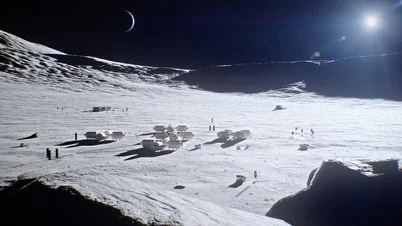
The United States National Aeronautics and Space Administration has officially unveiled an ambitious suite of initiatives designed to accelerate the establishment of a sustainable human presence on the lunar surface. At the center of this strategic roadmap is the introduction of a nuclear-powered exploration vehicle known as the PROMISE rover, a technological leap that addresses one of the most formidable challenges of lunar exploration: surviving the protracted and frigid lunar night. The announcement, made during a high-profile aerospace exhibition at the Kennedy Space Center, underscores a broader paradigm shift in space exploration, moving away from short-term exploratory sorties toward the systematic construction of permanent off-world infrastructure.
As space agencies worldwide look toward Mars and deep-space destinations, the Moon has increasingly become the designated proving ground for long-term habitation. The latest disclosures from NASA outline a comprehensive blueprint that integrates power generation, resource utilization, and advanced mobility. By harnessing nuclear energy for surface mobility, the agency aims to unlock permanently shadowed regions of the Moon that have remained largely inaccessible through traditional solar-powered systems.
Strategic Blueprint for Permanent Lunar Infrastructure
The strategic vision presented by leadership at the Kennedy Space Center emphasizes infrastructure development as the primary prerequisite for sustained human activity. For decades, lunar exploration was constrained by the limitations of chemical propulsion and solar power arrays, which restricted operations to sunlit areas and short-duration missions. The new framework introduced by NASA integrates power generation, heavy mobility, and in-situ resource utilization into a cohesive operational ecosystem.
According to agency officials, the overarching goal is to ensure that when human crews return to the lunar surface under the Artemis program, they will arrive to find a fully functioning base camp capable of supporting extended stays. This includes automated life-support systems, radiation shielding, communication relays, and reliable power grids. The deployment of the PROMISE rover represents the tip of the spear for this infrastructure drive, specifically engineered to operate in the harshest environments on the lunar body.
Engineering the PROMISE Rover: Overcoming the Lunar Night
The technological centerpiece of the newly announced initiative is the PROMISE rover, an advanced surface exploration vehicle tailored for the unique topological and environmental challenges of the lunar South Pole. Unlike previous generations of planetary rovers that relied primarily on solar panels, PROMISE is equipped with a compact nuclear fission power source. This design choice is critical for surviving the lunar night, a punishing two-week period of absolute darkness where surface temperatures plummet to cryogenic extremes and solar generation becomes impossible.
The rover’s nuclear propulsion and thermal management systems allow it to continuously generate electricity and heat, safeguarding its onboard electronics from the deep freeze of the lunar night. This continuous operational capability is essential for exploring the Moon’s permanently shadowed regions—craters and depressions at the South Pole where sunlight never reaches and where vast reserves of water ice are believed to be trapped.
Scientific Payload and Resource Extraction Capabilities
Beyond its mobility and power systems, the PROMISE rover carries a sophisticated suite of scientific instruments designed to analyze the lunar regolith and map subsurface resources. The vehicle features a specialized rotary percussion drill capable of penetrating up to one meter beneath the surface. This drilling apparatus will extract pristine core samples of dust and rock, providing researchers with vital data regarding the composition of the lunar crust and the history of volatile compounds in the solar system.
In addition to the drill, the rover is outfitted with high-resolution multispectral cameras, advanced thermal sensors, and integrated spectrometers. These instruments will work in tandem to identify, quantify, and map deposits of water ice and other hydrogen-bearing compounds. Confirming the accessibility and abundance of these resources is a foundational requirement for the Artemis architecture, as local water extraction could drastically reduce the mass—and financial cost—of supplies that must be transported from Earth, serving both as drinking water for astronauts and as a precursor for rocket propellant production.
Chronology and Development Milestones
The unveiling of the PROMISE rover is the culmination of years of iterative research and development within NASA’s Science Mission Directorate and the Space Technology Mission Directorate. The timeline of lunar exploration has accelerated dramatically over the past decade, shifting from orbital reconnaissance to surface-level investigations.
Initial concept studies for nuclear surface power began taking shape in the late 2010s, following successful demonstrations of small fission reactor designs on Earth. By 2021, NASA had issued formal contracts to aerospace contractors to mature surface power system designs. Throughout 2023 and 2024, subsystem testing for mobility and thermal management in vacuum chambers simulated the extreme environment of the lunar poles.
The formal announcement on November 7 marks the transition from theoretical engineering to hardware integration and testing. Over the next several years, the PROMISE rover will undergo rigorous environmental testing—including vibration, thermal vacuum, and radiation exposure trials—to ensure structural integrity and operational reliability before its eventual integration into a scheduled lunar landing manifest later this decade.
Implications for International Space Policy and Commercial Partnerships
The introduction of nuclear-powered mobility assets on the Moon carries significant geopolitical and commercial implications. As spacefaring nations race to establish footholds near the lunar South Pole—where strategic resources like water ice are concentrated—the ability to maintain continuous operations during the lunar night provides a distinct strategic advantage. Nuclear power independence ensures that operations are not restricted by geographic latitude or seasonal lighting conditions, allowing for uninterrupted scientific and industrial output.
Furthermore, the development of these systems relies heavily on public-private partnerships. Aerospace manufacturing firms, specialized robotics companies, and nuclear technology developers are deeply integrated into the supply chain for the PROMISE project. This collaborative model not only distributes the financial and technical burden but also stimulates commercial innovation, paving the way for a burgeoning lunar economy centered on resource extraction, logistics, and surface infrastructure maintenance.
Technical Challenges and Safety Protocols
Deploying nuclear technology in space is subject to stringent safety reviews and international regulatory frameworks. NASA, in coordination with the Department of Energy and other federal bodies, adheres to rigorous safety protocols to ensure that radioactive materials are contained under all foreseeable accident scenarios during launch, transit, and landing.
The fission systems utilized in modern space applications are engineered to remain inert during launch, activating only once they reach the vacuum of deep space or the surface of a celestial body. This design prevents any accidental release of radiological material in the event of an anomaly during the atmospheric ascent phase. Additionally, thermal dissipation and radiation shielding are optimized to protect sensitive onboard scientific instruments and ensure that the surrounding environment remains undisturbed outside the immediate operational footprint of the vehicle.
Broader Impact on Deep Space Exploration
The methodologies and technologies validated through the PROMISE rover mission will serve as a critical stepping stone for future crewed missions to Mars. The Martian environment presents similar challenges, including severe dust storms that can obscure solar panels for months at a time, as well as extreme cold cycles. Mastering nuclear-electric propulsion and surface power generation on the Moon provides engineers with invaluable operational data that will directly inform the design of Martian habitats and exploratory rovers.
As NASA and its international partners continue to lay the groundwork for a sustainable human presence beyond Earth orbit, the integration of nuclear power into lunar logistics marks the definitive end of the Apollo-era approach of "flags and footprints." Instead, the focus has shifted toward permanent, resilient infrastructure designed to withstand the harshest environments of the solar system, opening a new chapter in the history of human spaceflight.
