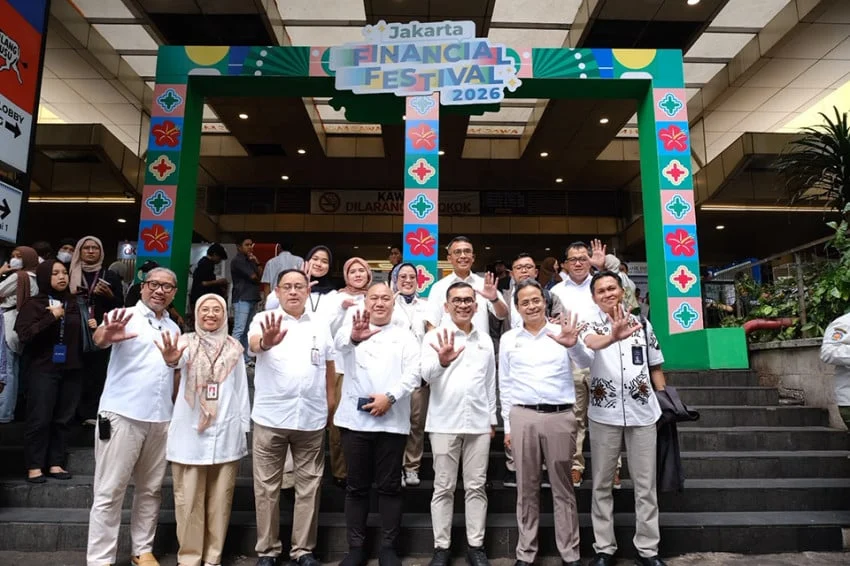
The inaugural Jakarta Financial Festival (FinFest) 2026, held at the iconic Blok M Square in South Jakarta, concluded its two-day run on October 24, 2026, marking a significant milestone in the capital city’s efforts to accelerate financial literacy and inclusion. The event, which served as the regional centerpiece for the national Financial Inclusion Month, saw a convergence of regulatory bodies, financial institutions, and the general public, effectively bridging the gap between complex financial services and everyday citizens. By the time the final booths dismantled their displays on Saturday evening, the festival had successfully registered over 7,500 attendees and facilitated the opening of more than 1,000 new financial accounts, signaling a robust appetite for formal financial integration among Jakarta’s diverse population.
A Strategic Alliance for Financial Empowerment
FinFest 2026 was not merely a public exhibition but a coordinated strategic initiative born from a multi-stakeholder partnership. The event was organized through the collaborative efforts of the Jakarta Provincial Government, the Financial Services Authority (OJK), Bank Indonesia, and the Communication Forum for the Financial Services Industry (FKIJK) of DKI Jakarta. The primary objective behind this coalition was to dismantle the barriers to entry for financial products and services, particularly for the underbanked and unbanked segments of the urban populace.
The selection of Blok M Square as the venue was deliberate. As a high-traffic transit hub and a cultural landmark in South Jakarta, the location allowed organizers to capture a broad demographic, ranging from students and young professionals to small business owners and families. This accessibility was central to the event’s mission: to bring the "bank to the people" rather than expecting the public to navigate the often-daunting bureaucracies of traditional financial institutions.
Chronology of the Two-Day Financial Marathon
The festival officially commenced on the morning of October 23, 2026, with an opening ceremony that underscored the urgency of digital financial literacy in an increasingly cashless society. The first day was characterized by intense engagement, featuring a series of workshops, seminars, and interactive sessions designed to demystify topics such as investment portfolios, micro-insurance, and digital banking security.
Throughout the morning of the second day, October 24, the momentum intensified. Industry experts held "Financial Health Check-ups," where attendees could receive personalized consultations regarding their credit profiles, savings strategies, and debt management. The afternoon sessions shifted toward interactive digital simulations, allowing participants to test various banking applications and investment platforms in a controlled, educational environment. The event concluded with an awards ceremony that recognized the institutions that had most effectively engaged with the public, capping off a weekend that proved to be both a social and an educational success.
Statistical Breakdown and Economic Impact
The quantitative success of FinFest 2026 provides a clear metric for the event’s impact on local financial inclusion. According to official reports released by the OJK, the festival generated the following key performance indicators:
- Total Attendance: 7,500+ visitors, exceeding initial turnout projections.
- New Account Openings: 1,000+ accounts, spanning savings, digital wallets, and investment securities.
- Total Capital Mobilization: Over IDR 5 billion in total funds deposited or committed during the two-day period.
These figures are particularly significant given the current economic climate in Indonesia, where digital transformation is rapid, yet gaps in financial knowledge persist. The collection of IDR 5 billion in funds indicates that when citizens are provided with trusted environments and face-to-face guidance, they are more willing to transition from informal cash-based economies to formal, regulated financial systems.
Official Perspectives and Institutional Reflections
Edwin Nurhadi, Head of OJK Jabodebek, expressed his satisfaction with the event’s outcome during the closing session. "The level of participation we witnessed over the last forty-eight hours is a testament to the public’s eagerness to engage with financial services, provided the information is accessible and transparent," Nurhadi stated. He emphasized that the success of the 2026 edition serves as a pilot model for future regional outreach programs.
The OJK’s strategy moving forward is rooted in the "sustainability of inclusion." Nurhadi noted that the success of the festival would be hollow if the momentum was not sustained through long-term educational follow-ups. He called upon the FKIJK and other industry participants to maintain the connections established during the festival, ensuring that the 1,000+ new account holders receive continued support and education as they navigate their new financial journeys.
Excellence in Public Education: The Case of Bank Jakarta
A notable highlight of the closing ceremony was the recognition of Bank Jakarta, which received dual honors as the "Most Educational Booth" and the "Most Attractive Booth." This achievement was largely attributed to the bank’s departure from traditional marketing tactics. Instead of focusing solely on promotional campaigns, Bank Jakarta utilized immersive gamification techniques to explain complex financial concepts like compounding interest and inflation.
By creating an environment where complex products were explained through simplified, interactive modules, Bank Jakarta set a high standard for how financial institutions can engage with the public. Industry analysts noted that such approaches are essential for rebuilding trust in the banking sector, particularly among younger generations who value transparency and experiential learning over legacy brand reputation.
The Broader Implications for Jakarta’s Financial Landscape
The success of FinFest 2026 has broader implications for the national agenda on financial literacy. Currently, the Indonesian government aims to increase the national financial inclusion index, and events like these are vital instruments in that effort. By aggregating multiple services in one location, the event reduced the "transaction cost" for consumers—not just in monetary terms, but in terms of time and effort required to research and compare financial products.
Furthermore, the integration of academic and industry perspectives—as seen in concurrent events like the collaboration between MNC University and MNC Sekuritas—demonstrates a holistic approach to the problem. By targeting university students, the festival addressed the next generation of investors and consumers, ensuring that financial literacy is treated as a foundational life skill rather than an afterthought.
Future Outlook and Sustainability
As the dust settles on the inaugural FinFest 2026, the organizers are already looking toward the next iteration. The challenge remains to scale these efforts while maintaining the quality of interaction that made the Blok M Square event so successful. There is already talk of expanding the festival’s duration or rotating the venue to other high-density areas within the Jabodebek region to ensure equitable access.
Moreover, the data collected during the event—specifically the types of products that saw the highest demand—will likely inform future policy decisions by the OJK and Bank Indonesia. If the demand for digital savings and micro-investment products remains high, regulators can focus on creating safer, more standardized frameworks for these specific sectors.
Ultimately, FinFest 2026 has proven that the appetite for financial growth in Jakarta is robust. The festival served as a critical touchpoint, proving that when barriers are removed and financial institutions adopt a more empathetic, educational approach, the public is more than ready to participate in the formal economy. As Jakarta continues its trajectory toward becoming a global financial hub, initiatives like these will remain the bedrock of a stable, inclusive, and prosperous society. The success at Blok M Square is not just a win for the organizers; it is a significant step forward for every citizen who took the first step toward financial independence this weekend.