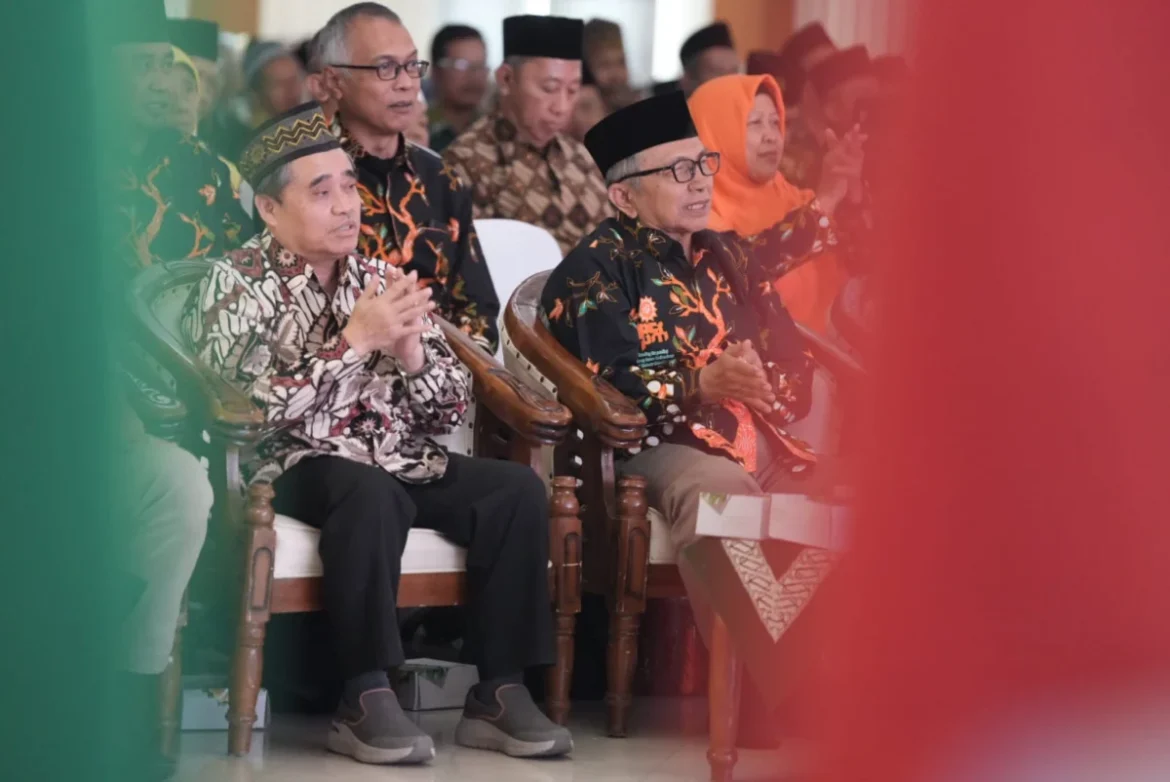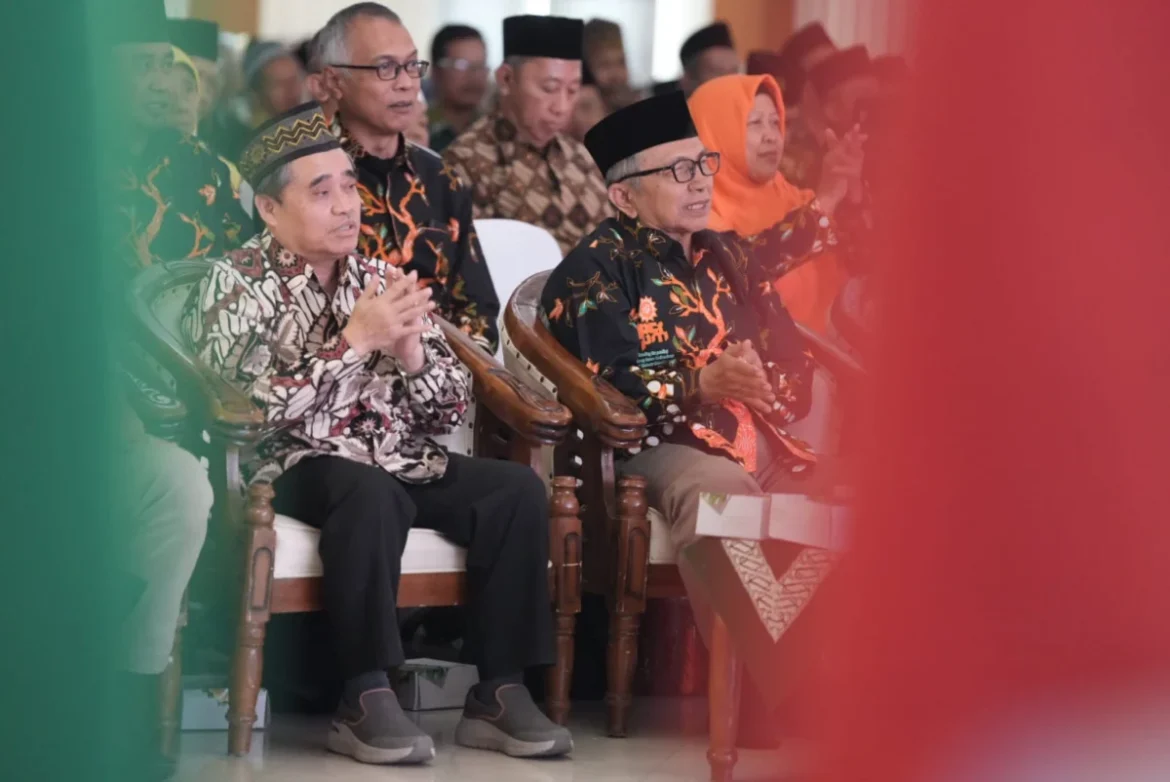
The esteemed Chairman of the Central Leadership (PP) Muhammadiyah, Ahmad Dahlan Rais, was recently revealed to possess the honorific title of "Gus," a designation typically reserved for descendants of revered Islamic scholars and spiritual leaders in Indonesia. This significant revelation occurred during the Kick Off CRM Award VII ceremony held at Universitas Muhammadiyah Gombong (Unimugo) in Kebumen Regency on Sunday, July 19, 2020. The announcement, made by Kiai Tafsir, Chairman of the Regional Leadership of Muhammadiyah (PWM) Central Java, underscored the deep historical and spiritual lineages that continue to influence and shape the leadership within one of Indonesia’s largest and most influential Islamic organizations.
Kiai Tafsir elaborated on the basis for Ahmad Dahlan Rais’s "Gus" title, explaining that it stems from his direct lineage as a zuriyah, or grandchild, of Mbah Kiai Wiriosoedarmo, a highly respected Islamic scholar hailing from Gombong. This ancestral connection provides a profound insight into the spiritual heritage that underpins the Rais family’s involvement in Islamic leadership. "Pak Dahlan is a Gus; the name of his grandfather was even immortalized as the name of an Islamic boarding school: Pondok Pesantren Wiriosoedarmo Gombong," Kiai Tafsir stated, emphasizing the enduring legacy of Mbah Kiai Wiriosoedarmo.
In response to Kiai Tafsir’s good-natured disclosure, Ahmad Dahlan Rais acknowledged the revelation with characteristic humility and wit. He playfully remarked that, in addition to being a "Gus," he also considered himself a "Wali"—a term that, in its spiritual context, denotes a saint or guardian, but which he humorously reinterpreted. "Around dozens of years ago, I was indeed still a Gus, still ‘bagus’ (good), which is why Bu Dahlan agreed to marry me," he quipped, drawing laughter from the audience. He then expanded on his "Wali" status, stating, "And what about ‘wali’? Oh, I am called ‘wali’ by many!" He proceeded to list various everyday roles that carry the "wali" designation, including wali murid (parent/guardian of a student), wali kelas (homeroom teacher), wali santri (guardian of a pesantren student), and other responsibilities entrusted to him, showcasing his grounded perspective despite his prominent position.
Understanding the Significance of "Gus" and "Wali" in Indonesian Islamic Context
The terms "Gus" and "Wali" carry immense cultural and religious weight within the diverse landscape of Indonesian Islam. "Gus" is an honorific title predominantly used in Javanese and other traditional Islamic communities, particularly within the pesantren (Islamic boarding school) tradition. It signifies a young man who is a direct descendant of a kiai (senior Islamic scholar or spiritual leader), implying not only noble lineage but also an inherited potential for religious knowledge, leadership, and moral guidance. Bearing the title "Gus" often comes with a certain level of societal respect and expectation, reflecting the deep reverence for scholarly and spiritual ancestry. For a prominent Muhammadiyah figure like Ahmad Dahlan Rais to be identified as a "Gus" highlights the intricate connections between different streams of Islamic thought in Indonesia, as Muhammadiyah is generally known for its modernist, reformist approach that often de-emphasizes hereditary spiritual authority in favor of merit-based scholarship and organizational leadership. However, the recognition of lineage, even within Muhammadiyah, underscores the enduring cultural value placed on zuriyah—the continuity of scholarly families.
Conversely, "Wali" can have multiple meanings. In its highest spiritual sense, it refers to an Islamic saint, someone believed to be close to God and possessing special spiritual powers. The legendary "Wali Songo" (Nine Saints) who spread Islam in Java are prime examples. However, in everyday Indonesian usage, "wali" also means guardian or trustee. Ahmad Dahlan Rais’s humorous take on the title, listing roles like wali murid or wali kelas, deftly navigated the spiritual profundity of the term with its more mundane, yet equally responsible, connotations. This clever wordplay served to both acknowledge his revered ancestry and reinforce his identity as a humble servant and leader.
The Legacy of Mbah Kiai Wiriosoedarmo and the Gombong Connection
The revelation of Ahmad Dahlan Rais’s lineage brings to the forefront the significant contributions of his grandfather, Mbah Kiai Wiriosoedarmo. Born in Karangmojo, Mbah Kiai Wiriosoedarmo was not merely a revered scholar but also played a pivotal role as one of the early founders and developers of Muhammadiyah in Gombong during its nascent stages. This historical detail is crucial, as it connects the current leadership directly to the foundational era of Muhammadiyah, an organization established in 1912 by K.H. Ahmad Dahlan with the vision of purifying Islamic practice from syncretic influences, promoting modern education, and engaging in social welfare.
Mbah Kiai Wiriosoedarmo’s efforts in Gombong were instrumental in localizing Muhammadiyah’s reformist agenda, adapting its principles to the regional context while maintaining fidelity to the broader movement’s goals. His establishment of Pondok Pesantren Wiriosoedarmo Gombong stands as a tangible testament to his commitment to Islamic education and community development. The fact that his name continues to grace an educational institution signifies the enduring impact of his scholarship and dedication. Ahmad Dahlan Rais, expressing deep pride, stated, "Of course, this is always a source of pride for us," reflecting the profound respect for ancestral contributions within the Muhammadiyah framework. This legacy reinforces the idea that Muhammadiyah’s strength is built upon generations of dedicated individuals who have contributed to its growth and influence across the archipelago.
The Context: CRM Award VII at Unimugo
The backdrop for this revelation was the Kick Off CRM Award VII, an event hosted by Universitas Muhammadiyah Gombong (Unimugo). While the acronym "CRM" typically stands for Customer Relationship Management in the corporate world, within the context of Muhammadiyah and its educational institutions, it likely refers to "Community Relationship Management" or a similar internal recognition program focused on organizational excellence, public service, and community engagement. Such awards are vital for fostering a culture of continuous improvement and acknowledging outstanding contributions within the vast Muhammadiyah network.
Unimugo itself is a crucial part of Muhammadiyah’s extensive educational infrastructure, which includes hundreds of universities, schools, and hospitals across Indonesia. As an institution of higher learning, Unimugo plays a critical role in educating future leaders and professionals, grounded in Islamic values and Muhammadiyah’s progressive vision. Hosting the CRM Award VII underscores Unimugo’s commitment to excellence and its role as a hub for organizational activities and intellectual discourse within the Muhammadiyah movement. The event likely served as a platform to launch the seventh iteration of the award, setting guidelines, inspiring participants, and celebrating past achievements, all while reinforcing the organizational values that Muhammadiyah champions.
Another "Gus" Revealed: Mohammad Yahya Fuad and Kiai Abu Dardiri’s Enduring Influence
The event also brought to light another significant lineage. Kiai Tafsir similarly bestowed the title of "Gus Fuad" upon Mohammad Yahya Fuad, the Chairman of the Pimpinan Cabang Muhammadiyah (PCM) Gombong. This designation acknowledges Fuad’s direct descent from Kiai Abu Dardiri, another colossal figure in Indonesian Islamic history.
Kiai Abu Dardiri’s legacy is particularly profound. He is celebrated as an ulama pejuang, a scholar-fighter, who played an instrumental role as one of the principal proponents for the establishment of the Ministry of Religious Affairs (Kementerian Agama Republik Indonesia). This institution, founded in 1946, has been crucial in managing religious affairs, education, and interfaith harmony in Indonesia, a nation with a vast Muslim majority and significant religious diversity. Abu Dardiri’s foresight and advocacy for such a ministry underscore his commitment to the structured development of religious life within the newly independent Republic of Indonesia.
Beyond his national contributions, Kiai Abu Dardiri was also a long-serving and influential leader of Muhammadiyah Banyumas, a region in Central Java. He led the Muhammadiyah branch for an impressive 33 years, from 1930 to 1963, a period that encompassed the struggles for independence, the early years of the republic, and significant social and political changes. His leadership during these turbulent decades solidified Muhammadiyah’s presence and impact in the Banyumas region, ensuring its continued growth and relevance. Furthermore, Kiai Abu Dardiri was widely recognized as a dermawan, a philanthropist, dedicating his resources and efforts to charitable causes and community welfare, embodying the Muhammadiyah spirit of social service. The recognition of Mohammad Yahya Fuad as "Gus Fuad" thus connects the contemporary leadership in Gombong to a powerful lineage of national service, organizational dedication, and philanthropic spirit.
Broader Implications and the Blending of Traditions
The public acknowledgement of prominent Muhammadiyah leaders like Ahmad Dahlan Rais and Mohammad Yahya Fuad bearing the "Gus" title carries significant implications for understanding the nuanced dynamics within Indonesian Islam. Muhammadiyah, since its inception, has emphasized tajdid (reform and renewal), often distinguishing itself from traditionalist Islamic movements that place greater emphasis on nasab (lineage) and the authority of inherited spiritual titles. However, the revelations at the CRM Award VII suggest a more complex interplay.
Firstly, it highlights that even within a modernist organization like Muhammadiyah, the cultural reverence for esteemed scholarly lineages remains strong. The "Gus" title, while perhaps not carrying formal authority within Muhammadiyah’s organizational structure, certainly commands respect and recognition among the broader Muslim community and within the organization itself. It symbolizes a deep historical rootedness in Indonesian Islamic scholarship that predates and runs alongside the establishment of Muhammadiyah.
Secondly, these revelations reinforce the idea that Muhammadiyah’s leadership is not solely composed of individuals from purely "modernist" backgrounds but often draws from families with profound and diverse Islamic scholarly heritages. This blending of traditional respect for lineage with modernist organizational principles can strengthen Muhammadiyah’s appeal and legitimacy across various segments of Indonesian Muslim society. It demonstrates that the organization is not monolithic but embraces a rich tapestry of intellectual and spiritual backgrounds.
Finally, the emphasis on the contributions of Mbah Kiai Wiriosoedarmo and Kiai Abu Dardiri serves as a powerful reminder of the multi-generational effort that has built Muhammadiyah into the influential force it is today. These historical figures were not only scholars but also active social reformers and nation-builders, whose legacies continue to inspire. Their descendants in leadership roles today represent a continuity of purpose and dedication, ensuring that the foundational values and aspirations of Muhammadiyah remain vibrant and relevant for future generations. The CRM Award VII, therefore, became more than just an event for recognizing achievements; it was a moment for affirming the deep historical and spiritual connections that bind Muhammadiyah’s past, present, and future.