
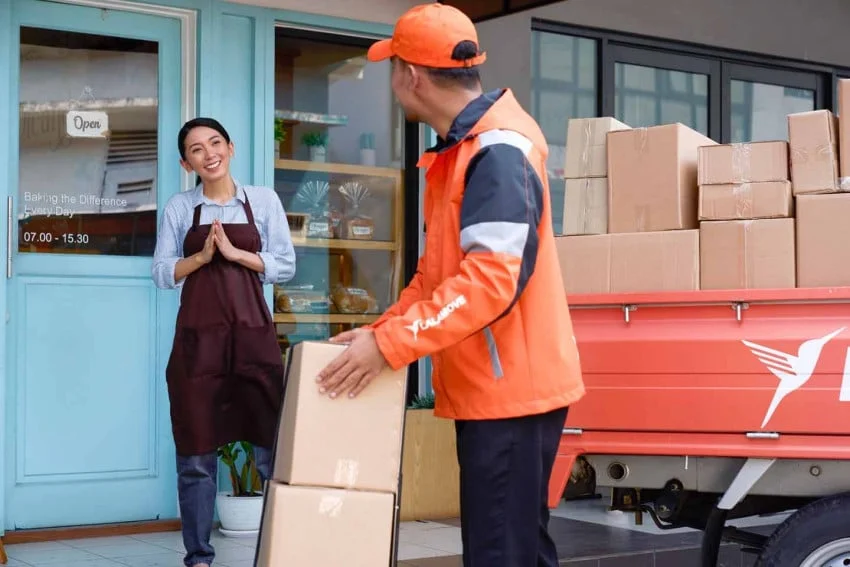
The modern retail landscape in Indonesia is undergoing a profound transformation, driven largely by shifting consumer expectations and the rapid digitization of commerce. At the heart of this evolution are Micro, Small, and Medium Enterprises (MSMEs), which serve as the backbone of the national economy. However, as customer demands for speed, personalization, and seamless service reach unprecedented heights, business owners face mounting pressure to optimize their supply chains. Chief among these challenges is the necessity for fast, flexible, and reliable shipping solutions that can adapt to volatile market conditions without disrupting daily operational workflows.
In response to these operational hurdles, on-demand delivery services have emerged as a vital lifeline for local enterprises. By offering dynamic shipping options tailored to specific business needs, these platforms allow MSMEs to manage orders more practically while maintaining high standards of customer satisfaction. Recent insights and industry surveys illuminate this shifting paradigm, offering a comprehensive look at how Indonesian businesses are preparing for the future—specifically targeting the macroeconomic landscape leading up to 2027.
The Changing Face of Indonesian Commerce: Context and Background
To understand the current logistical pressures faced by Indonesian MSMEs, one must examine the rapid growth of the country’s digital economy. Over the past decade, internet penetration, smartphone adoption, and the widespread use of e-commerce marketplaces have fundamentally altered consumer behavior. Shopping is no longer restricted by geography or traditional store hours; consumers now expect instant gratification, same-day delivery, and real-time tracking for everything from groceries to heavy industrial supplies.
For large corporations, scaling up logistics infrastructure to meet these demands is a capital-intensive yet manageable task. However, for MSMEs—which often operate with limited human resources, tight capital, and minimal warehousing space—managing last-mile logistics efficiently has historically been a significant bottleneck. Traditional courier services, characterized by rigid pickup schedules, fixed routes, and long processing times, often fail to accommodate the spontaneous nature of modern digital transactions.
This mismatch between legacy logistics and contemporary consumer habits created a vacuum that on-demand delivery platforms stepped in to fill. By bridging the gap, these platforms provide MSMEs with scalable transport fleets ranging from motorcycles to large trucks, bookable at a moment’s notice. This flexibility has allowed smaller merchants to compete on a relatively level playing field with larger, more established retail giants.
Unveiling the Lalamove Survey: Methodology and Key Findings
Providing a clearer picture of this ongoing commercial evolution, a comprehensive survey conducted by Lalamove—a leading on-demand delivery platform—has shed light on the changing operational needs and strategic challenges confronting Indonesian MSMEs as they look ahead to 2027. The research gathered insights from over 300 respondents, all of whom are active MSME business owners and regular users of on-demand delivery and transport platforms.
The findings of the survey offer a dual perspective: on one hand, they highlight a growing openness toward technological adoption; on the other hand, they underscore an escalating diversification in logistical requirements. As businesses strive to keep pace with market dynamics, the intersection of advanced technology and flexible transportation is proving to be the primary battleground for operational efficiency.
The Rise of Artificial Intelligence in MSME Operations
One of the most notable revelations from the survey data is the burgeoning integration of Artificial Intelligence (AI) into the daily workflows of Indonesian small businesses. While the adoption of advanced enterprise software was once considered the exclusive domain of large corporations, the accessibility of modern digital tools has democratized technology.
According to the survey data, 36.8% of responding MSME owners have already integrated AI tools into their business operations. These early adopters report that AI has successfully streamlined their workflows, making operations noticeably faster and more efficient. Furthermore, another 29.6% of respondents indicated that while they have not yet implemented AI solutions, they are actively evaluating and considering its adoption in the near future. This means that over two-thirds of the surveyed business community are either utilizing or seriously contemplating AI integration, signaling a cultural shift toward tech-driven entrepreneurship in Indonesia.
A closer examination of how these businesses utilize AI reveals specific areas of operational focus. Marketing and content creation emerged as the dominant use cases, accounting for 42.6% of AI applications among respondents. In an era where social media presence and digital marketing dictate brand visibility, small business owners are leveraging AI-powered writing assistants, graphic design tools, and automated campaign managers to maintain an active online footprint without incurring massive agency costs.
Following closely behind marketing, customer service and business communication represent 23.5% of AI utility. Chatbots, automated messaging systems, and AI-driven response templates enable MSMEs to maintain round-the-clock engagement with potential buyers, reducing response times and improving overall customer retention.
Logistical Complexities: Multi-Stop Deliveries and Flexible Timing
While digital tools are transforming front-end operations and customer engagement, the physical realities of moving goods from point A to point B present a distinct set of challenges. The Lalamove survey highlights a significant evolution in shipping patterns, driven by changes in consumer habits and business models.
Foremost among these logistical shifts is the demand for complex routing. A striking 60.7% of survey respondents reported an increasing operational need for multi-stop deliveries. Rather than simply dispatching a single package from a warehouse to an individual buyer, modern merchants frequently need to fulfill batches of orders across various neighborhoods, distribute stock to multiple retail pop-ups, or manage intricate supply chains involving several vendors in a single dispatch cycle. Traditional courier models, which charge per individual shipment and lack route-optimization tools, make multi-stop fulfillment cost-prohibitive for smaller operations.
In addition to routing complexity, time flexibility has emerged as a critical operational parameter. The data reveals that 43.3% of MSME respondents require delivery services outside standard business hours or demand greater flexibility regarding pickup and drop-off windows. This requirement is heavily influenced by consumer expectations and business growth: 36.3% of respondents attribute their changing shipping needs to the demand for faster service by end consumers, while 34.3% point to a tangible increase in overall order volumes.
When customers expect orders placed late in the evening to arrive the next morning—or even within a few hours—standard logistics frameworks collapse. On-demand delivery platforms bridge this gap by operating around the clock, allowing business owners to schedule pickups late at night or early in the morning to align with production cycles and customer deadlines.
Macroeconomic Implications and Industry Response
The convergence of technological adoption and complex logistical demands carries profound implications for the broader Indonesian economy. MSMEs contribute significantly to the nation’s Gross Domestic Product (GDP) and absorb the vast majority of the domestic workforce. Therefore, any systemic improvement in their operational efficiency translates directly into macroeconomic resilience and job security.
Industry stakeholders are continuously adapting their service portfolios to address these emerging trends. For instance, major logistics providers have expanded beyond simple goods transport to capture specific urban transit niches. Recent industry reports highlight significant growth in specialized transport sectors—such as multi-modal transport and passenger-goods hybrid services in high-density commercial and transit hubs like Jakarta. These strategic pivots are designed to integrate seamlessly with the daily rhythms of urban commerce, ensuring that delivery fleets remain agile despite chronic urban congestion.
Furthermore, the rise of on-demand logistics acts as a catalyst for regional economic growth. By removing geographical friction, these platforms empower rural and suburban enterprises to tap into metropolitan markets with the same logistical confidence as businesses located downtown. This democratization of transport infrastructure helps level the economic playing field, fostering entrepreneurship across diverse geographic regions.
Strategic Recommendations for MSMEs Moving Toward 2027
As Indonesian commerce marches steadily toward 2027, the operational environment for MSMEs will undoubtedly continue to evolve. Business owners who successfully navigate this transition will likely be those who treat logistics and technology not merely as operational expenses, but as strategic differentiators.
To capitalize on the trends identified in recent industry surveys, business analysts recommend several strategic approaches for MSME operators:
-
Deepen Technological Integration: Building upon the momentum of the 36.8% already utilizing AI, business owners should explore affordable, user-friendly software solutions that automate repetitive tasks, inventory management, and customer relationship tracking. Freeing up human capital from mundane administrative duties allows teams to focus on core product development and brand strategy.
-
Optimize Supply Chain Flexibility: Transitioning away from rigid, legacy delivery contracts in favor of on-demand, scalable logistics partners can dramatically reduce overhead costs. By paying only for the exact vehicle capacity and delivery distance required, businesses can protect their profit margins against fluctuating demand.
-
Embrace Multi-Channel Fulfillment: With over 60% of businesses requiring multi-stop deliveries, merchants should redesign their order-fulfillment schedules. Consolidating dispatches into strategic batches or utilizing platform-supported route optimization can save both time and fuel, contributing to both financial efficiency and environmental sustainability.
-
Align with Consumer Speed Expectations: As consumer tolerance for slow delivery times diminishes, integrating instant or scheduled same-day delivery options into checkout systems can significantly improve conversion rates and foster long-term customer loyalty.
Conclusion
The journey of Indonesian MSMEs toward 2027 is characterized by a dynamic interplay between technological innovation and logistical adaptability. As consumer expectations for speed and multi-point fulfillment intensify, traditional business models are being forced to reinvent themselves. Through the strategic adoption of artificial intelligence and the utilization of flexible, on-demand delivery platforms, small and medium enterprises are finding robust solutions to age-old operational challenges. Ultimately, these advancements not only enhance individual business productivity but also fortify the foundations of Indonesia’s vibrant digital economy, ensuring that local enterprises remain competitive, resilient, and ready for whatever the future holds.
