The constitutional and political landscape of Indonesia faces a momentous juncture as the Constitutional Court (Mahkamah Konstitusi or MK) prepares to deliberate on a high-profile legal challenge regarding the educational credentials of Vice President Gibran Rakabuming Raka. Prominent academic and political commentator Rocky Gerung has sounded the alarm, suggesting that should the court rule in favor of the petitioners in this Dispute over General Election Results (Perselisihan Hasil Pemilihan Umum or PHPU), the ruling could trigger an unprecedented systemic political crisis. The controversy centers on allegations regarding the authenticity of Gibran’s high school and university diplomas, a contentious issue that has steadily moved from the fringes of social media debate into the formal halls of the nation’s highest judicial institution.
The remarks were articulated during an appearance on the television program Rakyat Bersuara, broadcasted on iNews, under the theme "Hot Issues of Priority Programs." During the broadcast, Gerung elaborated on the potential domino effect that an adverse ruling by the Constitutional Court could unleash upon the incumbent administration of President Prabowo Subianto and Vice President Gibran Rakabuming Raka. As the legal proceedings commence, legal experts, political analysts, and the broader public are closely monitoring how the judiciary will handle a case that intertwines legal technicalities with profound executive legitimacy questions.
Chronology and Legal Background of the Dispute
To understand the gravity of the current proceedings at the Constitutional Court, it is essential to examine the chronology of events leading up to this legal challenge. The controversy surrounding Gibran Rakabuming Raka’s academic background first surfaced during the fiercely contested 2024 Indonesian presidential election cycle. Critics and political opponents raised questions about the validity of his secondary education certificates obtained abroad and his subsequent enrollment in higher education institutions.
Despite initial dismissals by the General Elections Commission (KPU) and the Election Supervisory Agency (Bawaslu), which cleared Gibran to run alongside then-presidential candidate Prabowo Subianto based on verified administrative documents submitted during registration, the issue did not dissipate. Following the inauguration of the Prabowo-Gibran administration, various civil society groups, legal coalitions, and persistent critics continued to compile documentation to challenge the foundational validity of Gibran’s candidacy retroactively.
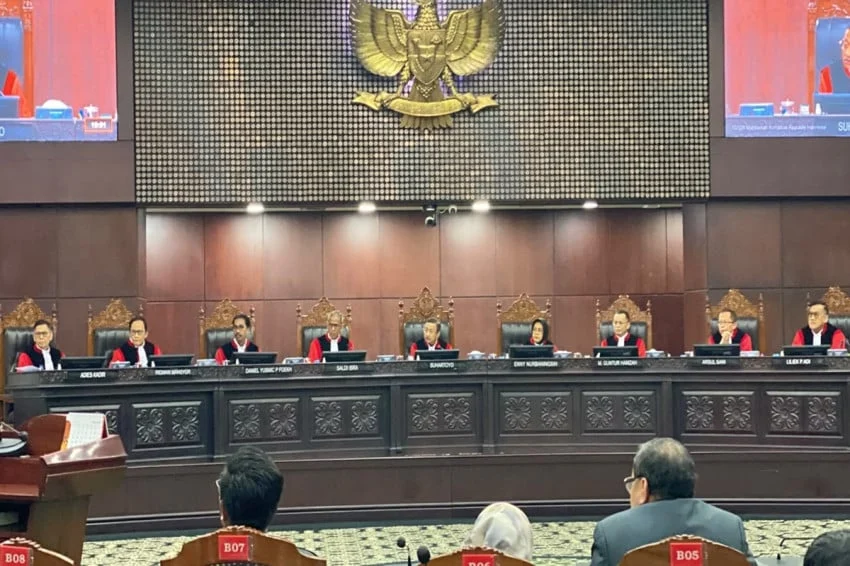
The legal battle escalated when formal petitions were lodged invoking the PHPU mechanism, arguing that an ineligible candidate should never have been certified, thereby invalidating the election results concerning the vice-presidency. The Constitutional Court, operating under its constitutional mandate to resolve disputes concerning election outcomes and constitutional rights violations, accepted the petition for procedural review. Legal analysts note that while PHPU petitions traditionally focus on vote tallies and electoral fraud, incorporating candidate eligibility and credential authenticity into the constitutional review creates a complex hybrid of administrative law and constitutional adjudication.
The Core Arguments and Institutional Implications
During his analysis on iNews, Rocky Gerung emphasized that the processing of the petition by the Constitutional Court represents a watershed moment that the House of Representatives (Dewan Perwakilan Rakyat or DPR) cannot afford to ignore. According to Gerung, if the judiciary finds merit in the allegations and issues a ruling that questions or nullifies Gibran’s credentials, the legislative branch will be forced to confront a constitutional vacuum and executive instability.
"Next week, the MK will begin processing Gibran’s fake diploma issue. That is going to be a huge scandal, the DPR must service that. What if the DPR says proceed, then Gibran falls, and then someone says don’t just stop at Gibran, Prabowo must fall too? There is no problem with that," Gerung stated during the broadcast.
This perspective highlights a critical vulnerability in coalition politics and constitutional architecture. While the petitioners specifically target Gibran Rakabuming Raka’s documentation rather than the legitimacy of President Prabowo Subianto, Gerung argued that the intertwined nature of a joint ticket creates a slippery slope. In a parliamentary and presidential hybrid system like Indonesia’s, the removal or disqualification of a sitting vice president through judicial decree would inevitably strain executive cohesion, test the loyalty of supporting political parties in the DPR, and provoke intense partisan realignment.
Official Responses and Counter-Perspectives
In response to the mounting legal challenges and public commentary, supporters of the administration and representatives of the ruling coalition have strongly pushed back against the narrative of an impending political crisis. Militant volunteer groups and legal defenders of the vice president have characterized the lawsuits as politically motivated maneuvers designed to delegitimize a democratically elected government.
For instance, groups such as Relawan Militan Gibran 08 Nusantara have previously voiced sharp criticisms against legal figures and activists spearheading these challenges, accusing them of attempting to orchestrate an unconstitutional ouster of the vice president outside the established electoral cycle. Representatives of these organizations argue that the KPU thoroughly vetted all candidate documents prior to the election, confirming compliance with the prevailing Election Law and relevant Constitutional Court regulations governing age limits and administrative prerequisites.
Furthermore, legal experts allied with the government maintain that the Constitutional Court lacks the jurisdiction to invalidate a candidate retroactively once the election has concluded, the results have been officially certified, and the inauguration has taken place. They contend that expanding the scope of PHPU to police educational credentials post-inauguration sets a dangerous precedent that could destabilize future transitions of power and undermine legal certainty in Indonesian elections.
Broader Impact and Economic-Political Analysis
The potential fallout of the Constitutional Court’s handling of the Gibran diploma case extends far beyond courtroom theatrics, carrying significant implications for Indonesia’s political stability and economic climate. Financial markets and foreign investors closely monitor the nation’s governance indicators for signs of stability and policy continuity. Any perception of an escalating constitutional crisis or executive paralysis can introduce market volatility, currency fluctuations, and a temporary slowdown in foreign direct investment inflows.
Political science analysts point out that Indonesia’s democracy has demonstrated remarkable resilience in absorbing post-election disputes through institutional channels. The willingness of petitioners to utilize the Constitutional Court reflects faith in judicial review, yet it also places an immense burden on the nine constitutional justices to render a decision that is legally airtight, politically neutral, and insulated from external pressures.
If the court dismisses the petition on procedural grounds or finds the accusations lacking in substantive evidence, the administration will likely claim total vindication, allowing President Prabowo and Vice President Gibran to refocus entirely on their domestic policy agenda, including food security programs, free nutritious meal initiatives, and downstream industrialization policies. Conversely, should the court accept the petition or demand further investigative steps, Indonesia could enter an uncharted constitutional territory characterized by heightened legislative scrutiny, intense partisan friction, and debates regarding succession protocols.
Conclusion and Future Outlook
As the Constitutional Court prepares to navigate this complex legal labyrinth, all eyes remain fixed on the judicial branch. The controversy surrounding Gibran Rakabuming Raka’s credentials serves as a stark reminder of the intricate relationship between electoral administration, judicial oversight, and executive stability in modern Indonesia. Whether this legal challenge culminates in a major political scandal as predicted by critics, or is peacefully resolved through established jurisprudence, the outcome will undoubtedly leave a lasting imprint on the nation’s constitutional jurisprudence and political trajectory for years to come.