The government of the Republic of Indonesia has officially embarked on a comprehensive financial study to determine the feasibility of eliminating tuition fees across all state-owned universities (PTN). This ambitious policy directive, championed by President Prabowo Subianto, aims to remove economic barriers to higher education, ensuring that academic merit, rather than financial capability, becomes the primary determinant for student enrollment in public institutions.
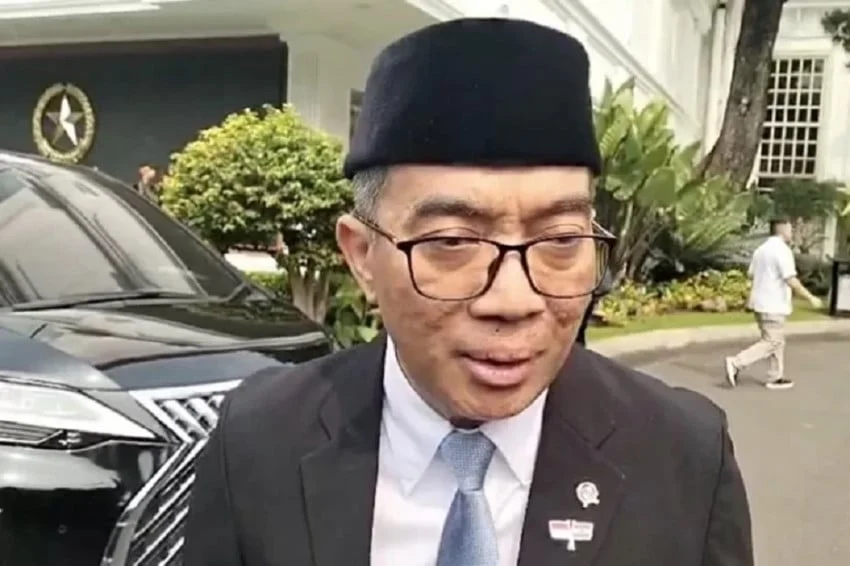
Minister of Higher Education, Science, and Technology, Prof. Brian Yuliarto, confirmed that his ministry is currently in the advanced stages of calculating the fiscal requirements necessary to implement this mandate. Speaking at the Parliament Complex in Senayan, Jakarta, on Monday, September 21, 2026, Prof. Yuliarto emphasized that the technical preparations are underway to translate the President’s vision into a sustainable national program.
A Strategic Shift in Educational Policy
The push for free higher education at state universities represents a significant pivot in Indonesia’s human capital development strategy. For decades, the cost of higher education has been a point of contention, with many high-achieving students from low-income families struggling to access top-tier public universities. While the government has previously implemented various scholarship schemes, such as the Bidikmisi and the Indonesia Smart College Card (KIP-K), these programs have historically functioned as targeted aid rather than universal access.
President Prabowo’s directive seeks to redefine the relationship between the state and its citizens regarding the right to higher education. By aiming for a tuition-free model at all PTNs, the administration intends to bolster the national gross enrollment ratio (GER) in tertiary education, which remains a critical metric for Indonesia’s aspiration to transition into a high-income economy by 2045.
The Technical Calculus: Analyzing Fiscal Requirements
Minister Brian Yuliarto noted that the ministry is conducting a granular analysis of the cost per student across diverse faculties and universities. The calculation is not merely a matter of subtracting tuition revenue from university budgets but involves a complex restructuring of how the state funds public tertiary institutions.
"We have already begun calculating the standard requirements per student for all PTNs," Prof. Yuliarto stated. The ministry’s assessment includes accounting for laboratory costs, research facilities, faculty salaries, and the operational expenses necessary to maintain academic quality standards. The challenge lies in ensuring that the removal of tuition fees does not lead to a decline in the quality of education or the infrastructure of the institutions.
State universities in Indonesia currently rely on a mix of government subsidies—known as Bantuan Operasional Perguruan Tinggi Negeri (BOPTN)—and revenue generated from tuition fees (UKT). Eliminating UKT requires a robust compensation mechanism where the state budget (APBN) assumes the entirety of the financial burden, potentially requiring a significant reallocation of national funds toward the education sector.
Chronology of the Initiative
The development of this policy follows a series of administrative actions and high-level discussions within the Prabowo-Gibran cabinet. Since the inception of the current administration, the Ministry of Higher Education, Science, and Technology has been tasked with auditing the current state of academic funding.
- Early 2026: Initial discussions regarding the expansion of KIP-K and the potential for a universal tuition-free model were raised during cabinet meetings focused on long-term poverty alleviation.
- Mid-2026: The President signaled a stronger intent to overhaul the higher education financing model, requesting a feasibility study from the Ministry of Higher Education.
- Late 2026: The formation of an academic task force, as requested by the President, was initiated to evaluate the efficiency of university spending and to propose a sustainable funding framework.
- September 2026: Minister Brian Yuliarto provides the first public confirmation that the ministry has moved from the conceptual phase to the quantitative calculation phase, signaling that the policy is nearing the design finalization stage.
Economic Implications and Budgetary Constraints
Implementing a tuition-free policy for public universities is an enormous fiscal undertaking. Based on data from the Ministry of Education, there are currently over 100 state universities in Indonesia serving millions of students. A blanket removal of tuition fees would necessitate an injection of tens of trillions of rupiah into the university system annually.
Economists have pointed out that while the policy is socially beneficial, its success depends on the government’s ability to maintain fiscal discipline. If the government fails to fully replace the lost tuition revenue with adequate state funding, universities might face a "hidden" crisis where the quality of teaching materials and research capacity diminishes due to budget shortages.
Furthermore, the policy could lead to a massive surge in demand for seats at public universities, potentially overwhelming existing infrastructure. This creates a secondary challenge: the need for an expansion of physical campuses and digital learning capacity to accommodate a larger influx of incoming freshmen.
Perspectives from the Academic Community
The academic community has expressed cautious optimism regarding the proposal. University administrators have long advocated for increased government support, noting that reliance on tuition fees can lead to volatile budget planning. However, many rectors and faculty heads are waiting for clarity on how the government plans to maintain institutional autonomy while centralizing the funding structure.
Student unions have generally welcomed the prospect of free education, framing it as a fulfillment of the constitutional mandate to educate the nation. Nevertheless, student activists have urged the government to ensure that the policy includes living cost subsidies, as tuition is only one component of the total financial burden faced by students, particularly those who must relocate to cities with high costs of living.
Challenges in Implementation: Ensuring Equity and Quality
A critical aspect of the ongoing calculations by the Ministry is the prevention of systemic inequality. Critics argue that simply making tuition free might inadvertently benefit students from affluent backgrounds who have better access to primary and secondary schooling, thereby gaining admission to top-tier PTNs.
To mitigate this, the government is expected to integrate this policy with a merit-based and needs-based framework. Prof. Yuliarto’s team is tasked with ensuring that the funding model remains equitable, potentially prioritizing institutions in underdeveloped regions and ensuring that the transition does not prioritize elite urban universities at the expense of regional campuses.
Future Outlook and Legislative Hurdles
For the policy to become fully operational, it will likely require adjustments to existing regulations, including the Law on Higher Education and potentially the annual State Budget (APBN) law. The government must present a concrete roadmap to the House of Representatives (DPR) to secure the necessary legislative backing and budgetary approval.
As the ministry continues its calculations, the public is awaiting a timeline for the phased implementation of the policy. Experts suggest that a pilot project approach—starting with specific faculties or specific universities—may be the most viable path forward to identify potential pitfalls before a national rollout.
Conclusion
The commitment expressed by President Prabowo Subianto, as reaffirmed by Minister Brian Yuliarto, marks a defining moment for Indonesia’s education sector. While the logistical and financial complexities are significant, the initiative reflects a clear political will to prioritize human capital as the backbone of the nation’s future.
As the Ministry of Higher Education, Science, and Technology concludes its detailed financial modeling, the focus will inevitably shift toward the sustainability of the funding, the maintenance of academic standards, and the capacity of the national budget to absorb such a substantial commitment. The coming months will be crucial as the government unveils the specific mechanisms that will govern this transition, setting the stage for what could be the most transformative shift in the Indonesian higher education landscape in the 21st century.
The successful implementation of this policy will ultimately serve as a litmus test for the administration’s ability to balance ambitious social welfare objectives with the practical realities of national economic management. For millions of Indonesian families, the promise of a tuition-free university education represents more than just a financial relief; it is a gateway to greater social mobility and a vital investment in the nation’s collective potential.