Shanghai, China – In a landmark announcement that signals a new era for mobile technology, Chinese technology giant ZTE, through its innovative brand Nubia, officially launched the NaviX Ultra at the World Artificial Intelligence Conference (WAIC) 2026 in Shanghai. Heralded as the world’s first smartphone to feature a truly embedded AI Agent, the NaviX Ultra is poised to redefine user interaction and device functionality, moving far beyond the capabilities of conventional virtual assistants. This groundbreaking device, which had been the subject of intense anticipation following a series of strategic teasers, aims to deliver a more autonomous and integrated artificial intelligence experience directly from the palm of a user’s hand.
The introduction of the NaviX Ultra represents a significant leap in the integration of AI into consumer electronics. While many contemporary smartphones boast AI-powered features, Nubia’s offering distinguishes itself by incorporating an "AI Agent" designed for independent, multi-step task execution and profound natural language understanding. This concept of agency implies a higher degree of autonomy and proactive capability, enabling the device to not merely respond to commands but to anticipate needs and complete complex workflows across various applications without continuous user intervention. The launch at WAIC 2026, a preeminent global platform for AI innovation, underscored the strategic importance of this development, placing Nubia at the forefront of the mobile AI revolution.
The Dawn of Autonomous AI in Mobile Devices
The evolution of artificial intelligence in smartphones has been a gradual but accelerating process. From rudimentary voice commands and predictive text, the industry has progressed through sophisticated image recognition, on-device machine learning for camera enhancements, and more recently, the integration of generative AI features. However, the NaviX Ultra introduces a paradigm shift by embedding an AI Agent that can transcend isolated tasks and operate with a degree of independence previously unseen in consumer-grade mobile devices. This agent is engineered to understand context, retain information from past interactions, and execute a sequence of actions necessary to fulfill a broader user intent.
The distinction between a traditional virtual assistant and an AI Agent lies primarily in the latter’s capacity for complex reasoning and autonomous action. Virtual assistants typically respond to direct commands, performing single-step operations like setting alarms or providing weather updates. An AI Agent, by contrast, is designed to comprehend nuanced requests, break them down into constituent parts, and then orchestrate various applications and services to achieve the desired outcome. For instance, rather than merely searching for flight information, the NaviX Ultra’s AI Agent could be tasked with planning an entire trip, including comparing prices across different platforms, booking flights and accommodation, and even suggesting local attractions, all within a seamless, integrated process. This level of functionality points towards a future where smartphones become more intelligent co-pilots rather than mere tools.
A Strategic Partnership: Nubia and Doubao AI
Central to the NaviX Ultra’s advanced capabilities is a strategic collaboration between Nubia and Doubao AI. While specific details of Doubao’s identity were not fully elaborated in the initial announcement, the partnership is understood to leverage Doubao’s cutting-edge Large Language Model (LLM) technology. This synergy combines the extensive experience of Nubia and its parent company ZTE in hardware design, software development, product engineering, quality management, and user services with the sophisticated cognitive abilities of Doubao’s AI model. This blend of robust engineering and advanced artificial intelligence is crucial for delivering a high-performance, reliable, and user-friendly AI Agent.
Ni Fei, Senior Vice President of ZTE Corporation and President of Nubia, highlighted the depth and longevity of this collaboration during the launch event. He revealed that the partnership has been in development since the initiation of the "M153 project," indicating a long-term strategic vision rather than a hasty reaction to market trends. The NaviX Ultra, according to Ni Fei, is the culmination of extensive technological validation and iterative product development, underscoring the rigorous process undertaken to bring this innovative device to market. This long-term commitment suggests a foundational integration of AI principles into Nubia’s product development philosophy, aiming for deep-seated functionality rather than superficial features. The M153 project likely involved exploring various AI paradigms and testing their practical applications within a mobile ecosystem, culminating in the agent-based approach seen in the NaviX Ultra.
Core Capabilities: Understanding, Functionality, Retention, and Security
Nubia has architected the NaviX Ultra around four foundational pillars: understanding, functionality, retention, and security. These principles collectively define the advanced nature of its integrated AI Agent.
-
Understanding: The NaviX Ultra’s AI is engineered to comprehend natural language commands across a wide array of usage scenarios. This means users can interact with the device in a conversational, intuitive manner, free from the constraints of rigid or specific commands often required by older voice assistants. The AI’s ability to grasp intent and context from natural speech significantly lowers the barrier to entry for complex tasks, making advanced features accessible to a broader user base. This deep understanding allows the agent to interpret ambiguous requests and seek clarification when necessary, mimicking human-like interaction.
-
Functionality: Beyond simple question-answering, the AI Agent on the NaviX Ultra possesses the ability to execute multi-step tasks autonomously. This is a crucial differentiator. As exemplified by comparing product prices, placing orders, or meticulously planning travel itineraries across multiple applications, the AI can seamlessly navigate between different software environments. The user no longer needs to manually switch between apps at each stage of a complex task, allowing for an uninterrupted and highly efficient workflow. This "cross-application orchestration" is a key enabler of true AI agency within the mobile context, streamlining traditionally cumbersome processes.
-
Retention: A critical aspect of an effective AI Agent is its memory and ability to retain context from previous interactions. While not explicitly detailed in the provided content, the concept of an "agent" implicitly suggests a capacity for learning and remembering user preferences, past requests, and ongoing conversational threads. This retention allows the AI to offer more personalized and relevant assistance over time, building a more coherent and efficient user experience. A truly intelligent agent learns from its interactions, adapting its responses and actions to better suit the individual user’s habits and needs, contributing to a sense of a truly personalized digital assistant.
-
Security: Perhaps one of the most compelling features of the NaviX Ultra’s AI Agent is its commitment to privacy and data security. Nubia emphasizes that the entire AI model’s computation is performed directly on the device. This "on-device AI processing" approach means that sensitive user data does not need to be transmitted to cloud servers for processing, significantly enhancing personal privacy. By keeping data local, the risk of data breaches during transmission or storage on third-party servers is drastically reduced. Furthermore, Nubia stated that the AI system within the NaviX Ultra has been integrated with official certifications for generative AI services. This combination of on-device processing and certified generative AI is positioned as a robust defense against data leakage, addressing a primary concern for consumers in an increasingly data-driven world. This focus on privacy is not just a feature but a strategic advantage, aligning with growing global regulations and consumer demand for greater control over personal information.
Distinctive Design and User Interface
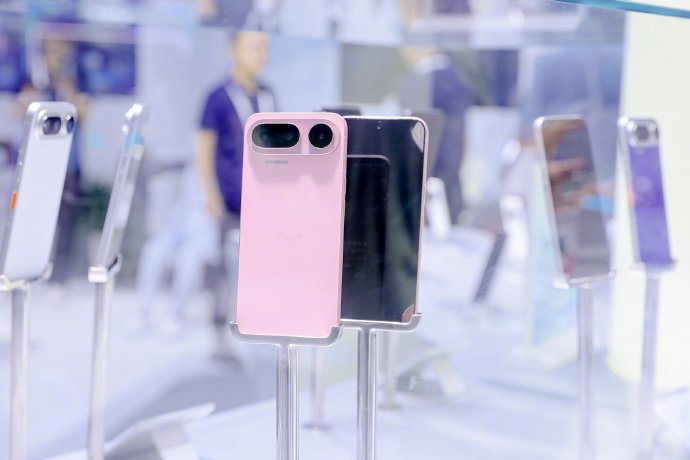
Beyond its technological prowess, the Nubia NaviX Ultra also introduces a distinctive design language intended to reflect its pioneering status. The device will be available in four sophisticated color options: Blue, Dream, Obsidian Black, and Snowfield. Among these, the "Dream" variant stands out with its striking full-body pink aesthetic, extending even to the rear camera module, making it an instantly recognizable and bold fashion statement. This unique color choice breaks from conventional smartphone palettes, signaling Nubia’s intent to marry cutting-edge technology with expressive design.
The rear of the NaviX Ultra features a unique horizontal, elongated camera module, a deliberate departure from the prevalent circular or square camera arrays seen in many contemporary smartphones. This design choice, according to Nubia, is aimed at establishing a distinct visual identity for the NaviX Ultra. The module houses a versatile triple-camera setup, including a periscope telephoto lens, indicating a strong focus on advanced photographic capabilities, particularly for long-range zoom. This architectural decision for the camera module serves both aesthetic and functional purposes, ensuring the device stands out in a crowded market while delivering high-quality imaging.
A key physical differentiator on the NaviX Ultra is the inclusion of a dedicated orange AI button located on the side of the device. This tactile button provides instant access to the intelligent assistant with a single press, eliminating the need to unlock the phone or navigate through menus to activate AI features. This user-centric design choice underscores the importance of the AI Agent as a core function of the device, making it readily accessible and intuitive to use at any moment. The dedicated button serves as a constant reminder of the phone’s unique capabilities and simplifies interaction with its most advanced feature.
The front of the NaviX Ultra boasts a flat display, complemented by a discreet punch-hole camera centered at the top. The design prioritizes an immersive viewing experience, featuring thin, symmetrical bezels on all four sides. This modern and clean aesthetic not only enhances the device’s visual appeal but also maximizes screen real estate, providing an expansive canvas for consuming media, gaming, and interacting with the AI Agent’s visual outputs. The symmetrical bezel design contributes to a premium feel and a balanced visual presentation, aligning with contemporary flagship smartphone aesthetics.
Anticipated Performance and Specifications (Rumored)
While Nubia has yet to officially disclose the full specifications of the NaviX Ultra, industry leaks and reports have provided tantalizing glimpses into its potential hardware. The device is rumored to be powered by the Snapdragon 8 Elite Gen 5 chipset, a processor expected to be at the pinnacle of mobile silicon for 2026. This flagship-tier processor would provide the immense computational power necessary to run complex AI models and enable on-device processing capabilities, ensuring smooth and responsive AI agent performance. The "Elite Gen 5" moniker suggests further optimization for AI workloads, a crucial aspect for a phone centered around an AI Agent.
Battery life is also expected to be a standout feature, with rumors pointing to a massive 7,000 mAh silicon-carbon battery. This substantial capacity, combined with the advanced silicon-carbon technology, would promise extended usage times, crucial for powering the intensive operations of an AI Agent throughout the day. The device is also anticipated to support rapid wired charging, with options rumored to be 90W or 100W, alongside wireless charging capabilities. This combination of large capacity and fast charging solutions aims to alleviate battery anxiety, allowing users to fully leverage the NaviX Ultra’s advanced features without constant concern for power.
In the camera department, the NaviX Ultra is rumored to feature a high-resolution 50 MP main camera, likely accompanied by an ultrawide lens and the aforementioned periscope telephoto lens for versatile photography options. For selfie enthusiasts, a high-resolution 50 MP front-facing camera is also anticipated, promising crisp and detailed self-portraits. These camera specifications align with flagship expectations, ensuring the device not only excels in AI but also in the increasingly important area of mobile photography. The integration of AI processing will undoubtedly play a role in optimizing image quality, scene recognition, and computational photography features.
The Broader Implications for the Smartphone Market
The launch of the Nubia NaviX Ultra at WAIC 2026 holds significant implications for the future trajectory of the smartphone industry. This device is not merely an incremental upgrade but a potential harbinger of a new era of mobile computing.
User Experience Transformation: The NaviX Ultra’s AI Agent has the potential to fundamentally transform how users interact with their smartphones. By enabling multi-step, cross-application task automation and natural language understanding, it moves the device from a reactive tool to a proactive assistant. This could lead to a significant reduction in cognitive load for users, allowing them to focus on outcomes rather than the mechanics of navigating various apps. The phone could become a truly personalized and efficient companion, capable of managing daily tasks with unprecedented ease.
Competitive Landscape Shift: Nubia’s pioneering move with the NaviX Ultra is likely to intensify competition among major smartphone manufacturers. Companies like Apple, Samsung, and Google, which have been steadily enhancing their AI capabilities, will now face pressure to integrate similar levels of autonomous AI agency into their flagship devices. This could spark an "AI Agent race" in the coming years, pushing innovation across the industry. The focus may shift from raw processing power or camera megapixels to the sophistication and utility of embedded AI.
Privacy and Security as a Key Differentiator: By emphasizing on-device AI processing and certified generative AI services, Nubia is positioning privacy and security as a core selling point. In an age of increasing data breaches and heightened awareness regarding personal information, this approach could resonate strongly with consumers. Other manufacturers may be compelled to adopt similar on-device processing strategies to compete on privacy, potentially driving a broader industry shift towards more secure AI implementations.
Future Trajectory of Mobile AI: The NaviX Ultra could represent a critical juncture in the development of mobile AI. It poses the question of whether smartphones will evolve into fully autonomous digital agents, capable of independent decision-making within defined parameters, or if the current iteration is merely a stepping stone. The success and adoption of the NaviX Ultra will provide valuable insights into consumer readiness for such advanced AI, influencing future research and development in the field. This could also pave the way for more specialized AI agents tailored for specific industries or personal needs.
Market Reception and Challenges: While the technology is groundbreaking, market reception will be crucial. Users will need to adapt to a new mode of interaction, and the learning curve for fully leveraging an AI Agent’s capabilities might be a factor. Ethical considerations regarding autonomous agents, such as data governance, decision-making biases, and user control, will also need careful navigation by Nubia and the wider industry. The initial price point and overall ecosystem support will also play a significant role in its adoption.
In conclusion, the Nubia NaviX Ultra stands as a monumental achievement in smartphone innovation, pushing the boundaries of what a mobile device can be. By integrating a truly autonomous AI Agent, Nubia has not only introduced a cutting-edge product but has also set a new benchmark for the future of mobile intelligence. As the industry watches closely, the NaviX Ultra’s journey will undoubtedly shape the discourse around AI in consumer electronics for years to come, potentially ushering in an era where our smartphones are not just smart, but truly intelligent partners.