Every September 9th, Indonesia marks National Sports Day, widely recognized as Hari Olahraga Nasional (Haornas). This significant annual observance traces its roots back to the turbulent post-independence era, specifically to the inception of the very first National Sports Games (Pekan Olahraga Nasional or PON) held in Solo, Central Java, in 1948. Over the decades, Haornas has evolved far beyond a mere historical commemoration. Today, it serves as a powerful catalyst for public health, a cornerstone for national character-building, and an emerging driver of the nation’s sports tourism economy.
As the nation observes the 43rd anniversary of Haornas’s formal designation in 2026, the occasion prompts a comprehensive reflection on how physical education, elite athletic achievements, and community wellness intertwine to shape the identity of the world’s largest archipelago.
The Historical Genesis: From Solo 1948 to International Aspirations
The genesis of National Sports Day is deeply intertwined with Indonesia’s struggle for international recognition following its proclamation of independence in 1945. In 1948, the young republic sought to participate on the global stage by aspiring to send a contingent to the XIV Olympic Games in London. However, this diplomatic ambition faced a formidable administrative roadblock. Because the international community had not yet widely recognized Indonesia’s sovereignty, and because the country lacked a recognized National Olympic Committee (NOC) at the time, the International Olympic Committee (IOC) and British authorities refused to accept Indonesian athletes under the Red and White flag. Passports and political status became insurmountable barriers.
Refusing to be sidelined, visionary Indonesian sports pioneers and government leaders decided to turn adversity into an opportunity. Rather than abandoning their athletes’ aspirations, they resolved to organize a massive domestic sporting event to demonstrate to the world—and to themselves—that an independent Indonesia possessed the administrative capability, spirit, and talent to manage a multi-sport competition.
Thus, the inaugural Pekan Olahraga Nasional (PON) was born. Held from September 9 to September 12, 1948, in Solo (Surakarta), Central Java, the games brought together athletes from various regions, residencies, and organizations across Java and Sumatra. Despite severe economic hardships, limited infrastructure, and ongoing military threats from colonial forces seeking to reclaim the territory, the Solo PON was an overwhelming success. It acted as a unifying force, proving that sport could transcend political fragmentation and foster a collective national identity. The opening day of this historic event—September 9—was permanently etched into the nation’s history as the foundational date for Indonesian sports development.
Institutionalization and the Formalization of Haornas
While the spirit of September 9, 1948, resonated across generations, it took nearly 35 years for the date to be officially institutionalized as a national day. On September 9, 1983, then-President Soeharto officially proclaimed Hari Olahraga Nasional during a grand ceremony to inaugurate the historic restoration of Sriwedari Stadium in Surakarta—the very cradle of Indonesian multi-sport competition.
This presidential proclamation was designed to inject renewed vigor into the country’s sports development framework, addressing both grassroots participation and elite training pipelines. To provide a robust legal foundation for the observance, the government later issued Presidential Decree (Keppres) Number 67 of 1985 concerning National Sports Day. This legal instrument officially mandated September 9 as a permanent fixture on the national calendar, aiming to institutionalize regular physical activity and foster sustainable athletic achievements across generations.
The Evolution of Haornas: Beyond Medals to Public Health and Economy
In contemporary Indonesia, the paradigm surrounding National Sports Day has undergone a profound transformation. While celebrating elite athletes who hoist the Red and White flag at international events such as the Olympics, Asian Games, and SEA Games remains a core component of Haornas, modern policy frameworks emphasize the broader concept of "sports culture" (pembudayaan olahraga).
The Ministry of Youth and Sports (Kemenpora) consistently highlights that sports must transcend the pursuit of medals. In recent policy guidelines and strategic frameworks, the government has framed sports as an indispensable instrument for national development, touching upon public health, education, and the economy.
Recent statements from the Ministry of Youth and Sports underscore that the systematic development of sports now generates significant multi-sectoral benefits. From a healthcare perspective, encouraging regular physical activity helps mitigate the rising prevalence of non-communicable diseases, thereby reducing the national healthcare burden. Educationally and socially, structured sports programs instill discipline, teamwork, resilience, and anti-corruption values among the youth.
Furthermore, the economic dimension of sports has taken center stage in recent years. The convergence of sports and tourism—commonly known as "sport tourism"—has emerged as a lucrative economic driver. Major sporting events, ranging from international marathons and cycling tours to regional multi-sport spectacles like the upcoming PON events, inject substantial capital into local economies. They stimulate the hospitality sector, boost micro, small, and medium enterprises (MSMEs), and accelerate infrastructural development in previously underdeveloped regions.
Strategic Investments and Future Horizons
As Indonesia looks toward future sporting milestones, such as regional hosting duties and specialized multi-sport events like the upcoming National Beach Games in Ancol and long-term preparations for future PON iterations (including initiatives to position regions like East Sumba as premier sport tourism hubs), the financial and structural requirements of sports development have scaled dramatically.
Recent policy discussions within Kemenpora have highlighted the necessity for massive fiscal investments to modernize the nation’s athletic ecosystem. Proposals demanding substantial budgets—such as allocations reaching trillions of rupiah for constructing state-of-the-art academies, localized training centers, and sports science laboratories—reflect a growing realization that natural talent alone is no longer sufficient to conquer global podiums. Modern athletic success requires a science-driven approach, comprehensive sports medicine, early talent identification, and continuous athlete welfare programs.
Celebrating Haornas in the Modern Era
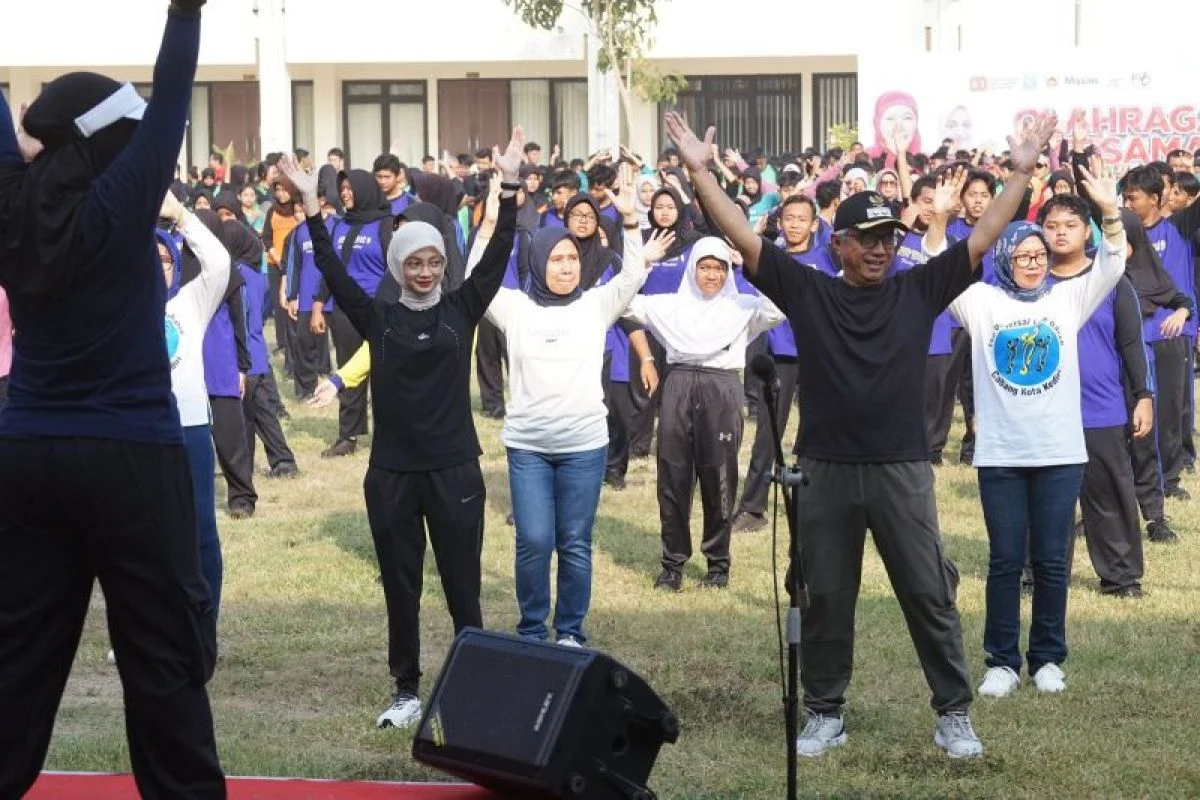
As the nation marks the 43rd anniversary of the formalization of National Sports Day, the call to action extends far beyond government offices and elite stadiums. Communities, schools, corporate entities, and families are encouraged to embrace the philosophy of Haornas by integrating physical activity into their daily routines.
Whether through participating in community fun runs, supporting local athletic clubs, encouraging children to explore diverse physical disciplines, or simply adopting an active lifestyle, the modern celebration of Haornas honors the resilience of the 1948 pioneers. It serves as an annual reminder that a healthy, active, and disciplined citizenry is the bedrock of a strong, prosperous, and competitive Indonesia.