The landscape of humanitarian response in Indonesia is undergoing a profound structural evolution, spearheaded by major civil society organizations aiming to mitigate the devastating human and economic tolls associated with natural calamities. Muhammadiyah, one of the nation’s premier Islamic socio-educational organizations, has officially cemented its strategic pivot from traditional post-disaster emergency relief toward comprehensive, community-level disaster resilience. This paradigm shift was formally underscored during a high-profile leadership visit to the eastern reaches of the archipelago, highlighting a nationwide commitment to institutional preparedness, localized capacity building, and proactive risk reduction.
Strategic Realignment: From Post-Disaster Aid to Pre-Disaster Preparedness
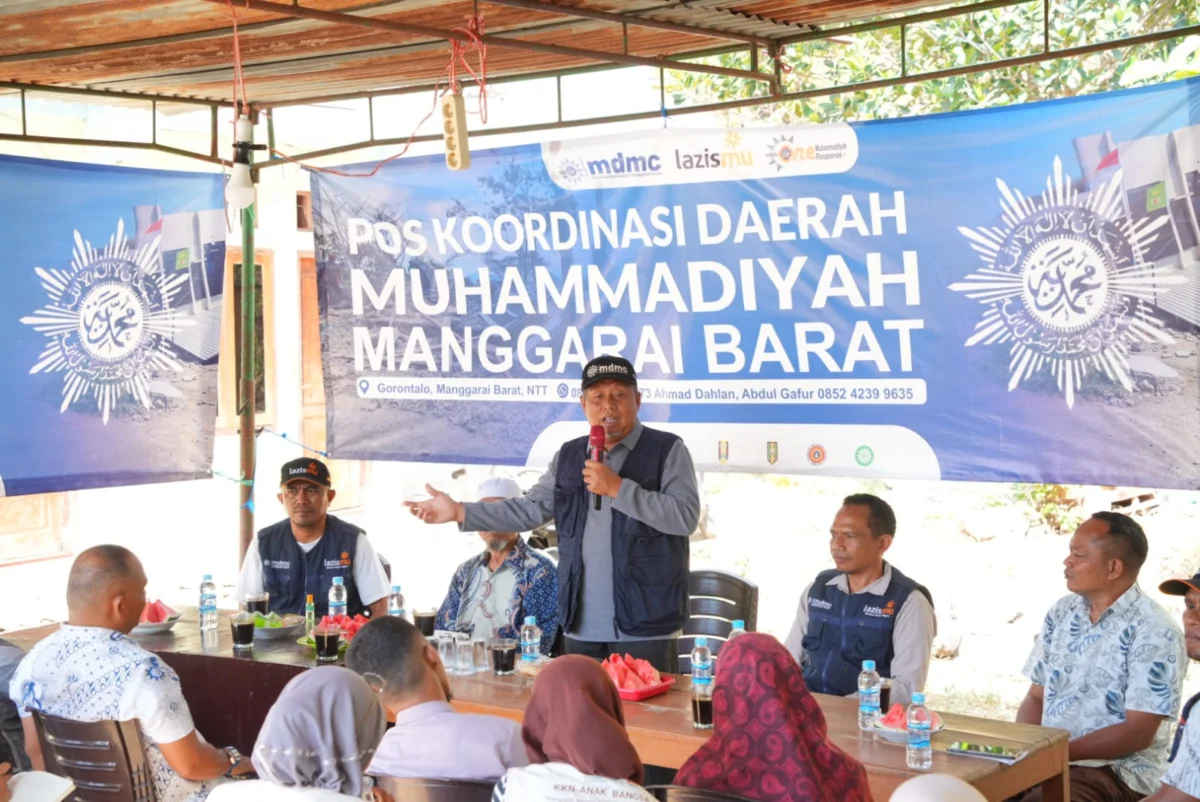
The transformation in Muhammadiyah’s humanitarian methodology was articulated by Dr. Agus Taufiqurrahman, Chairman of the Central Leadership (PP) of Muhammadiyah, during his official visit to the Regional Coordination Post (Poskorda) of Muhammadiyah in West Manggarai, East Nusa Tenggara (NTT). Speaking to local cadres, volunteers, and community stakeholders, Taufiqurrahman emphasized that contemporary humanitarian challenges demand an operational framework that anticipates crises rather than merely reacting to them after destruction has occurred.
For decades, humanitarian operations in disaster-prone regions globally and within Indonesia were characterized by reactive measures—deploying search and rescue teams, establishing makeshift medical camps, and distributing food packages only after earthquakes, floods, or volcanic eruptions struck. While these emergency responses remain vital, Muhammadiyah’s updated framework integrates disaster risk reduction (DRR) as a foundational pillar of its social mission.
This comprehensive approach involves educating vulnerable populations on evacuation routes, enhancing local early warning comprehension, conducting vulnerability assessments, and training community-based disaster response units long before any tremor is felt or mountain erupts. According to institutional policy updates, this proactive posture aims to minimize casualties, protect critical community assets, and significantly shorten the recovery timeline for affected families.
Indonesia’s High-Risk Geographic Realities
The urgency behind Muhammadiyah’s strategic shift is rooted in Indonesia’s precarious geographical reality. Straddling the Pacific Ring of Fire and situated at the convergence of major tectonic plates—including the Indo-Australian, Eurasian, and Pacific plates—Indonesia is recognized by international disaster monitoring agencies as one of the most disaster-prone nations on Earth.
The country frequently contends with a compounding matrix of natural hazards, ranging from high-magnitude subduction earthquakes and destructive tsunamis to frequent volcanic eruptions, severe landslides, and extreme hydro-meteorological events exacerbated by global climate shifts. Historical data from national disaster management authorities highlights that thousands of seismic events occur annually within the archipelago, varying widely in magnitude. Catastrophic events, such as historical earthquakes in Aceh, Yogyakarta, Central Sulawesi, Lombok, and the recent tremors in Flores, demonstrate the relentless vulnerability of local populations.
Given this unyielding backdrop of seismic and meteorological volatility, Taufiqurrahman noted that national readiness cannot be left to chance or solely to government agencies. "Therefore, we are moving toward ensuring that this nation is prepared whenever a disaster strikes," Taufiqurrahman stated. This preparation encompasses not only psychological and educational readiness but also physical infrastructure resilience. Muhammadiyah has increasingly advocated for structural integrity in residential and public buildings, alongside the strategic prepositioning of localized emergency logistics hubs capable of sustaining communities during the critical initial 72 hours following a disaster—a window widely acknowledged by emergency management professionals as crucial for survival.
Solidarity in Action: The Flores Earthquake Response
The practical application of Muhammadiyah’s humanitarian network was recently tested in the aftermath of the Flores earthquake, an event that triggered widespread structural damage and displaced numerous families in the region. During his visit to West Manggarai, Taufiqurrahman took the opportunity to formally express deep appreciation and institutional gratitude to the extensive network of Muhammadiyah volunteers across East Nusa Tenggara and other regions who mobilized rapidly under the banner of ta’awun (mutual assistance and collaboration).
Particular recognition was extended to academic volunteers, notably students participating in the Community Service Program (Kuliah Kerja Nyata – KKN) from Universitas Ahmad Dahlan (UAD). These student volunteers integrated theory with practice by deploying directly to disaster-affected zones immediately following the Flores earthquake. Their responsibilities included psycho-social support for traumatized children, assisting in logistical distribution, helping construct temporary shelters, and working alongside local community members to clear debris.
As a tangible expression of solidarity and institutional backing, the visit also featured the symbolic handover of financial assistance amounting to IDR 10 million from the PP Muhammadiyah to the Poskorda Muhammadiyah in West Manggarai. This financial injection is earmarked for bolstering local operational capacities and addressing immediate administrative and logistical bottlenecks faced by regional responders.
Local Governance and Regional Challenges in West Manggarai
The arrival of the central leadership was met with profound enthusiasm by the Regional Leadership (PDM) of Muhammadiyah in West Manggarai. For local leaders operating in geographically isolated and resource-constrained areas, the visit served as both a morale boost and a strategic platform to articulate regional challenges and aspirations.
Muhammad Arun, Chairman of PDM West Manggarai, welcomed the delegation and candidly addressed the ongoing needs of the regional branch. "We deeply look forward to the guidance and direction from you as our Central Leadership concerning our sustainability here. Frankly speaking, PDM West Manggarai still requires substantial support," Arun expressed during the strategic briefing.
Despite operational hurdles, the regional branch has maintained active engagement in social services, particularly in the educational sector. Arun highlighted that community trust in Muhammadiyah’s educational institutions remains high, prompting local leaders to continuously seek avenues for institutional expansion and quality enhancement.
A major focal point of the local leadership’s long-term development strategy involves the utilization and management of a substantial 60-hectare plot of waqf (endowment) land. PDM West Manggarai is currently undertaking comprehensive planning to harness this vast acreage for broader community welfare. Proposals for the land include the establishment of integrated educational complexes, modern health facilities, agricultural productivity initiatives, and economic empowerment centers designed to foster regional self-sufficiency and generate sustainable revenue for future humanitarian operations.
Broader Implications for National Humanitarian Governance
The evolution of Muhammadiyah’s disaster management strategy carries significant implications for Indonesia’s broader disaster risk reduction architecture. As a non-state actor with an extensive grassroots infrastructure spanning thousands of schools, hospitals, clinics, and local chapters, Muhammadiyah’s capacity to mobilize millions of adherents positions it as a critical partner to the National Disaster Management Agency (BNPB) and regional governments.
Analysts in disaster governance and civil society organizations note that decentralized resilience models—such as the one being championed by Muhammadiyah—substantially reduce the burden on centralized state apparatuses during catastrophic events. By embedding resilience education into school curricula, empowering youth through university community service programs, and establishing robust local coordination posts like those in West Manggarai, the organization is effectively creating localized buffers against catastrophic shock.
Furthermore, Taufiqurrahman’s emphasis on collective national solidarity over individualistic responses addresses a growing sociological concern in modern developing nations. In times of crisis, the erosion of communal ties and the rise of hyper-individualism can exacerbate suffering. By invoking ethical frameworks of mutual aid and societal responsibility—explicitly cautioning against selfishness during collective hardships—the organization reinforces the social fabric necessary for rapid post-disaster recovery.
Conclusion and Future Outlook
The visit of PP Muhammadiyah leadership to West Manggarai serves as a microcosm of a larger national transformation. By bridging high-level strategic policy shifts with grassroots operational realities, Muhammadiyah continues to redefine the scope of faith-based humanitarianism in Indonesia.
As the organization deepens its commitment to community resilience, infrastructure hardening, and educational outreach in high-risk zones like East Nusa Tenggara, it establishes a benchmark for civil society participation in disaster management. The ongoing development of regional capacities, exemplified by the utilization of endowment lands and the unwavering dedication of student and local volunteers, ensures that Muhammadiyah remains a resilient pillar of hope, security, and humanitarian excellence across the archipelago.