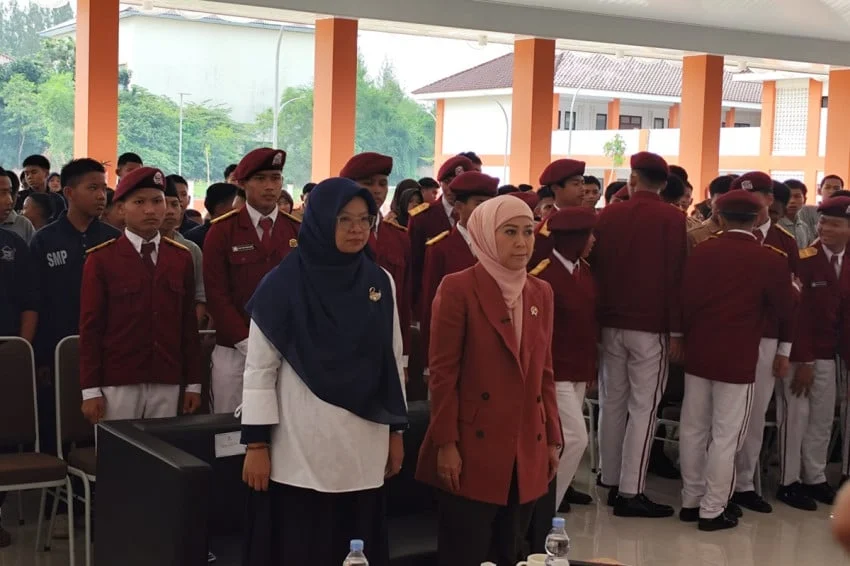
The Minister of Communication and Digital (Menkomdigi), Meutya Hafid, conducted an official visit to the Sekolah Rakyat Terintegrasi (SRT) 1 in Bekasi, West Java, on Friday, November 27, 2026, to evaluate the institution’s digital infrastructure. The visit served as a pivotal assessment of how government-backed digital initiatives are being integrated into local educational frameworks, particularly in areas where traditional schooling is being augmented by modern connectivity. During the inspection, Minister Hafid confirmed that the school’s digital connectivity is not only functional but currently exceeds the immediate operational requirements of the student body.
Context and Chronology of the Inspection
The visit to the Cikarang-based facility follows a period of rapid infrastructure rollout by the Ministry of Communication and Digital (Komdigi) aimed at bridging the digital divide in Indonesia’s peripheral and emerging educational hubs. The Sekolah Rakyat Terintegrasi model represents a collaborative effort between local governments and central policy mandates to provide high-quality education to children in industrial and semi-urban regions.
On the morning of November 27, 2026, Minister Hafid toured the campus grounds, observing the technical setup in classrooms and administrative centers. The inspection was prompted by the need to ensure that public schools under the government’s purview are adequately prepared for the transition toward digital-assisted learning. While the visit was brief, it was substantive, involving technical audits of internet bandwidth, hardware distribution, and the security protocols governing the school’s internal network.
Current Infrastructure and Operational Capacity
The data gathered during the visit indicates a unique situation regarding resource utilization at SRT 1 Bekasi. Currently, the school accommodates 344 students, a figure that is significantly lower than its maximum capacity of 1,086 students. This discrepancy in utilization rates means that the existing digital infrastructure—which was designed to handle the load of a full-capacity school—is currently operating with a substantial surplus of bandwidth and processing power.
"Alhamdulillah, here we do not need to do much because the connection is already excellent," Minister Hafid remarked to the media, including representatives from iNews Media Group. The minister emphasized that the current hardware, including computer laboratories and administrative systems, is robust enough to support the existing student population without further upgrades.
However, the ministry has maintained a flexible stance. Minister Hafid noted that should the school’s enrollment increase toward its full capacity, the Ministry of Communication and Digital stands ready to intervene. The school administration has been instructed to maintain open lines of communication with the Ministry, allowing them to request additional hardware or network enhancements as student intake grows.
Policy Contradictions: Connectivity vs. Gadget Usage
One of the most notable findings from the minister’s visit is the specific policy regarding student interaction with technology. While the school is fully equipped with high-speed internet and digital infrastructure to support pedagogical needs, the institution maintains a strict policy prohibiting the personal use of gadgets by students.
This approach reflects a broader pedagogical debate in Indonesia regarding the role of digital devices in early education. By providing centralized digital resources while restricting individual device usage, SRT 1 aims to prevent the distractions associated with personal smartphones while ensuring that students still gain essential digital literacy skills under the supervision of educators. This strategy is designed to balance the benefits of the digital age with the traditional values of classroom focus and student engagement.
Broader Implications for Digital Education in Indonesia
The visit to SRT 1 is part of a larger national initiative to standardize digital readiness in Indonesian schools. As Indonesia moves toward its goal of becoming a top-tier digital economy, the role of education becomes central. The Ministry of Communication and Digital has been tasked with ensuring that schools in districts like Bekasi—which acts as a major industrial hub—are equipped to produce a workforce familiar with digital tools.
Supporting Data and Infrastructure Trends
The digital infrastructure landscape in Indonesia has seen significant transformation over the last five years. According to recent reports from the Ministry, the expansion of the Palapa Ring and satellite-based internet access has brought connectivity to regions that were previously "dead zones." However, the challenge has shifted from mere connectivity to the "quality and utility" of that connection.
- Capacity vs. Demand: The situation at SRT 1, where capacity outweighs demand, is a microcosm of a larger issue in regional infrastructure planning. Over-provisioning infrastructure ensures longevity but requires careful management of maintenance costs.
- Digital Literacy: The Ministry’s focus on providing access while regulating usage underscores a pivot in policy. It is no longer just about giving students access to the internet, but ensuring that access is productive and curriculum-aligned.
- Regional Disparities: While SRT 1 enjoys high-quality connectivity due to its proximity to industrial sectors, other schools in remote areas of the archipelago still face significant latency issues. The Ministry is currently in the process of auditing these areas to ensure equitable resource distribution.
Responses from Stakeholders
The visit has elicited positive feedback from local administrators who view the Ministry’s proactive stance as a guarantee of future stability. By establishing a direct line of communication between the school and the Ministry, the government is reducing bureaucratic bottlenecks that often delay necessary repairs or hardware updates in the public school system.
Furthermore, the visit has helped clarify the government’s position on the "School for the People" (Sekolah Rakyat) initiative. There has been public speculation regarding the development and land use for these schools, particularly following statements from figures like Muhaimin Iskandar (Cak Imin) regarding the potential use of protected areas for educational facilities. By focusing on the existing infrastructure of the Cikarang facility, the Ministry of Communication and Digital has successfully shifted the discourse from political land-use debates to the tangible, practical benefits of digital education.
Future Outlook: Sustainability and Growth
Looking ahead, the Ministry of Communication and Digital plans to continue its monitoring program. The case of SRT 1 serves as a model for how the ministry intends to manage school infrastructure:
- Proactive Audits: Regular site visits to ensure that equipment remains in working order.
- Scalable Solutions: Providing modular hardware that can be added to as enrollment increases.
- Policy Alignment: Supporting schools that choose to limit personal device usage while promoting digital literacy through institutional hardware.
The success of this initiative will ultimately be measured by the academic performance of the students and their ability to navigate a digital-first economy upon graduation. As Minister Hafid stated, the foundation is in place. The next phase will involve ensuring that the curriculum evolves in tandem with the technology.
Conclusion: The Path Forward
The visit of Minister Meutya Hafid to SRT 1 Bekasi highlights a successful instance of government oversight in the education sector. By ensuring that the digital foundations are solid, the government has provided a safe and stable environment for students to learn. The decision to restrict personal gadgets while providing high-end institutional access is a calculated move that prioritizes academic integrity over unchecked digital exposure.
As the school moves toward its full capacity of 1,086 students, the partnership between the school and the Ministry of Communication and Digital will be tested. However, the current state of the facility suggests that the ministry is well-prepared to support the educational needs of the region. This visit serves as a testament to the government’s commitment to building a digitally proficient generation, one school at a time, ensuring that even as the nation advances, the quality of education remains the top priority.
In the broader context of the national digital agenda, the focus on Bekasi’s Sekolah Rakyat Terintegrasi serves as a blueprint for other districts. It reinforces the necessity of balancing high-speed connectivity with responsible, supervised usage, ensuring that Indonesia’s digital future is as much about the quality of the student as it is about the quality of the network.