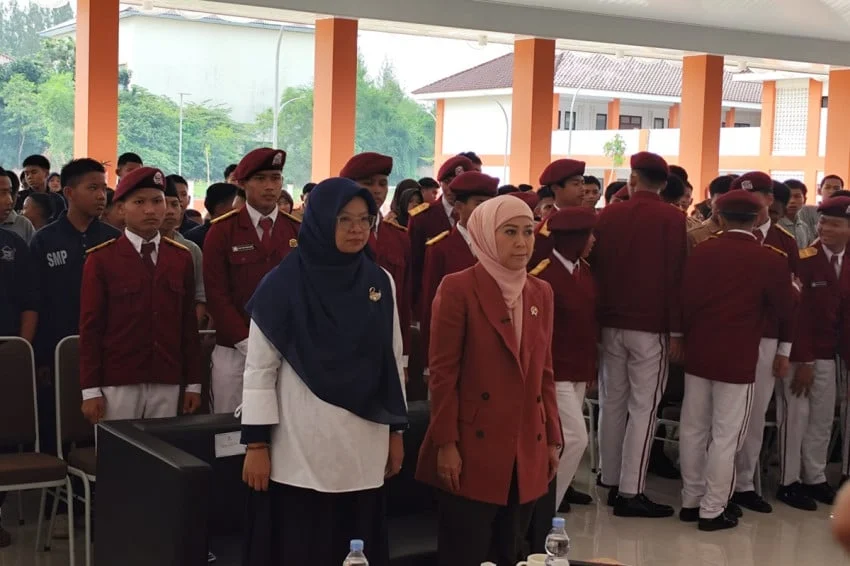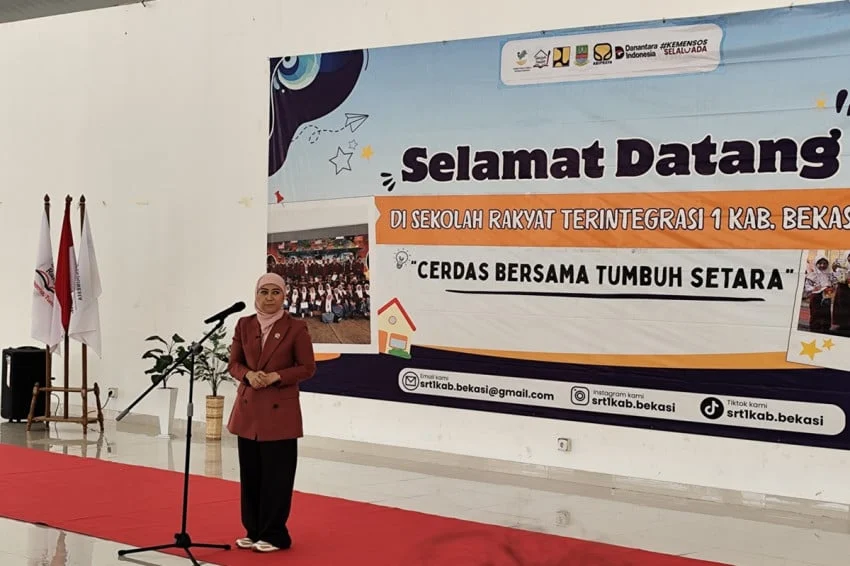
The Minister of Communication and Digital (Menkomdigi) of the Republic of Indonesia, Meutya Hafid, conducted an official visit to the Sekolah Rakyat Terintegrasi (SRT) 1 in Bekasi, West Java, on Friday, November 27, 2026. The visit served as a platform for the Minister to engage directly with students facing socio-economic challenges, underscoring the government’s commitment to bridging the educational and digital divide in underserved regions. The event highlighted not only the importance of infrastructural support but also the psychological and motivational fortitude required for students to succeed in an increasingly digitized global landscape.
Chronology of the Ministerial Visit
Minister Meutya Hafid arrived at the SRT 1 facility at approximately 09:27 WIB. Her arrival was marked by a reception organized by the student body, which featured various artistic expressions, including poetry recitations and mini-theatrical performances. These performances were more than mere ceremonial greetings; they served as a window into the students’ lives, showcasing their resilience and creative spirit despite the limitations imposed by their environment.
Following the reception in the school’s main hall, the Minister proceeded to listen to the testimonials of the students. These personal accounts provided a sobering look at the obstacles these children face, ranging from limited access to learning resources to the daily struggle of balancing education with familial economic responsibilities.
Contextualizing the Sekolah Rakyat Terintegrasi (SRT)
The Sekolah Rakyat Terintegrasi model represents a collaborative effort between the local government and civil society organizations to provide education to marginalized communities. These schools are designed to operate as hubs for integrated social development, offering not only academic instruction but also nutritional support and digital literacy training.
The choice of Bekasi as a site for this visit is significant. As an industrial hub surrounding the capital, Jakarta, Bekasi possesses a stark dichotomy: rapid technological development in urban centers versus significant educational disparities in its peripheral areas. By visiting SRT 1, the Ministry of Communication and Digital aims to signal that its mandate—digital transformation—is not limited to high-tech urban centers but must extend to the most vulnerable segments of the population.
Supporting Data: The Digital Divide in Indonesia
The urgency of Minister Meutya Hafid’s visit is supported by broader national data. Indonesia’s digital transformation agenda, as outlined in the National Digital Roadmap 2020-2024 and extended into 2026, focuses on the "3T" regions: Terdepan, Terluar, Tertinggal (Frontier, Outermost, and Underdeveloped). While internet penetration in Indonesia has surpassed 78% according to the latest figures from the Association of Indonesian Internet Service Providers (APJII), the quality of digital access remains unequal.
Data indicates that students in underdeveloped areas often lack the hardware necessary to compete with their urban counterparts. Furthermore, digital literacy—the ability to discern information and utilize digital tools for productivity—lags significantly behind hardware access. The government’s recent "Anugerah Penggerak Nusantara 2026" award, which recognized the Ministry of Communication and Digital for its efforts in these sectors, reinforces the narrative that digital infrastructure is the foundational pillar for national development.
Ministerial Address and Call to Action
In her formal address to the students, Minister Meutya Hafid emphasized the value of individual experience. "No student should compare their journey with that of others," she stated, urging the youth to treat their unique hardships as a source of motivation rather than a point of inferiority.
The Minister’s remarks struck a balance between empathy and pragmatism. She warned the students against the assumption that the existence of the school or the arrival of government officials guarantees success. "Facilities and state assistance are merely tools," she remarked. "True success is the product of the student’s own diligence and their commitment to pursuing their dreams." This sentiment reflects a shift in government policy from mere provision of resources to the fostering of self-reliance and meritocratic growth among students in marginalized areas.
Implications for National Digital Policy
The visit by the Minister of Communication and Digital to an educational facility underscores a strategic shift in how digital policy is implemented in Indonesia. Traditionally, the Ministry’s role was viewed through the lens of infrastructure—laying fiber optic cables or managing spectrum allocation. However, under the current administration, the Ministry is increasingly positioning itself as an agency of human capital development.
The broader implications of this policy approach include:
- Human-Centric Digitalization: The policy acknowledges that digital infrastructure is useless if the human element—the students—cannot leverage it for economic and social mobility.
- Cross-Sectoral Synergy: By collaborating with the Ministry of Education and local administrations, the Ministry of Communication and Digital is breaking down departmental silos to create "Integrated" solutions like the SRT.
- Psychological Empowerment: The emphasis on motivational support, as seen in the Minister’s speech, acknowledges that the "digital divide" is not just about bandwidth, but also about the psychological barriers that prevent marginalized youth from engaging with digital tools.
Expert Perspectives and Expected Outcomes
Educational observers and socio-economic analysts have reacted positively to the event, noting that the presence of high-level government officials at the grassroots level serves as a vital signal of inclusion. "When a Minister takes the time to listen to the struggles of students in an integrated school, it validates their existence and encourages local authorities to maintain and upgrade these facilities," noted a spokesperson from an independent educational think-tank.
However, critics point out that the sustainability of these efforts remains the primary challenge. For the SRT model to be effective, consistent funding, updated curricula that incorporate digital literacy, and the maintenance of internet infrastructure are essential. The Ministry has signaled that these components are part of a long-term plan to ensure that the 2026 digital transformation goals are met with equitable results.
Moving Forward: The Road to 2027
As Indonesia moves toward 2027, the focus of the Ministry of Communication and Digital is expected to remain on the intersection of technology and education. The visit to Bekasi is a microcosm of a larger, nationwide effort to ensure that the rapid advancement of the digital economy does not leave behind the next generation of Indonesian leaders.
By integrating the physical school environment with digital pedagogical tools, the government hopes to create a blueprint for other provinces to follow. Minister Meutya Hafid’s message—that tools must be matched with individual tenacity—will likely serve as the guiding philosophy for future educational and digital initiatives. The success of this endeavor will be measured not just in the number of tablets distributed or the speed of internet connections established, but in the academic and professional achievements of the students who today are finding their voice through poetry and theater within the halls of the Sekolah Rakyat Terintegrasi.
Ultimately, the visit serves as a reminder that in the age of the Fourth Industrial Revolution, the most critical infrastructure is the confidence and capacity of the youth. The Ministry of Communication and Digital’s presence in Bekasi is a tangible commitment to ensuring that the digital future of Indonesia is inclusive, resilient, and built upon the aspirations of all its citizens, regardless of their starting point.