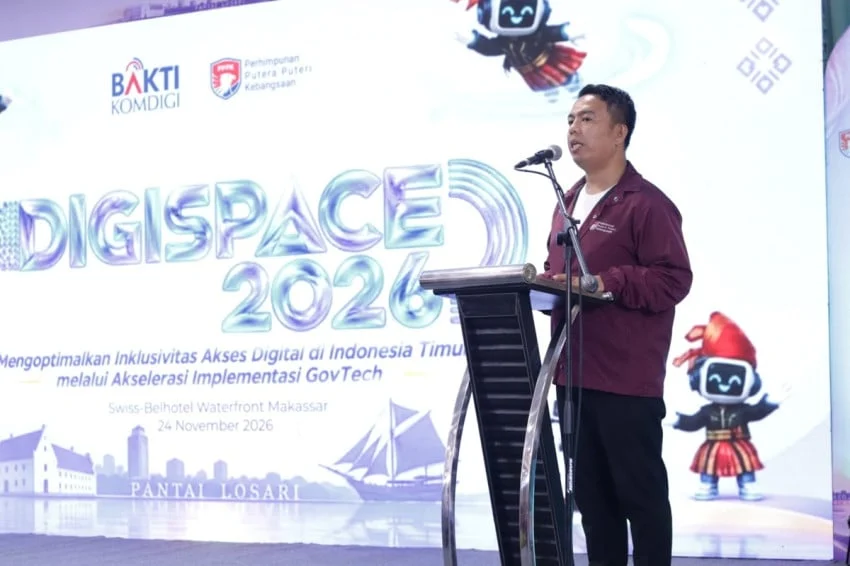
The pursuit of equitable digital access across Eastern Indonesia has emerged as a central pillar in the nation’s broader strategy for national digital transformation. At the forefront of this initiative, the Digispace 2026 conference convened stakeholders from government, academia, the technology sector, and youth organizations at the Swiss-Belhotel Waterfront in Makassar, South Sulawesi. The event placed a heavy emphasis on bridging the persistent connectivity gap between Western and Eastern Indonesia, framing digital inclusivity not merely as an infrastructure challenge, but as a fundamental catalyst for socio-economic development, educational equity, and transparent public governance.
Under the overarching theme, "Optimizing Inclusive Digital Access in Eastern Indonesia through Accelerated GovTech Implementation," the conference served as a multi-stakeholder forum designed to address regional disparities in information and communication technology (ICT). As Indonesia accelerates its transition toward a digitally integrated economy, policymakers and industry leaders increasingly recognize that the benefits of digitalization must reach remote and outer islands to ensure sustainable national growth. Digispace 2026 was structured to dissect these challenges, offering strategic pathways for accelerating Government Technology (GovTech) initiatives to streamline public services and make them accessible to marginalized and underserved populations.
Background and Context of the Digital Divide in Eastern Indonesia
For decades, Indonesia’s digital landscape has been characterized by a distinct geographical divide. While major urban centers in Java and parts of Western Indonesia enjoy high-speed broadband connectivity, advanced 4G and 5G networks, and mature digital economies, many regions in Eastern Indonesia—including parts of Sulawesi, Maluku, Nusa Tenggara, and Papua—have faced structural hurdles. These challenges stem from difficult archipelagic topographies, high infrastructure deployment costs, and lower baseline digital literacy rates.
However, the past several years have witnessed aggressive national interventions led by the Ministry of Communication and Digital Affairs, alongside state-owned enterprises such as BAKTI Kominfo, which have deployed thousands of Base Transceiver Stations (BTS) and launched high-throughput satellites like SATRIA-1 to bring internet access to remote schools, health clinics, and local government offices. Despite these infrastructure milestones, physical connectivity alone does not guarantee meaningful digital inclusion. Issues regarding affordability, device ownership, localized digital content, and the technical capacity of local governments to manage digital public infrastructure remain pressing concerns.
It is within this complex socio-technical context that Digispace 2026 was conceptualized. The event sought to move the conversation beyond basic connectivity toward deep, functional integration. By focusing on GovTech—the systematic modernization of government operations and service delivery through user-centric digital platforms—the conference addressed how public institutions in Eastern Indonesia can leapfrog traditional bureaucratic bottlenecks and deliver transparent, efficient services to citizens in remote areas.
Chronology and Proceedings of Digispace 2026
The planning and execution of Digispace 2026 unfolded as a collaborative multi-month initiative involving regional government bodies, academic institutions, and youth-led civil society organizations. Preparations began in the third quarter of 2025, focusing on identifying key bottlenecks in regional digital adoption and curating a panel of experts capable of addressing both technical and sociological dimensions of the digital divide.
On Friday, November 27, 2026, the main event officially commenced at the Swiss-Belhotel Waterfront in Makassar. The conference agenda was structured into high-level plenary sessions, technical workshops, and collaborative breakout discussions. The morning session opened with keynote addresses highlighting the urgency of localizing national digital strategies to fit the unique cultural and geographic contours of South Sulawesi and its neighboring provinces.
The afternoon featured a series of panel discussions addressing practical implementation frameworks for GovTech. Practitioners, policymakers, and academics dissected case studies of successful digital governance models from other regions, evaluating how these frameworks could be adapted to the administrative realities of Eastern Indonesia. The event concluded with the formulation of a collaborative framework aimed at fostering ongoing partnerships between technology startups, academic researchers, and municipal governments.
Expert Insights and Diverse Perspectives
Digispace 2026 drew a diverse roster of speakers representing various sectors of society, ensuring a multi-dimensional dialogue on digital transformation. Daniati, Secretary of the Makassar City Communication and Information Office (Diskominfo), provided valuable municipal insights during her address. Representing local government interests, she emphasized the critical role of municipal adaptation in digital transformation.
"Digital transformation at the national level cannot succeed without robust, localized implementation at the city and regency levels," Daniati stated during her panel presentation. She elaborated on Makassar’s ongoing initiatives to integrate digital public services, noting that local governments must actively build institutional capacity to handle citizen data securely while ensuring that non-digital populations are not left behind during the transition to automated platforms.
The private sector and digital advocacy perspectives were articulated by Sulfikar Suaib, CEO and Founder of Pallaka Group and spokesperson for Jubir.id. Suaib focused heavily on the economic empowerment dimensions of digital access, arguing that technology infrastructure must be paired with entrepreneurial training for the region’s youth. He highlighted that Eastern Indonesia possesses a demographic dividend characterized by a young, creative population that can serve as the primary engine for the digital economy if provided with adequate tools and digital literacy programs.
Adding an academic and technical dimension to the discourse, Mirfan, Vice Chairman II of the Association of Higher Education in Informatics and Computer Sciences (APTIKOM) for South Sulawesi, addressed the structural gaps in digital education. Mirfan stressed that academic institutions bear the responsibility of aligning their curricula with industry demands, particularly in fields such as data science, cybersecurity, and software engineering, which are vital for supporting GovTech infrastructure.
"Universities in Eastern Indonesia must transition from being traditional educational hubs to becoming active innovation incubators," Mirfan remarked. He advocated for closer partnerships between universities and local governments to conduct research on localized digital solutions, ranging from smart agriculture technologies for rural farmers to digital health platforms for remote island communities.
The youth and civil society perspective was powerfully represented by Muhammad Risal, Secretary-General of the Association of Sons and Daughters of the Homeland (Perhimpunan Putera Puteri Kebangsaan). In his official remarks closing the core sessions, Risal underscored the unifying and collaborative spirit of the conference.
"This activity serves as a vital collaborative space bridging the government, academia, technology industry players, and the younger generation to build an inclusive and sustainable digital ecosystem," Risal stated on Friday, November 27, 2026. He urged young leaders to take active ownership of the digital transition, positioning them not merely as consumers of technology, but as co-creators of digital public goods.
Broader Impacts and Policy Implications
The implications of Digispace 2026 extend far beyond the conference halls in Makassar, directly touching upon national policy goals outlined in Indonesia’s broader digital transformation roadmap. As the government continues to roll out integrated digital identification systems, cloud-first public administration policies, and centralized citizen portals, the success of these initiatives hinges on regional participation and trust.
One of the primary implications highlighted by policy observers at the event is the necessity of bridging the digital literacy gap alongside infrastructure deployment. While hardware—such as fiber optic cables, satellite terminals, and mobile devices—creates the physical foundation for connectivity, human capital development determines whether those tools are utilized effectively. In Eastern Indonesia, where literacy and digital fluency rates can vary significantly between urban centers and rural hinterlands, targeted educational programs are essential to prevent the exacerbation of existing social inequalities.
Furthermore, the emphasis on GovTech at Digispace 2026 points toward a fundamental shift in how public services are conceptualized and delivered. Traditional bureaucratic models, often plagued by red tape, geographical isolation, and opaque administrative procedures, are increasingly incompatible with the expectations of a digitally connected citizenry. By accelerating GovTech implementation, local governments in Eastern Indonesia can streamline licensing, public procurement, social assistance distribution, and civil registration processes. This not only enhances administrative efficiency but also reduces opportunities for corruption by increasing transparency and traceability in public spending and service delivery.
Another critical implication concerns economic resilience and regional competitiveness. By fostering a collaborative ecosystem where tech startups, academic researchers, and municipal leaders interact regularly, conferences like Digispace help cultivate regional innovation hubs. Rather than relying solely on technological imports from Jakarta or international markets, Eastern Indonesia can begin developing home-grown solutions tailored to its unique geographic and economic challenges, such as maritime logistics optimization, fisheries tracking technology, and localized e-commerce platforms for indigenous artisans.
Challenges Ahead in Regional Digital Transformation
Despite the optimistic tone of Digispace 2026, participants and independent analysts acknowledge that significant hurdles remain on the path to fully inclusive digital access in Eastern Indonesia. Chief among these challenges is cybersecurity and data privacy. As government agencies increasingly digitize sensitive citizen data—ranging from health records to financial information—they become prime targets for cyber threats. Ensuring robust cybersecurity frameworks across local government offices, many of which currently lack dedicated IT security personnel, is an urgent priority that requires sustained financial investment and technical support from the central government.
Infrastructure maintenance in remote areas also presents a persistent logistical challenge. Equipment deployed to outer islands and mountainous terrains is frequently vulnerable to extreme weather conditions, power supply instability, and high maintenance costs. Developing resilient, low-maintenance, and renewable-energy-powered digital infrastructure is vital for ensuring long-term continuity of service.
Additionally, digital affordability remains a barrier for lower-income households. Even in areas where network coverage is technically available, the cost of data packages and smart devices can consume a disproportionate share of household budgets. Addressing this economic barrier requires innovative regulatory frameworks, public-private partnerships, and targeted subsidies to ensure that marginalized communities are not priced out of the digital economy.
Conclusion and Future Outlook
Digispace 2026 has successfully underscored the urgency and strategic necessity of prioritizing digital inclusivity and GovTech acceleration in Eastern Indonesia. By bringing together diverse stakeholders—from municipal officials and academic leaders to industry disruptors and youth advocates—the event fostered a comprehensive dialogue centered on collaborative action rather than isolated policy planning.
As Indonesia continues its march toward a fully realized digital economy, the outcomes of initiatives discussed in Makassar will serve as a critical benchmark for regional development. The commitment of local governments, academic institutions, and youth organizations to build an inclusive, secure, and sustainable digital ecosystem demonstrates that the vision of a digitally unified Indonesia is well within reach, provided that cross-sector collaboration remains steadfast and implementation strategies remain sensitive to the unique needs of Eastern Indonesia’s diverse communities.