
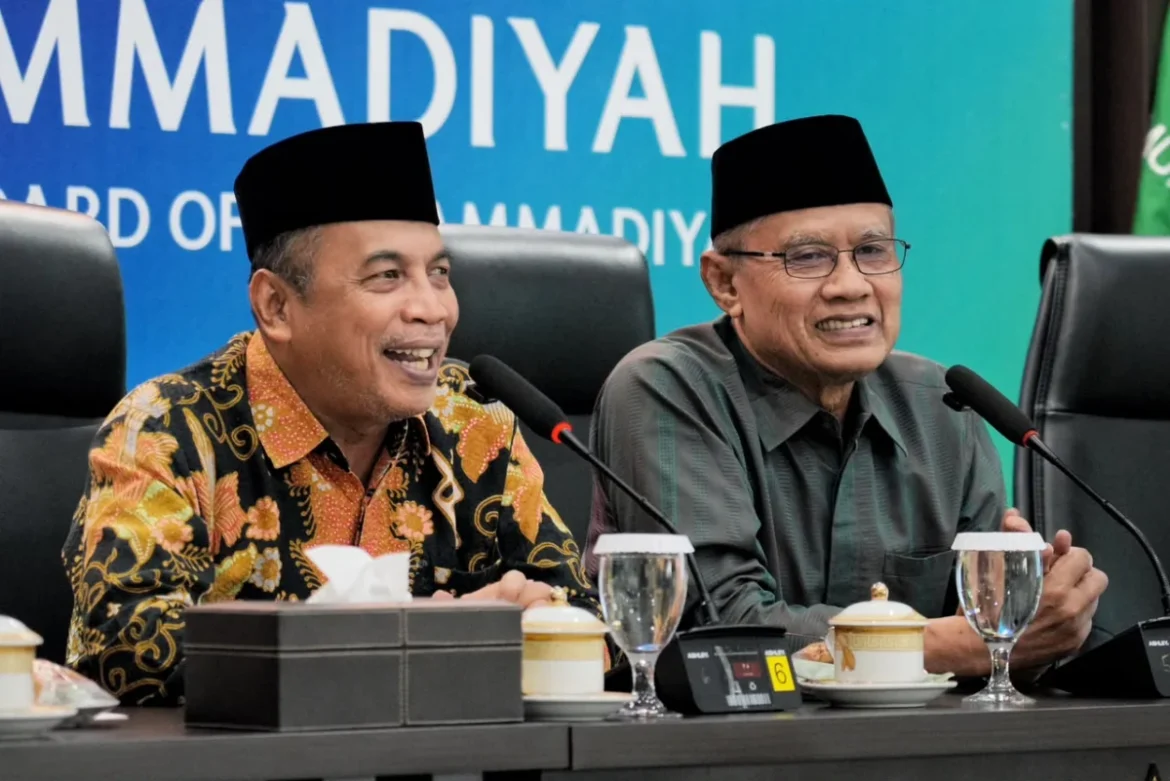
The Central Leadership of Muhammadiyah has officially announced a strategic adjustment regarding the upcoming Sidang Tanwir Muhammadiyah, scheduled to take place in Palu, Central Sulawesi, from November 13 to 15, 2026. Speaking after a high-level press conference at the Muhammadiyah Central Office in Yogyakarta on Monday, November 9, 2026, Central Leadership Chairman Agung Danarto outlined the revised framework of the forthcoming deliberations, emphasizing a streamlined focus on critical organizational trajectories and preparatory milestones leading up to the organization’s grand quadrennial congress, the Muktamar, in 2027.
The adjustment directly impacts the structural agenda of the commission sessions. Initially, the central leadership had formulated three primary topics for commission-level debate: the formulation of Muhammadiyah’s long-term strategic work program, the finalization of the Risalah Kesemestaan (Universal Message), and proposed amendments to the Muhammadiyah Articles of Association. However, following comprehensive internal evaluations and procedural reviews, the leadership decided to exclude the Articles of Association amendments from the Palu commission agendas.
Clarifying the rationale behind this exclusion, Agung Danarto explained that the deliberations concerning the organizational constitution had already undergone rigorous review during the preceding Tanwir session in Kupang, East Nusa Tenggara. At that earlier forum, the proposed amendments successfully transitioned through committee evaluations into plenary discussions, cementing their status as finalized preparation materials destined directly for the upcoming Muktamar floor. Consequently, revisiting the constitutional amendments in Palu was deemed procedurally redundant and unnecessary.
With the removal of the constitutional review from the commission workload, the Palu Tanwir will concentrate its efforts on two monumental pillars of the organization’s future: the long-term strategic work program spanning up to the year 2047, and the conceptual formalization of the Risalah Kesemestaan. This refined focus is designed to maximize the efficacy of the committee work, allowing delegates to dedicate undivided attention to charting the socio-religious, educational, and developmental roadmap of Indonesia’s second-largest Islamic organization as it approaches its milestone century-and-a-half trajectory.
Chronological Framework of Muhammadiyah’s Consolidation Phase
The pathway toward the Palu Tanwir represents a meticulously planned sequence of national consolidations within the Muhammadiyah organizational calendar. The administrative lifecycle of Muhammadiyah is punctuated by structured deliberative forums—ranging from localized branch consultations to regional conferences, culminating in the Tanwir (mid-term council) and the Muktamar (general congress).
Following the foundational discussions held during the Kupang Tanwir, the leadership structure initiated a cascading series of administrative reviews to ensure that regional aspirations align seamlessly with central strategic objectives. The announcement on November 9, 2026, marks the final pre-event adjustment phase, establishing clear boundaries for what the Palu assembly is mandated to achieve. This careful pruning of the agenda underscores a broader institutional strategy to prevent administrative gridlock during high-level meetings, ensuring that delegates can produce actionable, visionary policies rather than getting bogged down by repetitive constitutional debates.
The upcoming gathering in Central Sulawesi is not merely a routine administrative check-in; it serves as a crucial bridge between past programmatic cycles and the forthcoming leadership succession and visionary reset anticipated at the 2027 Muktamar. By refining the agenda well in advance, the Central Leadership has demonstrated a commitment to operational efficiency and purposeful governance.
Electoral Procedures and Verification Mandates
Beyond the substantive policy discussions on long-term programs and the Risalah Kesemestaan, the Tanwir assembly in Palu holds explicit constitutional responsibilities regarding organizational oversight and electoral preparation. In accordance with the Muhammadiyah Rules of Association (Anggaran Rumah Rumah Tangga – ART), the Central Leadership is mandated to propose specific slates of candidates for crucial oversight bodies, which must subsequently be ratified through formal Tanwir deliberations.
Agung Danarto elaborated on this procedural requirement, noting that the selection of the election committee and the financial verification team will be finalized during the Palu sessions. While the financial verification personnel are drawn from regional representations across the archipelago, their official legitimacy and formal establishment rely entirely on the ratification of the Tanwir assembly. This mechanism ensures institutional transparency, checks and balances, and democratic integrity within the organizational hierarchy, safeguarding financial accountability and electoral fairness as the movement moves toward the 2027 leadership transition.
Diverse National Participation and Attendance Projections
Logistical preparations for the Palu Tanwir indicate a robust, nationwide turnout reflecting the vast institutional footprint of the organization. According to registration data compiled by the central secretariat, participation is projected to exceed 400 delegates, bringing together key stakeholders from across Indonesia’s diverse administrative regions.
The composition of the assembly is structured to ensure comprehensive representation across all operational tiers of the movement. All 38 Pimpinan Wilayah Muhammadiyah (PWM)—representing provincial-level leadership boards spanning the entirety of the Indonesian archipelago—have formally confirmed their readiness to attend as voting members of the Tanwir. This absolute regional participation highlights the cohesive administrative reach of the organization and guarantees that grassroots perspectives will heavily influence the finalized strategic programs.
In addition to the provincial leadership, delegates from the seven Autonomous Organizations (Organisasi Otonom or Ortom) operating under the Muhammadiyah umbrella will take active part in the deliberations. These autonomous bodies—which include youth wings, student associations, women’s organizations, and professional groupings—represent vital demographic segments within the broader movement, ensuring that the voices of youth, women, and academics are duly integrated into the policy formulations.
Furthermore, operational support elements, including representatives from central councils, bureaus, and auxiliary boards (majelis and lembaga), will participate as official delegates. To bolster regional integration and foster administrative synergy, the organizing committee has also extended formal invitations to rectors of Muhammadiyah Higher Education Institutions (PTM), directors of Muhammadiyah hospitals, and the leadership of all Regional Leadership Boards (PDM) across Central Sulawesi, who will attend in the capacity of observers.
Broader Implications for National Development and Societal Influence
The decisions forged during the Palu Tanwir carry profound implications not only for the internal governance of Muhammadiyah but also for the broader socio-political and religious landscape of Indonesia. As an organization that manages thousands of educational institutions, extensive healthcare networks, and numerous social welfare programs, Muhammadiyah’s long-term strategic plans—particularly those extending toward the year 2047—serve as a parallel blueprint to national development goals.
The formulation of the long-term work program up to 2047 coincides strategically with Indonesia’s national vision of "Golden Indonesia 2047" (Indonesia Emas 2047), marking the centenary of the nation’s independence. By aligning its institutional milestones with the demographic and developmental trajectory of the republic, Muhammadiyah reaffirms its historical commitment to contributing constructively to nation-building, poverty alleviation, human resource development, and moral stewardship.
Moreover, the Risalah Kesemestaan is anticipated to provide a comprehensive theological and philosophical framework addressing contemporary global challenges, ranging from environmental crises and technological disruptions to ethical governance and pluralism. By tackling these themes at the Palu Tanwir, the leadership aims to project a modern, progressive, and inclusive Islamic discourse that resonates both domestically and internationally.
As the countdown to November 13, 2026, continues, the successful execution of the Palu Tanwir will serve as a definitive litmus test for Muhammadiyah’s organizational resilience and forward-looking vision. By streamlining its agenda to prioritize visionary policymaking and transparent administrative oversight, the movement is effectively positioning itself to navigate the complexities of the 21st century while laying a rock-solid foundation for the historic resolutions expected at the upcoming Muktamar in 2027.
