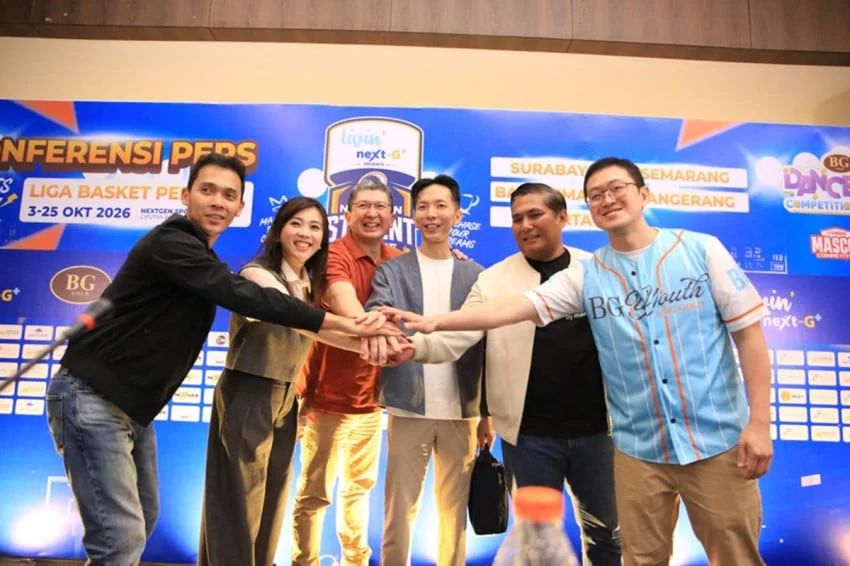
The landscape of Indonesian youth sports is undergoing a significant transformation as the Nextgen Student League (NSL) enters its fourth season. What began as a localized initiative in Surabaya has matured into a nationwide sporting ecosystem. Officially titled Livin Next-G Presents Cleo Nextgen Student League With BG Gold Season 2026–2027, the tournament has scaled its operations to include Surabaya, Semarang, Banjarmasin, Tangerang, and Jakarta. This expansion marks a pivotal moment for the league, which aims to standardize competitive basketball development for students ranging from elementary to high school levels.
The season is scheduled to kick off in the East Java Zone, with matches slated for October 3–25, 2026. The host venue, the Nextgen Arena located on the fourth floor of Ciputra World Mall in Surabaya, serves as the operational headquarters for the opening leg. This move signals a strategic shift in how student athletics are presented, moving away from traditional school gymnasiums toward professional-grade environments that mirror the intensity and production quality of adult professional leagues.
A Legacy of Growth: From Local Court to National Presence
The genesis of the Nextgen Student League was rooted in a simple yet ambitious premise: to provide a consistent, high-frequency competitive environment for student athletes in Surabaya. In its inaugural season, the league was hyper-focused on establishing a sustainable model within East Java. The organizers recognized early on that the primary weakness in Indonesian youth sports was the lack of a structured, long-term calendar. Many existing tournaments were "one-off" events that provided little room for player development or team continuity.
By the second and third seasons, the NSL began to refine its competitive format. They implemented a points-based system that prioritized long-term participation, rewarding teams that consistently engaged in the league’s programming. This shift not only stabilized the league’s attendance but also encouraged schools to treat basketball as a year-round institutional commitment rather than a seasonal extracurricular activity.
As of the 2026–2027 season, the scale of the operation is unprecedented. According to data released by the league, the competition now encompasses over 500 schools and 750 distinct teams, involving more than 8,000 student athletes. This growth trajectory mirrors the increasing demand for high-quality sports infrastructure in Indonesia’s urban centers.
Strategic Expansion and Logistical Complexity
The decision to expand into five distinct cities—Surabaya, Semarang, Banjarmasin, Tangerang, and Jakarta—is a calculated logistical endeavor. Each city presents a unique demographic and sporting culture. Jakarta and Tangerang offer access to a highly competitive pool of talent in the capital region, while Semarang and Banjarmasin represent strategic gateways into Central Java and Kalimantan, respectively.
Sudiantowi Limanauw, the Founder of NSL, commonly referred to as Awen, described this expansion as a foundational pillar for the league’s long-term vision. "The expansion to five cities is more than just a logistical feat; it is a declaration of intent," Awen stated during a press briefing on September 19, 2026. "We are building a bridge between talent identification and professional pathways. By standardizing the environment across these cities, we ensure that a student in Banjarmasin receives the same quality of competitive experience as a student in the heart of Jakarta."
The league’s ability to secure sponsorship from major entities such as Livin Next-G, Cleo, and BG Gold underscores the commercial viability of youth sports. These partnerships provide the financial backbone necessary to maintain professional-grade venues, officiating standards, and health safety protocols, which are often the limiting factors in grassroots sporting initiatives.
The Pedagogical Approach: Beyond the Scoreboard
While the scoreboard remains the primary metric for the players, the NSL administration emphasizes that the league is fundamentally an educational instrument. The organization has integrated a curriculum of "soft skill development" into the tournament structure. Players are not merely trained in dribbling, passing, and shooting; they are subjected to rigorous behavioral expectations that mirror the demands of higher education and professional life.
"When a student steps onto the court in the Nextgen Student League, they are not just playing for a trophy," Awen explained. "They are participating in a microcosm of society. They learn to navigate the pressures of leadership, the necessity of teamwork, the inevitable sting of defeat, and the maturity required to respect an opponent. These are the traits that will carry them forward, whether they pursue a career in basketball or any other professional field."
This focus on holistic development has drawn praise from educators and local government officials, who view the league as a constructive outlet for youth. By formalizing the competitive structure, the NSL helps keep students engaged in school-based activities, which studies have shown correlate with improved academic performance and social integration.
Economic and Social Implications
The growth of the NSL serves as a case study for the broader sports industry in Indonesia. The involvement of various stakeholders—including the schools themselves, the athletes, coaching staffs, parents, and local government—creates a multi-layered ecosystem. The tournament acts as a catalyst for local economies, driving foot traffic to malls and sports facilities, and fostering community engagement.
From a talent development perspective, the NSL functions as a scouting ground. With the increasing sophistication of data analytics in sports, the league provides a longitudinal record of a player’s performance. Scouts from university programs and professional clubs now have access to a reliable, historical database of player statistics, which was previously unavailable in the disorganized landscape of regional school tournaments.
Furthermore, the involvement of major brands indicates a shift in corporate social responsibility (CSR) strategies. Companies are moving away from passive sponsorship toward active participation in the growth of the next generation. By supporting the NSL, these brands are essentially investing in the future health and discipline of the nation’s youth.
Future Outlook: The Path to Professionalism
Looking ahead, the organizers of the NSL face the challenge of maintaining quality as they scale. The "Nextgen" model relies heavily on consistent standards, and the introduction of new regional markets requires a robust training program for officials, scorekeepers, and venue managers to ensure the "NSL standard" remains uniform across all five cities.
The 2026–2027 season will likely be a litmus test for this model. If the league can successfully execute its season in these five cities while maintaining high participation numbers and a clean record of fair play, it will likely serve as a blueprint for further expansion in subsequent years. There is potential for the league to eventually cover a broader geographical footprint, potentially including cities in Sumatra or Sulawesi, provided the current operational model proves scalable.
Ultimately, the Livin Next-G Presents Cleo Nextgen Student League With BG Gold is redefining the concept of a "student league." It is transitioning from an event-based model to a system-based model. By providing a consistent, predictable, and highly visible platform for competition, the league is nurturing a culture of excellence among Indonesian students. Whether these athletes go on to become professional basketball players or leaders in other industries, the discipline, teamwork, and mental fortitude they cultivate on the court at the Nextgen Arena will serve as a permanent asset in their development.
As the matches begin in October, the eyes of the Indonesian sports community will be on Surabaya. The success of this season will not be measured solely by who wins the championship, but by the league’s ability to continue fostering an environment where thousands of young Indonesians can learn, compete, and grow together in a structured, professional setting. The evolution of the NSL is a testament to the power of organized youth sports in building a more connected and disciplined future for the next generation of Indonesian leaders.