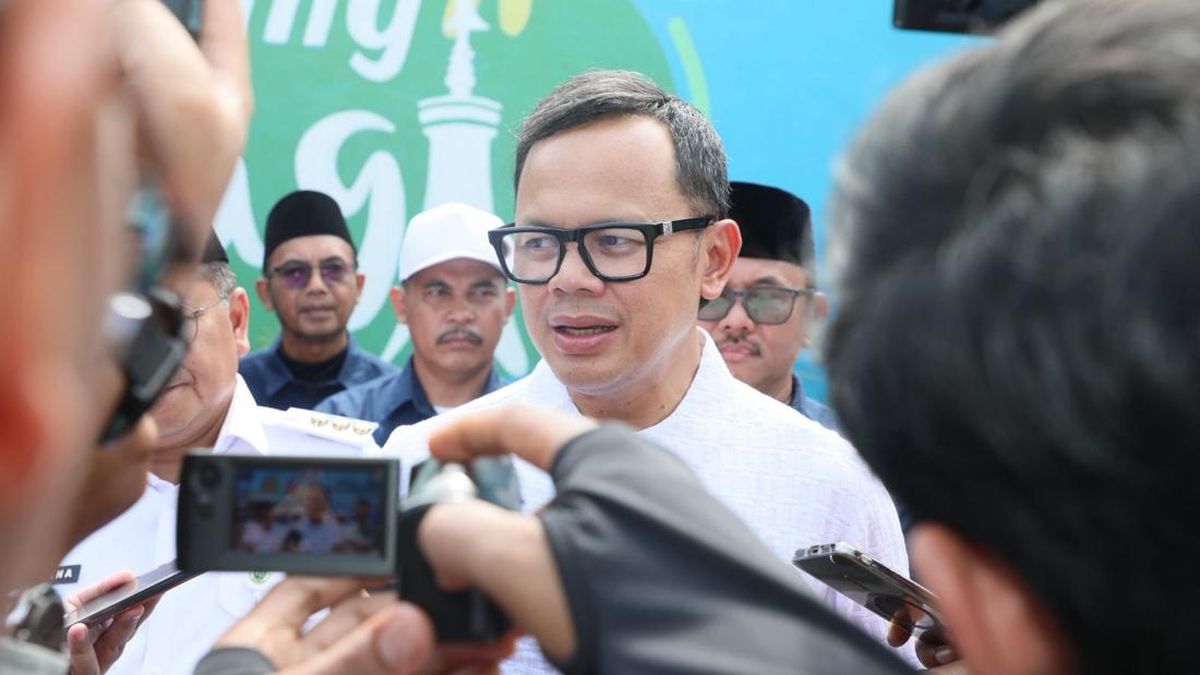
On Wednesday, April 15, 2020, Deputy Minister of Home Affairs (Wamendagri) Bima Arya Sugiarto undertook a direct inspection of the pilot location for the "Kampung Bahagia" (Happy Village) Program in RT 14, Kenali Asam Village, Kotabaru District, Jambi City. His visit served as a high-level endorsement of a community-driven initiative that he believes holds the key to effective national development strategies. During his comprehensive review, Sugiarto underscored the indispensable role of Ketua Rukun Tetangga (RT Chairmen) as the frontline implementers and vital "spearhead" for the successful execution of diverse government programs at the most localized levels of governance. His commendation of the Kampung Bahagia program extends beyond its immediate achievements, positioning it as an exemplary model worthy of adoption across other cities and regencies within Jambi, and potentially throughout the Indonesian archipelago, due to its systemic approach to community empowerment and emphasis on sustainable impact.
Understanding Indonesia’s Grassroots Governance: The Critical Role of RTs
Indonesia’s administrative structure is meticulously layered, extending from the central government down to the smallest community units. At the very foundation of this intricate system lies the Rukun Tetangga (RT), roughly translating to "Neighborhood Association," and the Rukun Warga (RW), or "Community Association." An RT typically encompasses 30 to 50 households, while an RW groups several RTs together. These units, though non-governmental in the strictest sense of formal bureaucracy, are absolutely integral to the daily lives of Indonesian citizens and serve as the direct interface between the populace and local government.
The Ketua RT, or RT Chairman, is a democratically elected community leader responsible for a myriad of tasks, ranging from mediating neighborhood disputes, managing local security and sanitation efforts, to facilitating administrative services like resident registration and birth certificates. More critically, they are the primary mobilizers of community participation in various development programs initiated by higher levels of government. In a nation as vast and diverse as Indonesia, with its unique challenges in equitable resource distribution and public service delivery, the efficacy of any national or regional policy often hinges on the capacity and dedication of these grassroots leaders.
Deputy Minister Sugiarto’s emphasis on the Ketua RTs as the "ujung tombak" or "spearhead" is not merely rhetorical. It reflects a deep understanding of Indonesia’s socio-political fabric. He articulated that the effectiveness and ultimate success of government programs are directly proportional to the capacity and proactive engagement of these neighborhood chiefs in mobilizing citizen participation. "Ujung tombak itu Ketua RT. Setiap program, kalau Ketua RT-nya enggak sigap, enggak aktif, enggak akan menang kelurahan itu," Bima Arya stated, highlighting that a kelurahan (village/urban ward) cannot truly succeed in its programs if its RT chairmen are not vigilant and active. This observation points to a long-standing challenge in Indonesian development: ensuring that top-down policies translate into tangible benefits and sustained engagement at the community level, a gap that often arises from a disconnect between central planning and local realities. The Kampung Bahagia program, according to Sugiarto, offers a compelling blueprint for bridging this gap.
The Genesis and Holistic Approach of the Kampung Bahagia Program
The Kampung Bahagia program in Jambi City was conceived as a multi-faceted initiative aimed at fostering comprehensive community development beyond mere infrastructure provision. Launched by the Jambi City Government, the program sought to move away from a traditional, budget-centric approach towards one that prioritizes systemic development, community empowerment, and robust local governance. While the precise inception date prior to Bima Arya’s visit is not detailed in public records, it is inferred to have been operational for some time, allowing for the observed outcomes by April 2020. The program’s core philosophy revolves around the belief that true progress stems from an empowered and self-reliant community, rather than solely from external funding injections.
A key distinguishing feature of Kampung Bahagia is its systematic empowerment approach, primarily through the establishment of dedicated working groups (pokja) within the community. These pokjas are composed of local residents, fostering a sense of ownership and direct involvement in planning, implementing, and overseeing local projects. This contrasts sharply with models where projects are externally conceived and executed, often leading to limited community buy-in and sustainability issues. Furthermore, the program places a significant emphasis on strengthening local governance structures, ensuring that decision-making processes are transparent, participatory, and accountable. This includes comprehensive education for community members and leaders, notably in disciplined financial management facilitated through banking mechanisms. This focus on financial literacy and institutionalized financial practices is crucial for ensuring the integrity and longevity of community funds, mitigating risks of mismanagement, and building trust among residents.
The Jambi City Government’s strategy, as observed by Deputy Minister Sugiarto, transcends simple budget disbursement. Instead, it invests in building enduring systems and enhancing human capital. This includes training in project management, resource allocation, and, critically, financial accountability. By integrating banking mechanisms for fund management, the program ensures a level of transparency and professionalism often lacking in informal community-managed initiatives. This systemic approach is designed to cultivate a self-sustaining development cycle, where communities are equipped with the skills and structures to manage their own progress, reducing reliance on intermittent external aid.
Tangible Achievements and Community-Led Development in RT 14
The visit by Deputy Minister Bima Arya Sugiarto to RT 14 in Kenali Asam Village provided a concrete demonstration of the Kampung Bahagia program’s successes. This particular neighborhood serves as a prime example of how the program’s systematic approach translates into tangible improvements in residents’ quality of life and community resilience. The achievements in RT 14 highlight a blend of government support and robust community self-sufficiency, known locally as "swadaya."
Among the notable infrastructure developments realized through the program is the construction of a 133-meter closed drainage system. This is a critical improvement, particularly in urban and semi-urban areas of Indonesia, where inadequate drainage often leads to localized flooding, waterborne diseases, and environmental degradation. A closed system, as opposed to open canals, also enhances public safety and hygiene. Beyond basic infrastructure, the program has invested in enhancing communal facilities designed to improve daily living and foster social cohesion. These include the procurement of essential items such as tents and chairs, which are vital for community gatherings, events, and emergency responses. The provision of a printer supports local administrative tasks and educational needs, while medical equipment signifies an investment in community health and immediate response capabilities. Furthermore, the installation of five CCTV points significantly boosts neighborhood security, deterring crime and enhancing residents’ sense of safety.
Crucially, the Kampung Bahagia program has actively fostered "swadaya" or community self-sufficiency. This principle encourages residents to contribute their own resources, labor, and ideas towards community projects, thereby deepening their sense of ownership and commitment. In RT 14, this spirit of self-reliance led to the addition of an extra 80 meters of drainage, alongside various other facilities, all financed and executed through community effort. This aspect is profoundly significant in the Indonesian context, where "gotong royong" (mutual cooperation) is a deeply ingrained cultural value. By leveraging and enhancing this traditional practice, the program not only achieves more with existing resources but also strengthens social bonds and collective agency. The synergy between government-allocated resources and community self-help has also demonstrably led to more efficient use of the budget, ensuring that funds are stretched further and invested in projects that genuinely reflect local priorities and needs.
Data-Driven Development: Ensuring Impact and Replication
A cornerstone of Deputy Minister Bima Arya Sugiarto’s assessment and his vision for the Kampung Bahagia program’s future is the imperative of data-driven measurement. He emphatically stressed the importance of collecting and analyzing data both before and after the program’s implementation to precisely ascertain its real-world impact on the community. This call for empirical evidence underscores a broader shift in national development policy towards evidence-based decision-making, moving away from anecdotal success stories to quantifiable outcomes.
For a program like Kampung Bahagia, such data could encompass a wide range of indicators. Before implementation, baseline data on public health (e.g., incidence of waterborne diseases), crime rates, community participation levels, and local economic indicators (e.g., household income, small business activity) would be collected. Post-implementation, these metrics would be re-evaluated to measure changes. For instance, the new drainage system could be assessed for its impact on reducing flooding incidents and disease prevalence. The CCTV cameras could be linked to changes in reported crime rates. The provision of community facilities might correlate with increased social gatherings and strengthened community ties. Furthermore, the educational components, particularly financial literacy, could be evaluated based on the number of residents utilizing banking services or demonstrating improved financial management.
This rigorous evaluation is crucial for several reasons. Firstly, it provides accountability to both the government and the community, demonstrating where public funds and community efforts have yielded results. Secondly, it offers invaluable insights for program refinement, allowing implementers to identify successful elements and areas needing improvement. Thirdly, and most significantly for Bima Arya’s vision, robust data is essential for justifying and guiding the replication of the program. "Harusnya yang seperti ini akan panjang dan bertahan lama karena dirasakan manfaatnya, saya apresiasi. Kampung Bahagia bukan saja bisa diadopsi di Kota/Kabupaten [di] Jambi, tapi juga di seluruh Indonesia," he remarked, emphasizing that programs with tangible, long-lasting benefits are inherently sustainable and deserve widespread adoption. By systematically documenting its impact, Kampung Bahagia can present a compelling case study for other regions facing similar development challenges, allowing them to adapt and implement proven strategies tailored to their unique contexts. This aligns with national development objectives of fostering equitable growth and empowering local communities across Indonesia.
Perspectives from Stakeholders: A Vision for Sustainable Growth
The success of the Kampung Bahagia program, and its potential for national replication, hinges on the collective buy-in and commitment from various stakeholders, from high-ranking government officials to the residents themselves. Deputy Minister Bima Arya Sugiarto’s endorsement represents a significant validation from the central government. His vision is clear: to identify and promote grassroots innovations that effectively address local needs while aligning with broader national development goals. His appreciation for Jambi City’s approach underscores a belief that systemic change, driven by community empowerment and transparent governance, is the most durable path to progress. This perspective signals a desire for a decentralized development model where local initiatives are celebrated and scaled up, rather than relying solely on uniform national directives.
From the perspective of the Jambi City Government, the Kampung Bahagia program is likely viewed as a flagship initiative that showcases their commitment to citizen welfare and effective local governance. The city administration, under the leadership of its Mayor, would likely express pride in the community’s participation and the program’s tangible outcomes. Inferred statements from city officials would highlight their commitment to expanding the program to other neighborhoods within Jambi, leveraging the lessons learned from RT 14. They would likely emphasize the efficiency gained through community self-sufficiency and the enhanced transparency provided by the banking mechanism for financial management. Such local government buy-in is paramount, as it ensures the necessary administrative support, resource allocation, and political will to sustain and expand such initiatives.
At the community level, the voices of the RT Chairmen, Pokja leaders, and residents are crucial. For Ketua RTs like those in RT 14, the program offers a framework to amplify their leadership and mobilize their communities more effectively. They would likely report an increased sense of ownership among residents, improved living conditions, and stronger social cohesion. Residents would articulate the direct benefits they experience – cleaner environments due to better drainage, enhanced security from CCTV, and improved access to communal facilities. While challenges in sustaining volunteer engagement or managing evolving community needs might exist, the overall sentiment would likely be one of empowerment and a heightened sense of collective responsibility for their neighborhood’s well-being. This bottom-up perspective is what truly validates the program’s impact, as it measures success through the lens of those it aims to serve directly.
Broader Implications and the Path to National Replication
The Kampung Bahagia program in Jambi, as championed by Deputy Minister Bima Arya Sugiarto, carries significant broader implications for Indonesia’s development landscape. Its potential for national replication positions it as a blueprint for addressing common grassroots development challenges across the archipelago. Indonesia, with its thousands of islands and diverse socio-economic contexts, faces persistent issues such as uneven development, inadequate basic infrastructure in remote areas, and the need for greater community participation in governance. Kampung Bahagia offers a replicable model that directly tackles these issues through its emphasis on systemic empowerment, local ownership, and robust governance.
Firstly, the program’s focus on strengthening the capacity of RT leaders and establishing community working groups (pokja) directly addresses the challenge of effective program delivery at the grassroots. By empowering these local units, it ensures that development initiatives are not merely top-down mandates but are organically integrated into the community’s fabric, increasing the likelihood of long-term sustainability. Secondly, its systematic approach to infrastructure development, coupled with an emphasis on "swadaya" and "gotong royong," demonstrates how limited government budgets can be maximized through community contributions, fostering a sense of collective responsibility and pride. This model of co-creation, where government acts as a facilitator and communities as active partners, can significantly enhance the efficiency and impact of development spending.
However, scaling such a program nationwide would present its own set of challenges. These include ensuring consistent funding mechanisms across diverse regional economic capacities, standardizing training and education for RT leaders and pokja members without stifling local innovation, and establishing effective monitoring and evaluation systems across millions of RTs. The cultural and social nuances of each region would also necessitate careful adaptation, as a one-size-fits-all approach is rarely effective in Indonesia. Yet, the core principles of community-led development, transparent financial management, and data-driven impact assessment are universally applicable.
Ultimately, the Kampung Bahagia program represents a valuable contribution to Indonesia’s decentralization agenda and its vision for inclusive, community-led development. By proving that effective governance and sustainable progress can be achieved through empowered local leaders and engaged citizens, it offers a compelling alternative to traditional development paradigms. As Indonesia continues its journey towards becoming a developed nation, programs like Kampung Bahagia will be instrumental in ensuring that no community is left behind, and that progress is rooted in the collective well-being and active participation of its diverse populace. The call for its national replication is not just an endorsement of a successful local project but a strategic vision for fostering a nation of "Happy Villages," built from the ground up.