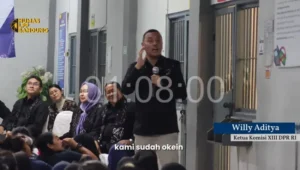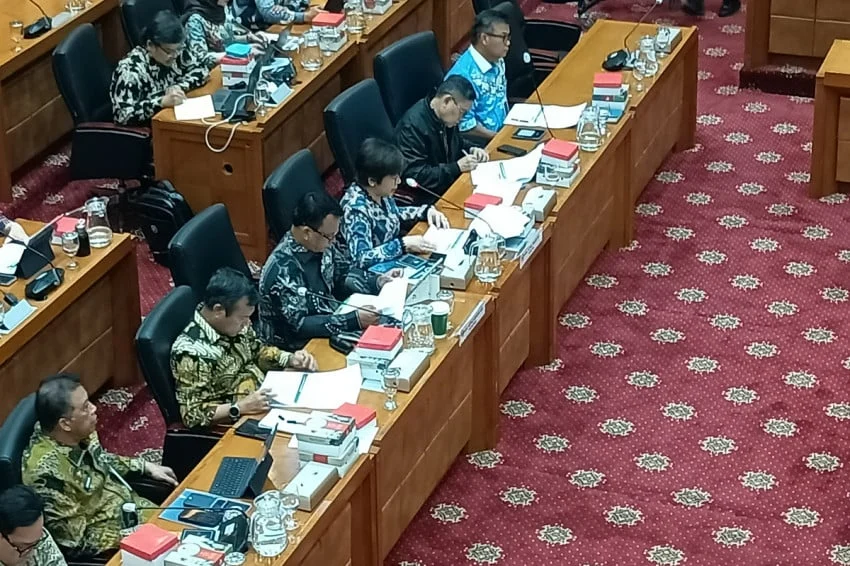
The National Nutrition Agency (BGN) faced intense scrutiny from members of Commission IX of the House of Representatives (DPR RI) during a hearing at the Nusantara I Building, Parliament Complex, Senayan, on Friday, July 17, 2026. The session, which was intended to review the agency’s performance and financial accountability for the 2025 fiscal year, turned contentious after BGN leadership presented an Unqualified Opinion (Wajar Tanpa Pengecualian or WTP) from the Audit Board of Indonesia (BPK). Lawmakers expressed deep skepticism, pointing to a significant gap between the prestigious audit status and the agency’s actual budget utilization, which remained alarmingly low.
Muazzim Akbar, a member of Commission IX representing the National Salvation Party (PAN) faction, led the critique. He argued that the financial report’s WTP status felt disconnected from the reality of the agency’s operations. According to the data presented, the BGN only managed to realize approximately 59% of its allocated budget for the year 2025. Muazzim suggested that such a low absorption rate usually indicates systemic inefficiencies or planning failures, which typically would not align with a "clean" audit report.
"The fact that the budget realization averaged only 59% is a serious red flag," Muazzim stated during the hearing. "How can an agency claim a WTP status when nearly half of its budget remained unspent? This discrepancy raises questions about the quality of the audit or the transparency of the reporting. One might even wonder if this WTP status was ‘manufactured’ to create an illusion of competence."
The skepticism was echoed by Heru Cahyono, a representative from the Golkar Party faction. While acknowledging the importance of the BGN’s mission to improve national health, Heru emphasized that financial "fairness" in accounting terms does not necessarily equate to "effectiveness" in public service delivery. He noted that the financial reports submitted to the commission still contained several "notes" or findings from the BPK that required immediate clarification.
The Gap Between Audit Status and Performance
In the Indonesian governmental context, an Unqualified Opinion (WTP) is the highest rating issued by the BPK. it signifies that the financial statements are presented fairly, in all material respects, and comply with state accounting standards. However, as the lawmakers pointed out, a WTP does not measure the success of a program or the efficiency of budget spending; it merely confirms that the money spent was recorded correctly.
The BGN’s 59% budget realization rate suggests that while the accounting may be accurate, the agency failed to execute its planned programs for nearly 41% of its total funding. For a body tasked with the critical mandate of national nutrition—specifically the "Free Nutritious Meal" (Makan Bergizi Gratis) program—this underperformance has direct implications for public health.
Commission members argued that if the funds were not spent, it means that millions of intended beneficiaries, particularly school-aged children and pregnant women, did not receive the nutritional support promised by the administration. The lawmakers demanded a detailed breakdown of why the funds were stalled, whether the issues lay in the procurement of food supplies, the establishment of distribution centers, or administrative bottlenecks within the newly formed agency.
Background: The Rise of the National Nutrition Agency
The National Nutrition Agency was established as a cornerstone of the government’s strategy to achieve the "Golden Indonesia 2045" vision. Its primary responsibility is the management and implementation of the Free Nutritious Meal program, a multi-billion dollar initiative designed to eradicate stunting and improve the cognitive development of the nation’s youth.
Since its inception, the BGN has been under immense pressure to deliver results quickly. However, the agency has faced several operational hurdles. In early 2026, the agency was embroiled in controversy following reports of food poisoning linked to several Nutrition Fulfillment Service Units (SPPG) in various regions. This led to calls from the DPR to permanently close facilities that failed to meet health and safety standards.
The 2025 fiscal year was supposed to be the year BGN scaled up its operations nationwide. The low budget realization reported in the July 2026 hearing suggests that the scaling process has been fraught with difficulties. Analysts suggest that the logistical complexity of delivering fresh, nutritious meals to over 80 million people across an archipelago of 17,000 islands is a task of unprecedented scale for the Indonesian bureaucracy.
Chronology of the Legislative Scrutiny
The tension during Friday’s hearing was the culmination of several months of observation by Commission IX. The timeline of the BGN’s recent challenges provides context for the lawmakers’ frustration:
- January 2025 – June 2025: The BGN began the initial rollout of the Free Nutritious Meal program. Early reports indicated delays in the recruitment of local vendors and nutritionists.
- September 2025: BPK began its interim audit of the agency’s mid-year spending.
- January 2026: Preliminary data showed that budget absorption was lagging behind targets, primarily due to "technical difficulties" in rural distribution.
- March 2026: Several incidents of foodborne illnesses were reported at BGN-managed hubs, leading to a temporary suspension of services in three provinces.
- June 2026: BPK officially issued the WTP opinion for the 2025 fiscal year.
- July 17, 2026: The BGN leadership presented the WTP status to Commission IX, leading to the current "grilling" session over the 59% realization rate.
Analysis of the 59% Realization Rate
The 59% figure is particularly damaging because it suggests a lack of "absorptive capacity." In public finance, if an agency cannot spend its budget, it often indicates that the agency was given more money than it had the infrastructure to manage.
For the BGN, the unspent 41% likely represents:
- Failed Tenders: Large-scale procurement for food processing equipment or transport vehicles that did not find qualified bidders.
- Infrastructure Delays: Planned SPPG centers that were not completed on time due to land acquisition or construction issues.
- Human Resource Gaps: A failure to hire the thousands of dietitians and kitchen staff required to run the program at full capacity.
Lawmakers warned that if this trend continues, the government may be forced to reallocate funds from the BGN to other departments in the 2027 budget cycle, which could jeopardize the long-term goals of the nutrition program.
Responses and Official Statements
During the hearing, the leadership of the BGN defended their record, stating that the WTP opinion was a testament to their commitment to financial integrity and the prevention of corruption. They argued that it is better to spend less and ensure every rupiah is accounted for than to rush spending and risk massive leakage or graft.
"We prioritize transparency and accountability," a BGN spokesperson noted on the sidelines of the meeting. "The low realization is a result of our strict vetting process for partners and suppliers. We refuse to compromise on the quality of food or the integrity of the procurement process just to meet a spending target."
However, this explanation did not satisfy Muazzim Akbar. "Integrity is the bare minimum. We expect integrity and performance. You cannot feed hungry children with a clean balance sheet alone," he retorted.
Broader Implications for Public Trust
The debate over the BGN’s audit status reflects a broader skepticism in Indonesia regarding the "WTP" label. Over the past decade, several government agencies have received WTP opinions only to have their high-ranking officials later arrested by the Corruption Eradication Commission (KPK) for embezzlement. This has led to a public perception that a WTP status can be "purchased" or "manufactured" through creative accounting.
For the BGN, which handles a program that is a signature policy of the current administration, the stakes are even higher. If the public perceives that the "Free Nutritious Meal" program is being mismanaged or that its success is being exaggerated through misleading audit reports, it could erode trust in the government’s ability to deliver on its social promises.
Furthermore, the "stunting" crisis remains a critical issue for Indonesia’s human capital development. With stunting rates still above the World Health Organization’s recommended levels in many provinces, every month of delayed budget realization is a month where children miss out on vital nutrients during their "first 1,000 days" of life—a window of development that cannot be recovered.
Moving Forward: Recommendations from the DPR
As the hearing concluded, Commission IX issued several recommendations for the National Nutrition Agency:
- Comprehensive Performance Audit: The commission requested that the BPK conduct a "Performance Audit" (Audit Kinerja) in addition to the financial audit. This would evaluate whether the 59% of funds spent actually achieved the desired nutritional outcomes.
- Accelerated Procurement: BGN must streamline its procurement processes to ensure that the 2026 budget does not suffer from the same delays.
- Local Empowerment: Lawmakers suggested that the BGN should work more closely with local farmers and MSMEs (Micro, Small, and Medium Enterprises) to shorten supply chains, which might improve budget absorption and support the local economy.
- Quarterly Reporting: The BGN is now required to provide quarterly updates to Commission IX on budget realization and program impact to ensure closer legislative oversight.
The "grilling" of the BGN serves as a reminder that in the realm of public service, financial compliance is only half the battle. As Indonesia moves toward its 2045 goals, the pressure on agencies like the BGN to match their "clean" books with "tangible" results will only continue to intensify. The upcoming 2026 mid-year review will be the next major test for the agency to prove that it has learned from the criticisms of the Parliament and is capable of turning its massive budget into actual meals on the tables of Indonesian families.