Tehran — In a significant escalation of geopolitical and maritime tensions in the Middle East, a senior Iranian military official announced that the nation’s naval forces maintain authoritative control over a vast expanse stretching from the eastern sector of the Strait of Hormuz to the northern reaches of the Indian Ocean. The declaration, made by military spokesperson Mohammad Akraminia, coincided with the observance of Iran’s National Navy Day on November 27.
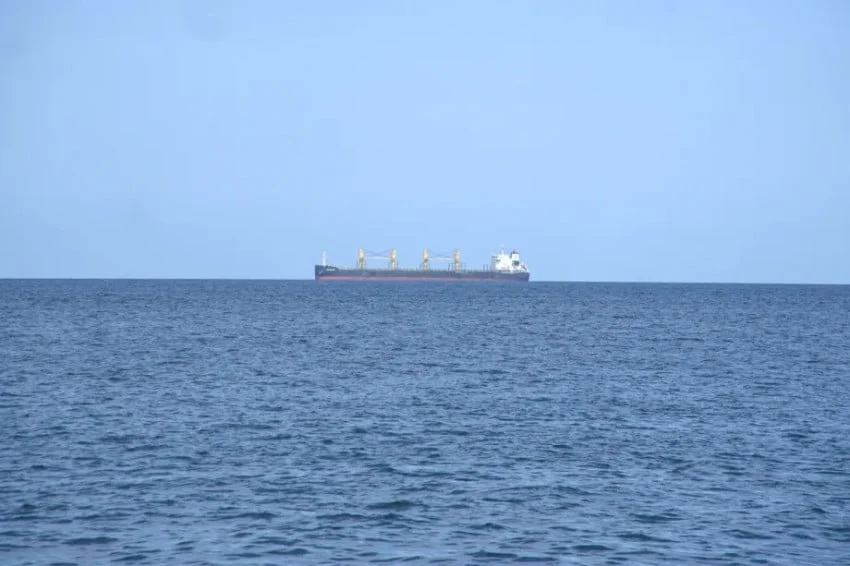
This assertive posture from Tehran was rapidly compounded by reports from the Islamic Revolutionary Guard Corps (IRGC) regarding a violent maritime incident. Two commercial oil tankers sustained catastrophic damage, resulting in explosions and subsequent fires, after reportedly striking sea mines in close proximity to the Omani port of Khasab and the eastern approaches of the critical Strait of Hormuz.
The compounding events have instantly elevated anxieties regarding the security of global energy corridors, reigniting longstanding fears of systemic supply chain disruptions in one of the world’s most vital maritime choke points. International shipping authorities, intelligence agencies, and global energy markets are scrambling to assess the operational reality on the ground as conflicting narratives emerge from regional actors and international observers.
Anatomy of the Maritime Incidents
According to official statements broadcast by Iran’s state-run media organization, IRIB, the IRGC Navy detailed the sequence of events that led to the destruction of the two petroleum carriers. The first vessel reportedly detonated a sea mine near the entrance of the port of Khasab, located on the northern tip of the Musandam Peninsula in Oman. The second vessel met a similar fate shortly thereafter while navigating what the IRGC characterized as an "unofficial route" situated east of the primary shipping lanes in the Strait of Hormuz.
The IRGC further alleged that both targeted vessels were operating with their Automatic Identification System (AIS) transponders disabled. Iranian military sources claimed this was a deliberate maneuver designed to facilitate clandestine transit through the tightly monitored waters without detection by regional authorities.
In a stark warning accompanying the operational update, the IRGC asserted that the designated waters are currently heavily mined. The elite military branch explicitly cautioned that even the deployment of airborne military assets by the United States—which maintains a robust naval presence in the region through the U.S. Fifth Fleet—would be wholly inadequate to protect commercial vessels attempting to traverse the contested sectors.
International Recognition and Verification Efforts
The United Kingdom Maritime Trade Operations (UKMTO), an organization within the Royal Navy that provides information on maritime security and counter-piracy, confirmed that it had logged alerts regarding a security incident in the broader region. The UKMTO noted that it received formal reports detailing an event "involving one cargo vessel and military forces in the Gulf of Oman," signaling that international monitoring agencies are actively tracking the unfolding crisis.
However, independent verification of the IRGC’s claims regarding sea mines, the disabling of transponders, and the specific ownership or flag states of the damaged tankers remains limited. Commercial satellite imagery and maritime tracking databases are currently being utilized by defense analysts to corroborate the extent of the damage and the precise geographical coordinates of the explosions.
Geopolitical Context and the Strategic Importance of the Strait of Hormuz
To fully comprehend the gravity of the events unfolding in the Gulf of Oman and the Strait of Hormuz, it is essential to examine the extraordinary geopolitical and economic weight of the region. The Strait of Hormuz is widely considered the world’s most critical energy transit chokepoint. Measuring only 21 miles wide at its narrowest point, the passage connects the Persian Gulf with the Gulf of Oman and the Arabian Sea.
Historically, roughly one-fifth of the world’s petroleum consumption passes through this narrow corridor. Any disruption, whether actualized through military conflict, asymmetric warfare, or the deployment of naval mines, carries immediate and severe repercussions for global crude oil prices, insurance premiums for maritime shipping, and international economic stability.
Iran’s reiteration of control over the waters from the eastern Strait of Hormuz to the northern Indian Ocean aligns with its long-standing strategic doctrine. Tehran has frequently emphasized its role as the primary security provider in the Persian Gulf region, often demanding that foreign powers—particularly the United States and its Western allies—reduce their military footprint in what Iran defines as its immediate sphere of influence.
The timing of Mohammad Akraminia’s statement on National Navy Day serves a dual purpose: projecting internal military strength to domestic audiences while signaling deterrence to external adversaries. By publicly linking naval dominance with the physical realities of mining activity near critical shipping lanes, the Iranian military is effectively underscoring its capacity to disrupt commercial traffic at will.
Chronology of Escalation Leading to the November Incidents
The explosions near Khasab and the Strait of Hormuz do not occur in a vacuum; they represent the latest chapter in a prolonged series of maritime security incidents that have plagued the Persian Gulf and the Gulf of Oman over recent years.
Historically, the region has witnessed intermittent friction involving commercial shipping, often referred to as the "tanker war" dynamics. Incidents involving mysterious sabotage, the seizure of foreign-flagged oil tankers by Iranian forces, and alleged covert operations targeting energy infrastructure have periodically heightened regional risk profiles.
During previous periods of heightened diplomatic friction—particularly following the breakdown of the Joint Comprehensive Plan of Action (JCPOA) and the re-imposition of severe international economic sanctions on Tehran—commercial vessels frequently became pawns in broader geopolitical standoffs. The deployment of naval mines, whether confirmed or suspected, recalls historical precedents from the late 1980s during the Iran-Iraq War, when maritime commerce in the Persian Gulf faced severe kinetic threats.
Official Responses and Regional Reactions
As details of the tanker explosions continue to filter through international channels, diplomatic and military capitals around the world are formulating responses.
Washington and its regional allies, including members of the Gulf Cooperation Council (GCC), have long prioritized the maintenance of freedom of navigation through international waters in the Middle East. The U.S. Fifth Fleet, headquartered in Bahrain, routinely patrols these waters to safeguard commercial shipping lanes and deter hostile actions by state and non-state actors. The explicit IRGC warning regarding the inability of U.S. air support to protect traversing vessels is seen by defense analysts as a direct challenge to American security guarantees in the region.
European maritime coalitions and independent shipping associations are expected to issue updated advisory notices to commercial operators, strongly recommending that vessels exercise extreme caution, maintain active tracking systems, and avoid unauthorized or secondary routes in the vicinity of the Strait of Hormuz and the Gulf of Oman.
Economic Implications and Global Energy Market Reactions
The immediate economic fallout from the reported tanker explosions is centered on the volatility of global energy markets. Crude oil futures historically react with sharp upward spikes whenever security threats materialize in the Persian Gulf.
Beyond raw commodity prices, the incident is anticipated to trigger immediate increases in maritime war risk insurance rates. Underwriters frequently reassess the risk profiles of vessels operating in the Persian Gulf, the Strait of Hormuz, and the Gulf of Oman following kinetic events. Skyrocketing insurance premiums can severely impact the economic viability of commercial transit, forcing shipping companies to temporarily suspend operations or reroute vessels entirely—options that are severely limited given the geography of the region.
Furthermore, supply chain vulnerabilities are likely to be highlighted by industrial nations that rely heavily on energy imports originating from Persian Gulf producers such as Saudi Arabia, the United Arab Emirates, Iraq, Kuwait, and Qatar.
Fact-Based Analysis of Broader Implications
From a strategic standpoint, the events of November 19 to November 27 underscore the fragility of regional deterrence architectures. The deployment or presence of sea mines in vital commercial pathways introduces an asymmetric hazard that is notoriously difficult to mitigate through conventional naval escorts alone.
Mine countermeasures require specialized naval assets—such as minehunter vessels and dedicated clearance divers—which take time to deploy to a crisis zone. Until international maritime authorities can definitively verify the safety of the affected routes, shipping companies will likely adopt a posture of heightened risk aversion.
Moreover, the conflicting claims regarding the operational status of the damaged tankers—specifically the IRGC’s assertions that the vessels had deactivated their tracking systems to evade detection—highlight the ongoing challenges of maritime domain awareness. In a crowded and legally complex waterway like the Strait of Hormuz, the line between clandestine movement and legitimate commercial navigation often becomes dangerously blurred during periods of heightened tension.
Outlook and Future Monitoring
As the international community awaits further clarification from the UKMTO, maritime intelligence firms, and official diplomatic channels, the situation in the Gulf of Oman remains fluid and highly volatile.
Naval analysts will closely monitor whether the reported mine incidents represent an isolated tactical escalation or the beginning of a sustained campaign targeting commercial shipping in the region. The ability of international diplomacy to de-escalate tensions, combined with the posture adopted by the United States and its regional partners in response to the IRGC’s warnings, will dictate the trajectory of security in one of the world’s most indispensable geopolitical corridors in the weeks to come.