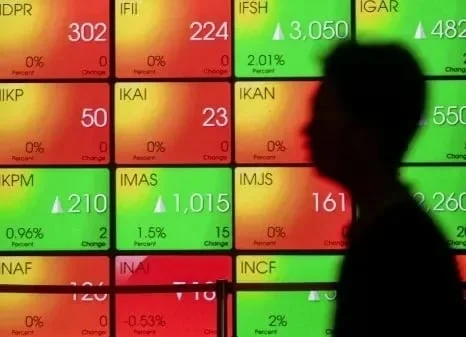
The Indonesia Stock Exchange (IDX) witnessed a robust performance during the Tuesday trading session on July 21, 2026, as the Composite Stock Price Index (IHSG) closed significantly higher, marking a pivotal moment for domestic capital markets in the second half of the year. The benchmark index surged by 1.74%, or approximately 108 points, to settle at the 6,340 level by the closing bell. This bullish momentum was characterized by high liquidity and widespread optimism across nearly all industrial sectors, reflecting a resurgence in investor confidence amid stabilizing macroeconomic indicators and strong corporate earnings reports.
Data from the exchange indicated a high level of market participation, with the total transaction value reaching a substantial Rp21.4 trillion. This figure represents a notable increase compared to the average daily turnover seen in previous weeks, suggesting that both domestic and foreign institutional investors are reallocating capital into Indonesian equities. The trading volume was equally impressive, with approximately 47.7 billion shares changing hands throughout the day. The breadth of the market was decidedly positive, with 439 stocks posting gains, while 221 stocks declined, and 305 remained unchanged.
Intraday Chronology and Market Momentum
The trading day began on a promising note, with the IHSG opening at 6,273, representing an initial jump of 0.67%. From the opening bell, the index maintained a steady upward trajectory, fueled by early buying pressure in blue-chip banking and energy stocks. By the end of the first session at noon, the index had already breached the 6,300 psychological barrier, supported by an influx of foreign capital.
As the second session commenced, the momentum intensified. Market analysts noted that the absence of negative global sentiment from Wall Street and major Asian markets provided a "goldilocks" environment for the IDX. Throughout the afternoon, the index touched a daily high of 6,345 before slightly cooling off to its final closing position of 6,340. This consistent climb throughout the day indicates that the rally was not merely a result of a late-day spike but rather a sustained accumulation of shares by market participants.
Comprehensive Performance of Major Indices
The rally was not limited to the composite index alone; various specialized and liquid indices also recorded significant gains, underscoring the quality of the day’s market movement. The LQ45 index, which tracks the 45 most liquid and fundamentally sound stocks on the exchange, rose by 1.42% to close at 636. Similarly, the IDX30, representing the top 30 stocks, climbed 1.10% to reach 358. These gains in the "blue-chip" segment suggest that large-cap companies are leading the charge, providing a stable foundation for the broader market rally.
Sharia-compliant investments also saw a surge in interest. The Jakarta Islamic Index (JII) outperformed the broader market average with a gain of 1.84%, closing at 381. Meanwhile, the MNC36 index, which tracks a specific basket of high-performing stocks, rose by 1.27% to finish at 278. The synchronized movement of these indices points toward a systemic recovery rather than isolated speculative plays in a few specific tickers.
Sectoral Analysis: Energy and Technology Lead the Green Wave
A deep dive into sectoral performance reveals that almost all sectors contributed to the index’s upward movement. The energy sector emerged as one of the primary drivers, bolstered by a recovery in global commodity prices and increased domestic demand for industrial fuels. As Indonesia continues its push for downstreaming (hilirisasi) in the mining and mineral sectors, companies involved in raw materials and industrial processing saw their share prices appreciate significantly.
The technology sector also played a crucial role in the day’s success. After a period of consolidation, tech stocks regained favor as investors reacted positively to improved path-to-profitability metrics from major Indonesian tech giants. Financial stocks, particularly the "Big Four" banks, remained the backbone of the rally, benefiting from a stable interest rate environment and healthy credit growth projections for the remainder of 2026.
Other sectors that finished in the green included:
- Infrastructure and Property: Driven by the continuation of national strategic projects and a slight easing in mortgage demand barriers.
- Consumer Cyclical and Non-Primary: Reflecting a boost in household spending power and consumer confidence.
- Transportation and Logistics: Benefiting from increased trade activity and the expansion of e-commerce delivery networks.
In contrast, the healthcare sector was the sole outlier, closing in the red. Analysts suggest this decline is a result of a "rotation of play," where investors move away from defensive healthcare stocks and toward growth-oriented cyclical stocks as the economy enters a more aggressive expansion phase.
Factors Driving Market Optimism
Several internal and external factors have converged to create this bullish atmosphere on the IDX. On the domestic front, the Indonesian government’s commitment to fiscal discipline and the successful implementation of structural reforms have lowered the country’s risk premium. Furthermore, the 2026 economic outlook remains bright, with GDP growth expected to hover around the 5.2% to 5.4% range.
"The market is currently pricing in the stability of the Rupiah and the proactive stance of Bank Indonesia in managing inflation," said a senior market strategist at a leading Jakarta-based brokerage. "Today’s high transaction value of over Rp21 trillion is a clear signal that institutional ‘big money’ is coming back to the table, specifically targeting sectors that will benefit from the country’s long-term industrialization goals."
Globally, the sentiment has been buoyed by the cooling of inflationary pressures in developed economies, which has led to expectations of a more dovish stance from the US Federal Reserve. As global interest rates stabilize, emerging markets like Indonesia become increasingly attractive due to their higher growth potential and relatively cheap valuations.
Foreign Capital Inflow and Liquidity
One of the most encouraging aspects of Tuesday’s trading was the significant presence of foreign net buys. Preliminary data suggests that foreign investors were net buyers across several major sectors, particularly in banking and telecommunications. This influx of foreign capital is vital for the IDX, as it provides the necessary liquidity to sustain long-term rallies.
The total volume of 47.7 billion shares traded reflects a vibrant retail sector as well. The rise of digital trading platforms in Indonesia over the last few years has democratized access to the stock market, resulting in a more diverse investor base. This combination of institutional stability and retail enthusiasm has created a resilient market structure capable of absorbing volatility.
Implications for the Third Quarter of 2026
As the IHSG enters the latter half of the year, the 6,340 level serves as a significant technical and psychological milestone. If the index can maintain its position above the 6,300 support level, technical analysts predict a potential run toward the 6,500 mark before the end of the quarter. However, market participants are advised to remain cautious of external shocks, such as geopolitical tensions or sudden shifts in global energy prices.
The robust performance of the Indonesian stock market also has broader implications for the national economy. A strong capital market facilitates easier fundraising for corporations, which in turn leads to increased capital expenditure, job creation, and overall economic activity. The Rp21.4 trillion turnover is not just a number; it represents the flow of capital into the engines of Indonesian growth.
Expert Reactions and Future Outlook
Market observers are generally optimistic but urge a selective approach to stock picking. While the "rising tide lifts all boats" today, the coming weeks may see a more fragmented performance based on individual corporate earnings. "We are seeing a transition from a sentiment-driven market to a fundamental-driven market," noted a researcher from a national financial institute. "Investors should focus on companies with strong balance sheets and clear growth trajectories in the green energy and digital economy sectors."
Government officials have also expressed confidence in the market’s trajectory. Representatives from the Coordinating Ministry for Economic Affairs recently highlighted that the integration of the Indonesian capital market with regional Asian markets is progressing well, further enhancing the attractiveness of the IDX for international funds.
In conclusion, the IHSG’s close at 6,340 on July 21, 2026, marks a day of significant achievement for the Indonesian financial landscape. With nearly all sectors participating in the rally and trading values reaching multi-month highs, the stage is set for a potentially historic year for the IDX. As investors look ahead, the focus will remain on sustaining this momentum through consistent economic policy and corporate transparency, ensuring that the Indonesian stock market remains a premier destination for global and domestic investment alike.