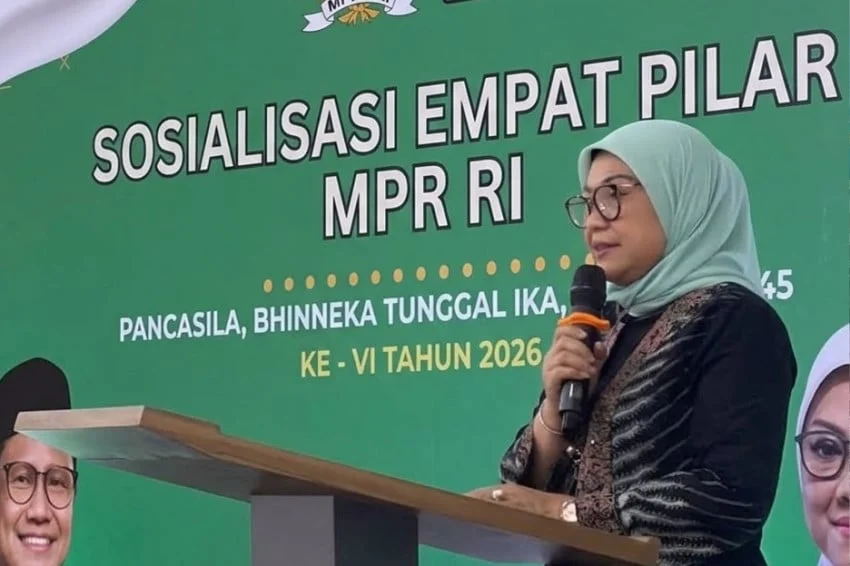
Jakarta, the capital city of Indonesia, stands as a microcosmic representation of the nation’s motto, Bhinneka Tunggal Ika—Unity in Diversity. Amidst the rapid urbanization and the socio-political dynamics of a global metropolitan hub, the imperative to maintain social cohesion has never been more critical. On Saturday, September 19, 2026, Ida Fauziyah, a prominent member of the People’s Consultative Assembly (MPR) representing the National Awakening Party (PKB) faction, spearheaded a significant public outreach initiative titled "Sosialisasi Empat Pilar Kebangsaan" (Socialization of the Four Pillars of Nationality) at the Mampang Sports Hall in South Jakarta. The event served as a strategic platform to reinforce the foundational ideologies that bind the Indonesian archipelago together.
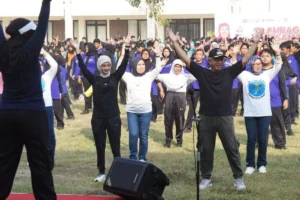
The gathering brought together a diverse cross-section of the Jakarta population. Participants included religious leaders, local community figures, grassroots administrators such as RT/RW (neighborhood and community unit) heads, women’s advocacy groups, and a vibrant contingent of high school and university students. This demographic mix was intentional, aimed at bridging the generational gap and ensuring that the principles of national identity remain resilient across all layers of society.
The Four Pillars: A Foundational Framework
The "Four Pillars" refers to the essential ideological infrastructure of the Indonesian state: Pancasila (the five guiding principles), the 1945 Constitution (UUD 1945), the Unitary State of the Republic of Indonesia (NKRI), and the national motto, Bhinneka Tunggal Ika (Unity in Diversity). These pillars are not merely theoretical concepts; they are the legal and moral frameworks that govern the Indonesian democratic process.
During the event, Ida Fauziyah emphasized that the relevance of these pillars extends far beyond the halls of parliament. "The four pillars are the bedrock of our existence as a sovereign nation," Fauziyah stated in a follow-up briefing on Monday, September 21, 2026. "In a city as complex and dynamic as Jakarta, where thousands of backgrounds intersect daily, the values of tolerance, mutual respect, and national unity are the primary safeguards against polarization and social fragmentation."
Contextualizing the Initiative: Why Jakarta Matters
Jakarta’s role as the melting pot of Indonesia makes it a barometer for the nation’s social health. With a population exceeding 10 million and a transient population that doubles this figure during work hours, the city faces unique challenges. According to the latest census data from the Central Statistics Agency (BPS), Jakarta hosts residents from almost every ethnic and linguistic group in the country. This demographic density often leads to heightened political competition and occasional social friction.
The decision to host the socialization in Mampang, South Jakarta, is significant. As an urban district with a high density of residential and commercial activities, it represents the typical Jakarta neighborhood where community cohesion is tested by modern stressors, such as economic inequality and the rapid spread of digital information. By engaging local community leaders—the RT/RW heads—the MPR is effectively utilizing the "grassroots approach" to maintain stability, ensuring that local leaders can act as mediators in potential conflicts.
Chronology of the Advocacy Efforts
The September 19 event was part of a larger, long-term national agenda initiated by the MPR to bolster civic education. The trajectory of this outreach can be summarized as follows:
- Early 2026: The MPR intensified its mandate to conduct outreach, following observations of increased digital polarization during the lead-up to regional election cycles.
- July 2026: Parliamentary sessions highlighted the need for more targeted engagements with Gen Z and Millennial populations, who are increasingly susceptible to extremist ideologies disseminated via social media.
- September 19, 2026: The Mampang session was conducted as a primary intervention for the Jakarta metropolitan area, focusing on the intersection of urban development and social harmony.
- Post-Event (Late September 2026): Stakeholders involved in the event have committed to follow-up workshops designed to translate the four pillars into actionable neighborhood programs, such as community-led diversity festivals and youth dialogue forums.
Supporting Data: The Need for Civic Resilience
Research from various policy think tanks in Indonesia suggests that while the national identity remains strong, there is a measurable decline in "inter-group trust" among the youth in urban centers. A 2025 survey by the Indonesian Institute of Sciences (now BRIN) indicated that while 85% of respondents valued Pancasila, only 40% felt they had a deep understanding of its practical application in daily civic life.
Ida Fauziyah, who also serves as a member of the House of Representatives (DPR) Commission VI, which oversees trade, industry, and investment, linked the importance of these pillars to the economic future of the city. She argued that a stable, inclusive society is a prerequisite for a thriving economy. "When citizens feel safe and respected, investment increases, and social capital grows," she noted. Her dual role in both the MPR and DPR allows her to advocate for policies that integrate national character building with economic development.
Official Responses and Stakeholder Perspectives
The initiative received positive feedback from local community leaders who attended the event. Ahmad Subekti, an RT head from the Mampang district, remarked that the dialogue provided a much-needed venue for discussing local grievances. "Often, we feel disconnected from the national narrative. Having a representative from the MPR come down to the neighborhood level reminds us that our local harmony is a national priority," Subekti said.
Academic experts have also weighed in on the efficacy of these sessions. Dr. Retno Wulandari, a sociologist at the University of Indonesia, commented that while socialization events are beneficial, they must be part of a broader, sustained curriculum. "The Four Pillars should not be seen as a historical relic but as a living document. The involvement of students is the most promising aspect of this event, as they are the ones who will define the social discourse of the next decade," she observed.
Broader Implications for National Stability
The socialization of the Four Pillars in Jakarta carries implications that reach far beyond the city limits. As the seat of government, the social climate in Jakarta often dictates the political mood of the entire nation. By proactively addressing the nuances of tolerance and unity, the MPR is aiming to preemptively mitigate the risks associated with the upcoming national transition periods.
The focus on youth participation is particularly strategic. With the demographic bonus currently being experienced in Indonesia, the youth are both the greatest potential for progress and the most vulnerable to divisive rhetoric. By framing the Four Pillars as a "modern toolset" for 21st-century citizens, Ida Fauziyah is attempting to rebrand traditional civic education to resonate with a digitally native audience.
Conclusion: A Path Forward
The event at Mampang serves as a clear indicator of the government’s current strategy: strengthening the foundations of the nation through direct, face-to-face dialogue. As Indonesia navigates the complexities of an increasingly globalized world, the emphasis on Pancasila, the Constitution, the unitary state, and national diversity is positioned as the primary defense against the erosion of social cohesion.
Looking ahead, the success of such initiatives will be measured by their long-term impact on local policy and community relations. For Ida Fauziyah and her colleagues in the MPR, the work does not end with the conclusion of the Mampang event. The objective remains to ensure that every citizen, from the high-rise offices of the business district to the bustling alleys of South Jakarta, views the four pillars as more than just a formal doctrine—but as a daily, lived experience of what it means to be Indonesian. As the nation progresses toward the next stage of its development, the ability of its diverse population to remain united under these four pillars will undoubtedly remain the ultimate test of its democratic maturity.