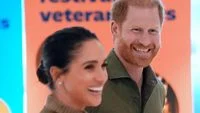
The Duke and Duchess of Sussex find themselves at a critical crossroads just weeks after establishing a residential base in the United Kingdom. Despite their attempts to reintegrate into British life, reports have surfaced indicating that the couple is contemplating a return to their residence in Montecito, California. At the heart of this potential departure lies a complex and intensifying dispute over the security protocols afforded to them by the British government, specifically regarding the Royal and VIP Executive Committee (Ravec).
The Security Impasse and Ravec’s Role
The primary friction point involves the Ravec committee, an independent body tasked with overseeing the security arrangements for members of the Royal Family and high-profile public figures. Since Harry and Meghan formally stepped back from their roles as working royals in 2020, their automatic entitlement to taxpayer-funded protection was revoked.
Prince Harry has been vocal about his contention that the current security climate in the United Kingdom poses a credible threat to his family. His legal challenges regarding this matter have been well-documented, with the Duke arguing that his status as a target for hostile actors necessitates specialized police protection, regardless of his non-working royal status. The Ravec committee is currently in the process of reviewing the level of protection required for the family, particularly now that the Duke, Duchess, and their two children, Prince Archie and Princess Lilibet, are living as permanent residents rather than transient visitors.
This assessment is expected to cover a wide spectrum of daily risks, including the logistical challenges of school runs and personal travel. The committee’s decision, which is anticipated to be finalized in October, serves as a make-or-break factor for the couple’s long-term residency plans. Should the committee decide against granting the level of security the Duke deems necessary, insiders suggest the couple may opt to abandon their British residence entirely.
Chronology of Recent Developments
The current situation is the culmination of several weeks of mounting tension regarding the family’s privacy and safety.
- Early September 2026: The Duke and Duchess of Sussex transition into a permanent residential arrangement in the United Kingdom, attempting to establish a sense of normalcy for their children.
- September 14, 2026: A significant security incident occurs during the school run for Prince Archie and Princess Lilibet. While the school had been vetted, the transit route proved to be an unforeseen vulnerability. The heavy traffic congestion rendered the security detail unable to maintain the necessary protocols, leading to an immediate withdrawal of the children from the institution after only two days of attendance.
- September 19, 2026: Media reports, citing internal sources, confirm that the Sussexes are re-evaluating their UK residency based on the looming Ravec decision.
The incident on September 14 served as a catalyst for the current crisis. According to representatives for the couple, the decision to remove the children from the school was taken following urgent consultations with their security team. The primary issue was not the school facility itself, which had undergone rigorous safety vetting, but rather the practicalities of the commute, which proved impossible to secure effectively under current conditions.
Supporting Data and Context
The debate over the Sussexes’ security is not an isolated incident but a continuation of a legal saga that has spanned several years. Since the 2020 "Megxit" agreement, Prince Harry has maintained that his family is inherently at risk due to his background, his military service in Afghanistan, and his high-profile public identity.
Data regarding the costs of high-level protection for royals and dignitaries typically runs into the millions of pounds annually. The British government has historically maintained that protection is provided on a case-by-case basis and that the criteria are applied strictly to ensure consistency. However, critics of the current arrangement argue that the government’s refusal to grant the Duke’s requested level of security—even if he pays for it himself—creates a dangerous vacuum.
The legal battle has underscored a fundamental shift in the relationship between the Sussexes and the British establishment. When the couple relocated to California, they were effectively removed from the "Protected Person" list that applies to active royals. However, the Duke’s legal team has argued that the decision to strip them of this protection was made without proper consideration of the unique threat profile that remains attached to his position as a son of the King.
Official Responses and Public Statements
The response from the Sussexes’ camp has been measured, focusing on the welfare of their children rather than political grievances. Following the school incident, a spokesperson for the family issued a statement to Hello! magazine, noting that the decision to change schools was reached after exhaustive discussions regarding the "practical aspects of the current arrangements."
"Harry and Meghan remain deeply grateful to all the teachers and staff for the kindness, care, and efforts they have provided to their family," the statement read.
The Royal Household has remained largely silent on the matter, adhering to the tradition of not commenting on security arrangements. This silence, while standard protocol, has arguably exacerbated the speculation surrounding the Duke’s relationship with the institution.
Broader Implications: The "Permanent Resident" Dilemma
The situation highlights a broader dilemma regarding the status of non-working royals in the 21st century. As members of the Royal Family seek more autonomy and individual career paths, the traditional structures of state-funded support—such as security and logistical assistance—struggle to adapt.
If the Sussexes ultimately choose to return to the United States, it would signal a significant failure in the effort to maintain a bridge between the family and the United Kingdom. It would further cement their status as an American-based family, potentially distancing them further from the British public and the institution of the monarchy.
Furthermore, the implication for other public figures is noteworthy. If a high-ranking member of the Royal Family cannot be adequately protected while navigating daily life in London, it raises questions about the state of public safety for other high-profile individuals. The upcoming Ravec ruling will be scrutinized not just for its impact on Prince Harry and Meghan, but as a precedent for how the state defines "risk" in an era of heightened global instability and celebrity culture.
Analysis: What Lies Ahead
As October approaches, the decision-making process within Ravec will be subject to intense public and media scrutiny. The committee must balance the principle of public expenditure with the genuine security concerns raised by the Duke of Sussex.
Should the decision go against the couple, the narrative of "exile" will likely gain further traction in the media. However, if the committee adjusts its assessment, it could pave the way for a more stable, albeit limited, residency for the family in Britain.
For the Sussexes, the core issue remains the safety of their children. Their transition from private citizens to global figures with a unique royal heritage has made the simple act of schooling their children a matter of international concern. The next few weeks will prove pivotal in determining whether the United Kingdom remains a viable home for the couple, or if their future lies exclusively across the Atlantic.
In the absence of a formal statement from the couple regarding their long-term plans, the public is left to observe the logistical and legal developments as they unfold. The situation serves as a stark reminder that even for those born into the world’s most famous institution, the basic human need for security and personal peace remains a volatile and complex challenge.