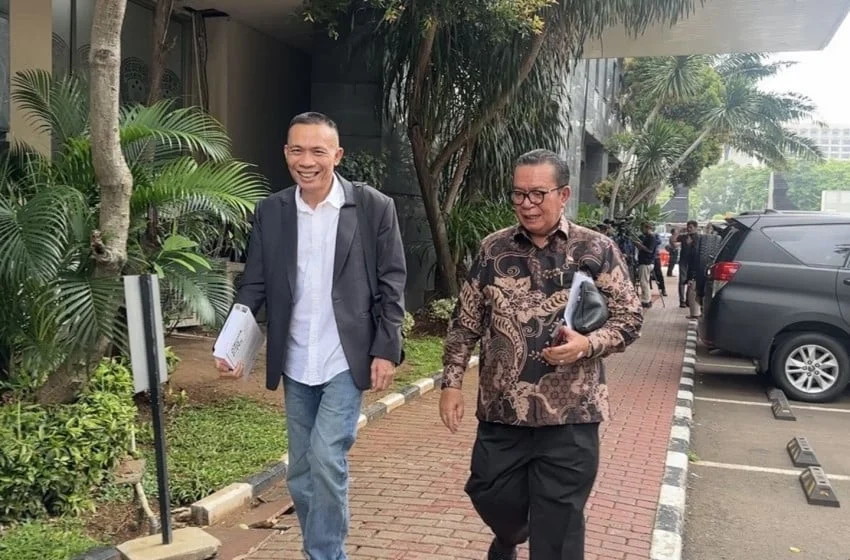
JAKARTA – In a significant development echoing the growing complexities of digital media and legal accountability, forensic expert Rismon Sianipar, accompanied by his legal counsel, appeared at the Polda Metro Jaya on Wednesday, April 15, 2026, to address a defamation complaint lodged against him. The complaint was filed by former Vice President (Wapres) Jusuf Kalla (JK) at Bareskrim Polri on Wednesday, April 8, 2026. Kalla’s report also targeted four specific YouTube accounts, alleging they disseminated accusations that he had funded Roy Suryo and his associates with Rp5 billion to propagate the contentious issue of former President Joko Widodo’s (Jokowi) alleged fake diploma.
Rismon Sianipar vehemently denies direct responsibility for the content that led to the complaint, asserting that he is a victim of sophisticated artificial intelligence (AI) manipulation. According to Sianipar, the video at the heart of Kalla’s complaint is an AI-generated alteration of original footage featuring him. He argues that the actual creators of the AI-modified video, rather than himself, should bear the legal responsibility for its content. This defense introduces a critical dimension to the ongoing legal battle, highlighting the emergent challenges posed by advanced digital manipulation technologies in the realm of public discourse and legal precedent.
The Core Allegations and Jusuf Kalla’s Stance
The legal action initiated by Jusuf Kalla stems from serious allegations made against him concerning his purported involvement in financing a campaign to discredit former President Joko Widodo. The accusation that Kalla provided Rp5 billion to Roy Suryo and others to push the narrative of Jokowi’s fake diploma is not only politically sensitive but also carries significant reputational damage for a figure of Kalla’s stature. Jusuf Kalla, a prominent and respected elder statesman in Indonesian politics, has twice served as Vice President, under Susilo Bambang Yudhoyono and Joko Widodo. His career has been marked by a reputation for integrity and astute leadership, particularly in conflict resolution and economic management. An accusation of this nature, suggesting he funded a disinformation campaign against a sitting or former president, directly challenges his public image and could be perceived as an attempt to undermine democratic processes or incite public distrust.
Kalla’s decision to report not only Rismon Sianipar but also four YouTube accounts underscores his determination to combat the spread of what he considers false and damaging information. In an era where social media platforms frequently become conduits for misinformation, public figures often resort to legal means to protect their reputations and hold disseminators accountable. The inclusion of YouTube accounts in the report indicates a broader strategy to address the platforms and individuals actively involved in the propagation of the alleged defamatory content, recognizing the virality and wide reach of online videos.
A Web of Digital Deception: Rismon Sianipar’s Defense
Rismon Sianipar, a forensic expert known for his work in digital investigations, presented a unique defense centered on the concept of AI manipulation. He explained to reporters, "The video in circulation is the result of AI engineering from my video on the Balige Academy YouTube channel. That video was recorded on March 11, 2026, before I went to Solo to meet Mr. Joko Widodo. The video in circulation has been modified using AI; I am a victim." This statement places the onus of responsibility firmly on the unknown creators of the AI-altered content.
Sianipar’s defense introduces the technical intricacies of AI-generated media, specifically deepfakes and other forms of synthetic media. Deepfakes involve the use of artificial intelligence to create highly realistic but entirely fabricated videos or audio recordings, often by swapping faces or synthesizing voices. The rapid advancement of these technologies has made it increasingly difficult for the average viewer to distinguish between genuine and manipulated content. If Sianipar’s claims are substantiated through digital forensics, it would represent a significant case study in Indonesia concerning the legal implications of AI-driven misinformation.
He further emphasized the need for a thorough digital forensic investigation: "The police need to conduct digital forensic tracing to find out who first created and disseminated it. I am not responsible for the content of the engineered video." Sianipar articulated that the police’s primary objective should be to identify the original perpetrator who manipulated his legitimate content using AI and subsequently uploaded or spread it across various platforms. This argument is critical as it seeks to shift accountability from the individual whose likeness or voice was used to the party responsible for the malicious creation and distribution of the synthetic media.
Chronology of the Dispute
The timeline of events leading up to this legal confrontation is crucial for understanding the escalating tensions:
- March 11, 2026: Rismon Sianipar records an original video, which is later uploaded to the Balige Academy YouTube channel. According to Sianipar, this video was produced prior to his meeting with former President Joko Widodo in Solo, suggesting it was part of his professional or academic work and not intended for political controversy. This original video forms the base material that Sianipar claims was subsequently manipulated by AI.
- Early April 2026 (Implied): The AI-modified video, allegedly featuring Rismon Sianipar discussing Jusuf Kalla’s purported funding of Roy Suryo Cs, begins circulating on social media, particularly through four YouTube accounts identified by Kalla. The exact date of its initial dissemination is critical for forensic analysis.
- Wednesday, April 8, 2026: Former Vice President Jusuf Kalla files a formal complaint with Bareskrim Polri. The complaint names Rismon Sianipar and the four YouTube accounts as parties responsible for disseminating defamatory content, specifically the accusation that Kalla funded a campaign regarding Jokowi’s alleged fake diploma. This action signals Kalla’s serious intent to pursue legal redress and clear his name.
- Wednesday, April 15, 2026: Rismon Sianipar, accompanied by his legal team, appears at Polda Metro Jaya. During this appearance, he publicly addresses the complaint, presenting his defense that he is a victim of AI manipulation and that the video in question is an engineered product for which he holds no responsibility. He calls for a comprehensive digital forensic investigation to identify the true perpetrators.
This chronology highlights a rapid escalation from online content dissemination to a high-profile legal dispute, underscoring the swift impact of digital misinformation.
The Broader Context: Political Climate and Digital Misinformation
The controversy surrounding Jokowi’s alleged fake diploma is not new. It has periodically resurfaced in Indonesian political discourse, often during election cycles or periods of heightened political tension. Such issues are frequently weaponized to undermine political figures, erode public trust, and sway public opinion. The "fake diploma" narrative, despite being repeatedly debunked by official sources and educational institutions, persists in certain segments of the online sphere, fueled by a combination of genuine skepticism, partisan agendas, and deliberate disinformation campaigns.
Roy Suryo, a former Minister of Youth and Sports and a well-known information technology expert, has previously been involved in public discussions and controversies related to digital media and political issues. His name being linked to this specific accusation, allegedly funded by Jusuf Kalla, adds another layer of complexity to the narrative, suggesting a coordinated effort by multiple parties. The political landscape in Indonesia, characterized by robust online activism and a high degree of social media penetration, provides fertile ground for the rapid spread of both factual information and harmful misinformation. This incident is a stark reminder of how digital content, particularly videos, can be used to influence public perception and create deep divisions.
Legal Ramifications and the Challenge of AI
This case presents significant legal challenges, particularly under Indonesia’s Electronic Information and Transactions (ITE) Law, which governs online defamation and the dissemination of false information. The ITE Law has been a subject of debate for its broad interpretations and potential for misuse, but it remains the primary legal instrument for addressing cybercrime and online content-related offenses.
The core legal question revolves around attribution and intent. If Rismon Sianipar’s claims of AI manipulation are proven, the legal focus will shift dramatically. Prosecuting cases involving deepfakes is notoriously difficult due to:
- Attribution: Identifying the original creator of AI-generated content can be challenging, as perpetrators often use anonymizing tools and operate across international borders.
- Intent: Proving malicious intent behind the creation and dissemination of such content requires tracing the entire chain of production and distribution.
- Expertise: Law enforcement agencies require specialized digital forensic capabilities and highly skilled experts to analyze AI-generated media, differentiate it from genuine content, and uncover its origins.
This case could set a crucial legal precedent in Indonesia regarding the responsibility of individuals whose original content is manipulated by AI, versus the responsibility of those who perform the manipulation and dissemination. It forces the judiciary to grapple with the technological frontier of evidence and accountability. The outcome will likely influence how similar cases are handled in the future and could prompt a reevaluation of existing laws to explicitly address AI-generated misinformation.
Implications for Public Trust and Platform Accountability
The proliferation of deepfakes and AI-generated content poses a grave threat to public trust in media and information. When it becomes difficult to discern truth from fabrication, the foundation of informed public discourse erodes, impacting everything from political elections to public health campaigns. This case, involving prominent public figures and a contentious political issue, will undoubtedly draw significant public attention and scrutiny.
Moreover, the role of platforms like YouTube in moderating and removing AI-generated misinformation comes under renewed focus. While many platforms have policies against deepfakes and harmful misinformation, their implementation and enforcement vary. This incident will likely reignite calls for:
- Proactive Detection: Platforms investing more in AI-powered tools to detect and flag synthetic media automatically.
- Clearer Policies: Establishing unambiguous policies regarding AI-generated content and its dissemination.
- Faster Takedowns: Expediting the process of removing verified deepfakes and defamatory content.
- Transparency: Providing greater transparency on how content moderation decisions are made.
The legal action taken by Jusuf Kalla, and Rismon Sianipar’s defense, underscore the urgent need for a multi-faceted approach involving legal frameworks, technological solutions, and platform accountability to combat the rising tide of AI-driven misinformation.
Moving Forward: The Path of Digital Forensics
The immediate next steps in this case will heavily rely on the capabilities and thoroughness of the digital forensic investigation. Police investigators will need to:
- Collect Evidence: Secure all relevant digital evidence from the YouTube accounts, associated servers, and any other platforms where the video was disseminated.
- Analyze the Video: Employ specialized software and forensic techniques to analyze the video in question. This involves looking for artifacts, inconsistencies, and other tell-tale signs of AI manipulation. Experts can often detect anomalies in facial movements, lighting, shadows, and audio synchronization that betray synthetic media.
- Trace Origins: Attempt to trace the digital footprint of the AI-modified video back to its point of origin, including identifying the IP addresses, accounts, and individuals responsible for its creation and initial upload.
- Interview Witnesses: Gather statements from all involved parties, including Jusuf Kalla, Rismon Sianipar, and potentially representatives from the YouTube channels if identifiable.
The successful resolution of this case will not only determine the fate of Rismon Sianipar and the implicated YouTube accounts but also provide invaluable insights into how Indonesia’s legal system adapts to the challenges of a rapidly evolving digital landscape. It stands as a pivotal moment in the ongoing global battle against misinformation and the ethical implications of artificial intelligence. The outcome could significantly influence future legal strategies for public figures targeted by deepfakes and shape the responsibilities of platforms in maintaining a trustworthy information environment.