The name of Minister of Agrarian Affairs and Spatial Planning/Head of the National Land Agency (ATR/BPN), Nusron Wahid, has emerged prominently within a high-profile corruption investigation involving alleged bribery and gratuities tied to the processing of Building Use Rights (Hak Guna Bangunan or HGB) in Bogor Regency, West Java. The controversy escalated after the Corruption Eradication Commission (KPK) officially named and detained four individuals allegedly operating as close associates and trusted confidants of the minister.
The suspects identified in connection with the sprawling bribery ring are Arif Sugiyanto (ARF), Fahd El Fouz (FEZ)—also widely known as Fahd A Rafiq—Erwin (ERW), and Muhammad Fakhry (MF). The direct association of these individuals with a sitting cabinet minister has triggered intense public scrutiny and raised profound questions regarding the potential broader reach of the conspiracy within the upper echelons of Indonesia’s land administration framework.
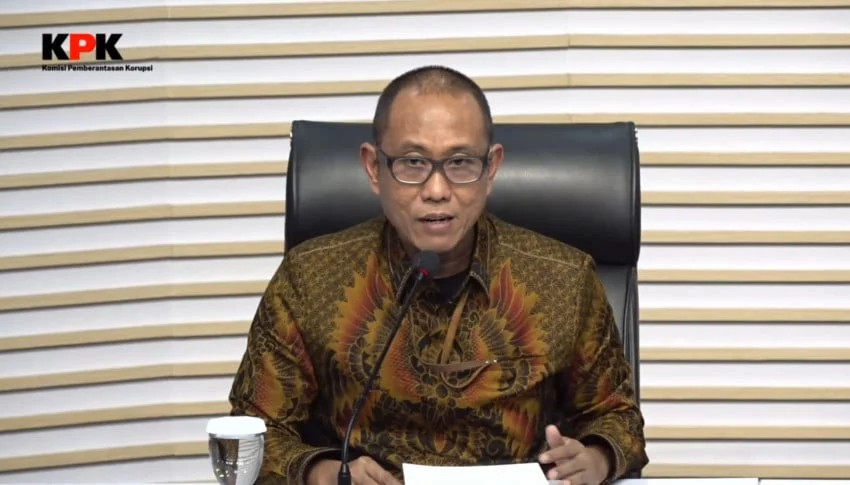
During a formal press briefing held at the KPK Red and White Building in Jakarta on Tuesday, September 15, 2026, the anti-graft agency addressed the public outcry. Plt Director of Investigation at the KPK, Achmad Taufik Husein, provided an official explanation regarding the scope of the arrests and why the investigation’s initial trajectory focused heavily on the four alleged confidants of Nusron Wahid.
Understanding the Constraints of the 24-Hour Operation Window
Addressing reporters at the headquarters, Achmad Taufik Husein emphasized that the operational constraints dictated by the Indonesian Criminal Procedure Code heavily influenced the immediate structure of the suspect list following the sting operation (Operasi Tangkap Tangan or OTT). According to prevailing legal mandates, law enforcement agencies are granted a strict window of precisely 1×24 hours to conduct preliminary interrogations, analyze seized evidence, and legally determine the status of individuals secured during a live sting operation before making formal detention decisions.
"Please understand, colleagues, as we have stated repeatedly, this is a sting operation where we only have a limited window of 1×24 hours to then examine all parties who were secured," Taufik explained to the press corps.
The KPK underscored that the 24-hour statutory limitation restricts investigators from immediately mapping out the entirety of complex, multi-layered criminal conspiracies. Consequently, the initial phase of the legal action targeted the immediate actors caught with direct evidentiary links to the transaction, while broader inquiries regarding potential institutional complicity or ministerial awareness remain under active investigation.
Chronology of the Bogor HGB Sting Operation
The legal proceedings leading up to the public disclosure on September 15, 2026, originated from a meticulously planned intelligence operation executed by KPK field agents. The case centers on systemic irregularities and illicit financial facilitation surrounding the issuance, extension, and administrative processing of lucrative HGB titles spanning prime commercial and residential zones within Bogor Regency.
Over the preceding months, investigators accumulated actionable intelligence indicating that land brokers and influential intermediaries were leveraging purported political and bureaucratic connections to expedite land titles and bypass standard regulatory checks. On the eve of the arrests, KPK surveillance teams tracked a series of suspicious financial movements and direct handoffs of illicit capital intended to influence regional land office decisions.
The sting operation itself was executed swiftly across multiple locations in Jakarta and West Java. Investigators apprehended key facilitators, including Arif Sugiyanto, Fahd El Fouz, Erwin, and Muhammad Fakhry. Subsequent raids yielded significant physical and digital evidence, including financial ledgers, digital communication records detailing payoffs, and cash equivalents amounting to billions of rupiah. Following the expiration of the mandatory 24-hour assessment period, the KPK officially designated eight individuals as suspects in the bribery network, with the aforementioned four individuals explicitly linked to Minister Nusron Wahid’s inner circle.

The Defendants: Profiles and Past Controversies
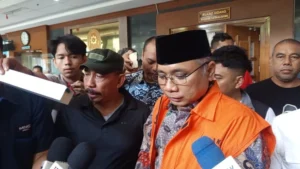
The inclusion of high-profile figures among the suspects has lent extraordinary weight to the KPK investigation. Notably, Fahd El Fouz, alias Fahd A Rafiq, is a well-known political figure with a history of entanglement in high-level corruption cases in Indonesia. His presence within the group of arrested individuals has particularly drawn the attention of political analysts and anti-corruption watchdogs, who point to his extensive network spanning various political and bureaucratic factions.
Arif Sugiyanto, Erwin, and Muhammad Fakhry are likewise identified by investigators as critical nodes within the syndicate, serving as the connective tissue between private corporate entities seeking land rights and corrupt administrative officials within the Ministry of ATR/BPN regional offices. According to preliminary findings, these individuals allegedly leveraged their proximity to power to guarantee favorable outcomes for commercial land acquisitions, extracting substantial rents from developers and investors in the process.
Implications for the Ministry of ATR/BPN and Governance Reforms
The emergence of a cabinet minister’s associates in a major land-securities corruption case deals a severe blow to ongoing efforts to reform Indonesia’s notoriously bureaucratic and graft-prone agrarian sector. The Ministry of ATR/BPN, under the leadership of Nusron Wahid, has publicly committed to digitizing land services, eliminating extortion, and eradicating the pervasive "land mafia" (mafia tanah) that has plagued the nation for decades.
The detention of individuals closely aligned with the minister exposes vulnerable points within the institutional firewall, raising critical questions about internal oversight and the vetting of advisory circles within ministries. Experts in public policy note that even in the absence of direct, legally proven complicity by a political leader, the mere presence of close confidants in systemic corruption scandals inflicts substantial political damage and erodes public trust in state institutions.
Furthermore, the Bogor HGB case highlights the ongoing vulnerabilities in land governance. Bogor Regency, acting as a booming satellite region bordering the capital city of Jakarta, represents one of the most lucrative real estate markets in the country. High land valuation makes it an attractive target for speculative developers willing to bypass legal compliance through illicit facilitation payments.
Next Steps in the KPK Investigation
As the legal process moves forward, the KPK has signaled that its investigation is far from complete. Investigators are currently analyzing the digital forensic evidence seized during the operations to trace the money trail upward and outward. The primary objective is to determine whether the proceeds of the HGB bribery scheme were confined to the pockets of the intermediaries or if they flowed upward into broader political financing networks or other bureaucratic layers.
Legal analysts anticipate a series of high-level summonses in the coming weeks. While Plt Director of Investigation Achmad Taufik Husein has maintained institutional prudence regarding potential expansions of the suspect list, the gravity of the allegations ensures that Minister Nusron Wahid and his remaining administration will face intense parliamentary oversight, media scrutiny, and public pressure to cooperate fully with the anti-graft agency.
The unfolding scandal serves as a stark reminder of the systemic challenges facing Indonesia’s legal and administrative frameworks. As the judiciary prepares to handle the trial of the eight suspects, the case will undoubtedly stand as a litmus test for the independence and efficacy of the nation’s anti-corruption institutions in confronting powerful political networks.