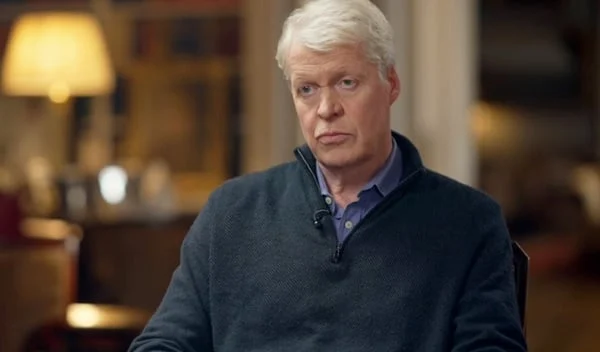
Nearly three decades after delivering a soaring, emotionally charged eulogy at the funeral of his late sister, Princess Diana, Earl Charles Spencer has once again thrust the British Royal Family into a storm of public controversy. In his newly published memoir, Spencer steps forward to expose what he terms the systemic coldness and institutional flaws of Britain’s most prominent institution. His revelations, however, have not only opened old wounds regarding the tragic life and death of the "People’s Princess" but have also delivered a profound emotional blow to her two sons, Prince William and Prince Harry.
The publication of Spencer’s book has deeply fractured perceptions within the United Kingdom. While supporters view him as a protective uncle willing to challenge an archaic and unyielding establishment, critics and royal insiders argue that his decision to dredge up deeply painful decades-old memories amounts to an unprovoked assault on the monarchy. At the center of this controversy is an explosive claim regarding King Charles III’s immediate reaction to Diana’s tragic death in August 1997, a claim that Buckingham Palace has aggressively refuted, setting the stage for a bitter public war of words between an aristocratic family and the sovereign state.
The Anatomy of a Royal Feud: The 1997 Funeral Dispute
To understand the current volatility between Earl Spencer and King Charles, one must revisit the turbulent days following the fatal car crash in Paris that claimed the life of Princess Diana on August 31, 1997. At the time, the nation was submerged in an unprecedented wave of public grief, and the inner workings of the royal household were paralyzed by confusion over how to handle the state-adjacent funeral of a woman who was no longer officially an "HRH" (Her Royal Highness).
According to excerpts from Spencer’s new book, tensions reached a boiling point behind closed doors regarding the role of young Princes William and Harry—then aged 15 and 12, respectively—in the funeral procession. Spencer reportedly argued vehemently that Diana herself would never have wanted her young sons subjected to the grueling, highly publicized ordeal of walking behind her coffin through streets packed with millions of mourning citizens.
Spencer claims that this protective stance provoked a furious reaction from his former brother-in-law, then-Prince Charles. In a tense telephone conversation, Charles allegedly unleashed an outburst of heavy anger. Furthermore, Spencer alleges that the future monarch made a shockingly dismissive remark during the exchange, stating that the public would "soon forget about it"—referring to the overwhelming grief surrounding Diana’s passing. This specific assertion has become the flashpoint of the current literary scandal, serving as the primary catalyst for Buckingham Palace’s rare and pointed intervention.
Buckingham Palace Counterattacks and the Gaslighting Accusations
Buckingham Palace, operating under its traditional doctrine of rarely complaining and rarely explaining, made an exception in the face of Spencer’s severe allegations. In a strongly worded public statement, representatives for the crown suggested that Spencer’s memory of the events was profoundly warped by personal trauma. The palace statement implied that the raw, enduring pain of sibling grief had clouded the Earl’s judgment, effectively framing his narrative as an emotional distortion rather than objective historical fact.
This official pushback triggered an immediate and incandescent response from Charles Spencer. In interviews promoting his book, the Earl did not mince words, accusing the highest echelon of the British monarchy of engaging in "gaslighting"—a psychological manipulation technique designed to make an individual doubt their own perception of reality.
"It is not an everyday occurrence when you wake up and find yourself being gaslighted by the King," Spencer remarked in a pointed interview with the Mail on Sunday. This public accusation places the British media and constitutional observers in a difficult position. Commentators remain deeply divided: one faction questions the timing and motivation of Spencer’s disclosures, suggesting he is exploiting historical wounds for commercial or personal vindication, while another faction defends him as a truth-teller who values familial transparency far above the preservation of royal mystique.
Background and Lineage: Who Is Earl Charles Spencer?
To fully grasp the weight of Earl Spencer’s interventions in royal affairs, one must examine his deep-rooted pedigree within the British aristocracy. Born Charles Edward Maurice Spencer on May 20, 1964, in London, the 9th Earl Spencer belongs to a lineage that has been intertwined with the British monarchy for centuries. His familial relationship with the Windsor dynasty is not merely political; it is personal. The late Queen Elizabeth II served as his infant godmother, establishing a lifelong proximity to the crown.
The Spencer family seat is the magnificent Althorp estate, located in West Northamptonshire, approximately a two-and-a-half-hour drive north of London. Purchased by the Spencer family in 1508, the sprawling estate spans thousands of acres and serves as the ancestral burial site of Princess Diana, whose grave sits on an isolated island in the middle of an ornamental lake on the property.
Spencer’s educational path followed the quintessential trajectory of the British upper class. He attended Eton College, the elite boarding school situated near Windsor Castle that has educated generations of British prime ministers, royals, and aristocrats. Following his time at Eton, Spencer pursued higher education at Magdalen College, the University of Oxford, where he focused on modern history—a discipline that clearly influenced his later literary pursuits into family genealogies and monarchical histories.
A Career in Journalism and Literary Pursuits
Before stepping into the role of a controversial memoirist and custodian of the Spencer legacy, Charles Spencer forged a successful career in professional journalism. Moving away from the insulated world of the landed gentry, he carved out a niche in broadcast media during the 1980s and 1990s.
Notably, Spencer spent a decade working with the American television network NBC News, beginning in 1986 as a broadcast correspondent. This extensive experience in the fast-paced, high-stakes environment of international news gave him a sophisticated understanding of media mechanics, public relations, and narrative framing—skills that are visibly at play in his current public relations rollout against the royal apparatus.
In addition to his journalism career, Spencer is a prolific author. He has penned several critically acclaimed books, focusing primarily on historical non-fiction, family chronicles, and British political history, including studies on King Charles II and the intricate histories of his own ancestral line. His personal life has similarly attracted media scrutiny; he has been married four times and is the father of seven children—five daughters and two sons—from his unions.
The Bond Between Brother and Sister: Growing Up at Althorp
The intensity of Earl Spencer’s protectiveness toward Princess Diana stems from a childhood shared in the sprawling corridors and quiet gardens of Althorp House. Born less than three years apart, Charles and Diana formed a close, protective bond during their formative years. While their parents’ turbulent marriage and eventual high-profile divorce fractured the family dynamic, the siblings remained deeply tethered to one another through shared trauma and isolation.
During his famous 1997 funeral eulogy, Spencer famously pledged that he would actively shield William and Harry—whom he explicitly referred to as Diana’s "blood family"—from the suffocating pressures and intense public scrutiny that had driven their mother to moments of profound despair and tears. Nearly three decades later, critics of his new book argue that by dragging private family disputes and volatile phone calls back into the public arena, Spencer has inadvertently inflicted the very kind of emotional turbulence upon William and Harry that he once swore to prevent.
Implications and Broader Impact on the Modern Monarchy
The timing of Earl Spencer’s memoir could not be more delicate for the House of Windsor. King Charles III, currently undergoing cancer treatments while managing the daily burdens of statecraft, faces a monarchy already stretched thin by departures, scandals, and generational transitions. Prince William, now the Prince of Wales, and Prince Harry, residing in California, are caught in the crossfire of a renewed media storm that weaponizes their mother’s tragic legacy.
From a journalistic and analytical perspective, Spencer’s book highlights an ongoing friction between institutional self-preservation and individual truth-telling. The British monarchy relies heavily on a carefully curated mythology of stoicism, continuity, and dignity. When insiders—particularly those with noble titles and direct blood ties to the sovereign—shatter that illusion from the inside, the damage extends beyond mere gossip; it touches upon the very legitimacy of the institution’s emotional intelligence.
Whether Spencer’s revelations will permanently alter public perception of King Charles remains to be seen. However, the bitter exchange between the Earl and Buckingham Palace underscores a fundamental truth about Britain’s royal family: while centuries of tradition have allowed them to crown kings and rule nations, they remain chronically unable to escape the ghosts of their own past, nor the testimonies of those who knew them before the crowns were placed upon their heads.