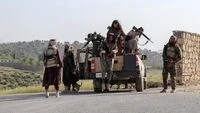
The harrowing ordeal of Arunima IP, a prominent Indian travel content creator, has once again cast a spotlight on the volatile intersection of adventure tourism and the oppressive socio-political landscape of Taliban-controlled Afghanistan. Arunima, who commands a combined digital audience of nearly two million followers across Instagram and YouTube, found herself in a life-threatening situation mid-September 2026, when she was detained by Taliban authorities while traveling solo through the country. This incident underscores the extreme risks faced by civilians, particularly women, who attempt to traverse a nation governed by a regime that enforces stringent, often unpredictable, restrictions on movement and individual autonomy.
Chronology of the Detainment
Arunima IP initiated her solo journey into Afghanistan in early September 2026, documenting her travels through markets, rural villages, and historical sites. The escalation of her predicament began on Monday, September 14, when her routine documentation of the trip took a sharp turn toward crisis. In a frantic bid for assistance, she broadcasted a distress signal, specifically requesting support to contact the Indian Embassy in Kabul.
The subsequent 24 hours were marked by profound uncertainty. According to reports, Arunima was intercepted at a Taliban checkpoint by armed personnel who took issue with her solitary travel status. The interaction quickly devolved into an interrogation. In footage shared with her audience, Arunima is seen being stopped by armed men, with the situation becoming increasingly tense as the personnel demanded official documentation—documents that the fighters reportedly struggled to read or interpret.
By the morning of Tuesday, September 15, the creator confirmed via social media that she was safe, though she had endured several hours of detention. During this period, she described feelings of overwhelming fear, noting that the guards threatened her with arrest for violating local customs that prohibit women from traveling without a male guardian, or ‘mahram.’ Following her release, she managed to secure passage on a truck to Bamyan, only to find herself in a vulnerable position once more upon arrival, as locals were surprised to see a woman traveling alone after dark.
The Landscape of Gender Restrictions in Afghanistan
Since returning to power in August 2021, the Taliban has systematically dismantled the rights of women and girls in Afghanistan. The Ministry for the Propagation of Virtue and the Prevention of Vice has issued a series of decrees that limit women’s access to public spaces, education, and employment.
For a foreign traveler like Arunima, these restrictions present a complex paradox. While she noted in her content that she was granted a visa by the Taliban administration—suggesting an awareness of her status as a foreign female—the practical application of law on the ground remains highly inconsistent. Taliban fighters at local checkpoints operate with a high degree of autonomy. As Arunima observed, "every member of the Taliban acts like a police officer," implying that the interpretation of law varies from one district to another, leaving travelers at the mercy of individual commanders’ whims.
The incident highlights the dangers inherent in the current "dark tourism" trend. Despite government advisories from India and other nations warning citizens against all travel to Afghanistan, an increasing number of content creators have sought to monetize the curiosity surrounding one of the world’s most isolated and dangerous regions.
Supporting Data and Geopolitical Context
Afghanistan’s current travel climate is characterized by an absence of formal diplomatic protections for many nations. While India has maintained a "technical team" at its embassy in Kabul to facilitate humanitarian aid, it has not officially recognized the Taliban government. This lack of full diplomatic recognition limits the ability of the Indian government to intervene effectively in cases of detention or legal disputes involving its citizens.
According to data from the Global Terrorism Index and various human rights monitors, the security situation in Afghanistan remains precarious. The presence of militant groups, coupled with the Taliban’s internal enforcement of "morality laws," creates a landscape where the rule of law is subservient to ideological dictates. International observers have long noted that the Taliban’s visa issuance process is not a guarantee of safety, but rather a administrative formality that holds little weight when compared to the directives issued by regional military commanders.
Official Responses and Diplomatic Silence
As of the date of this report, both the Taliban’s spokesperson and the Indian Ministry of External Affairs have remained silent regarding the specifics of Arunima’s detention. Historically, the Taliban has sought to project an image of stability to attract foreign investment and tourism, often portraying the country as "open for business." Instances where tourists are detained, harassed, or threatened serve to undermine this narrative, which may explain the lack of official acknowledgment from the de facto authorities.
Conversely, the Indian government’s reluctance to comment publicly reflects a delicate diplomatic balancing act. By not engaging in public rhetoric, New Delhi maintains a cautious stance that prioritizes the safety of its citizens currently in the region while avoiding the political entanglement of engaging with an unrecognized regime.
Broader Implications for Solo Travel
The case of Arunima IP raises significant ethical and practical questions regarding the responsibilities of travel influencers. While the democratization of travel media has allowed for unprecedented access to remote parts of the world, it has also blurred the lines between adventure and recklessness.
Experts in regional security suggest that the "influencer economy" has incentivized individuals to bypass safety protocols in favor of high-engagement content. In regions like Afghanistan, where the political and social climate is inherently hostile to Western or Indian liberal values, the presence of an unaccompanied woman is not just a personal risk—it is a magnet for scrutiny by local authorities.
The incident also serves as a stark reminder of the limitations of social media as a safety net. While Arunima’s SOS message allowed her to communicate with her followers, digital connectivity is no substitute for physical security or consular access. In a country where internet access is monitored and electricity is intermittent, relying on a digital audience for protection is a precarious strategy.
Conclusion
The ordeal of the Indian backpacker in Afghanistan is a microcosm of the risks inherent in travel to unstable regions. While she ultimately emerged from the situation physically unharmed, the psychological toll and the inherent vulnerability she faced at the hands of armed militants underscore the reality of life under Taliban rule. As the trend of traveling to "dangerous" destinations continues to grow among digital creators, this case serves as a sobering cautionary tale. It emphasizes that in regions where human rights are suppressed and the rule of law is absent, personal fame, digital influence, and valid travel documentation are insufficient safeguards against the unpredictable nature of an authoritarian regime. The international community continues to monitor the situation, but for now, the story of this brief, terrifying detention remains a poignant reminder of the extreme fragility of individual liberty in contemporary Afghanistan.