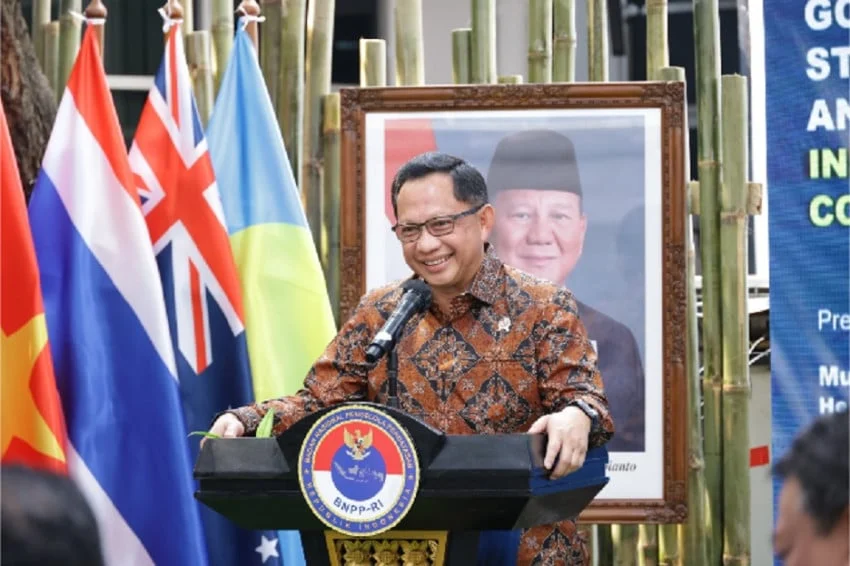
The National Border Management Agency of the Republic of Indonesia has taken a decisive step toward enhancing regional stability and economic development by convening international stakeholders in the nation’s capital. Led by Minister of Home Affairs and Head of the BNPP, Muhammad Tito Karnavian, the high-level diplomatic gathering—entitled the Indonesia Border Partnership Coffee Morning—serves as a pivotal platform for redefining how the archipelago interfaces with its neighbors. Held at the Permanent Secretariat of the BNPP RI in Jakarta on Wednesday, September 16, 2026, the event centered on the theme "Strengthening Cooperation in Managing Our Border to Promote Prosperity."
This strategic initiative underscores a paradigm shift in Indonesian statecraft. Rather than viewing national peripheries merely as security checkpoints or defensive barriers, the administration is actively repositioning borderlands as dynamic economic corridors and critical zones for cross-border commerce, infrastructure development, and bilateral diplomacy. By bringing together foreign diplomats, security officials, and policymakers, the forum aims to harmonize cross-border regulations, mitigate transnational crimes, and leverage shared economic potential to elevate the living standards of communities residing in remote and outermost regions.
The Complex Geopolitical Landscape of Indonesia’s Frontiers
Managing Indonesia’s territorial boundaries presents a unique and immense logistical challenge. As an archipelagic state spanning thousands of islands, Indonesia shares international boundaries with ten sovereign nations, encompassing both terrestrial demarcations and extensive maritime zones. This multifaceted geopolitical reality demands sophisticated diplomatic engagement and rigorous inter-agency coordination.
The nation shares direct land borders with three countries: Malaysia on the island of Kalimantan, Papua New Guinea on the island of New Guinea, and Timor-Leste on the island of Timor. Additionally, Indonesia shares complex maritime boundaries with seven nations: Singapore, Australia, the Philippines, Vietnam, Thailand, India, and Palau. Each of these relationships carries distinct strategic, economic, and security implications. For instance, the maritime border with Singapore involves some of the busiest commercial shipping lanes in the world, while the borders with Malaysia and the Philippines involve intricate security dynamics related to maritime safety and resource management.
Given this vast geographical footprint, the Indonesian government has repeatedly stressed that border governance cannot be executed in isolation. Unilateral policies are often insufficient to address cross-border challenges such as illegal fishing, smuggling, unauthorized migration, and environmental degradation. Therefore, multilateral and bilateral cooperation frameworks are indispensable for ensuring regional security while simultaneously fostering an environment conducive to trade and investment.
Chronology of Strategic Border Management Initiatives
The convening of the Indonesia Border Partnership Coffee Morning is the latest milestone in a sustained, multi-year effort by the Indonesian government to modernize its border governance infrastructure. Over the past decade, Jakarta has systematically shifted its national development paradigm from Java-centric growth to an inclusive approach that prioritizes peripheral development.
In the early stages of this transition, the government focused primarily on basic infrastructure, constructing roads, ports, and cross-border posts (Pos Lintas Batas Negara or PLBN) to connect isolated regions to the national grid. These physical assets were designed to assert state presence and improve the delivery of public services, healthcare, and education to remote populations.
As physical connectivity improved, the focus naturally expanded toward regulatory harmonization and international diplomacy. In recent years, the BNPP has initiated a series of high-level dialogues, bilateral technical meetings, and joint patrols with neighboring countries to resolve lingering demarcation issues and establish standard operating procedures for cross-border trade. The development of the Integrated Border Management Design, spearheaded by the BNPP, represents a comprehensive roadmap to synchronize the efforts of various ministries, local governments, and security forces.
The September 2026 forum builds directly upon these historical foundations. By moving away from rigid, bureaucratic negotiations and toward collaborative, conversational diplomacy exemplified by the "Coffee Morning" format, the agency has created a trusted space where diplomatic envoys can candidly discuss operational bottlenecks, share intelligence, and explore joint economic ventures.
Strategic Insights and Official Responses from the Leadership
During his keynote address at the secretariat, Minister Tito Karnavian emphasized that national sovereignty and economic prosperity are inextricably linked. He noted that secure borders are a prerequisite for economic development, but security alone is insufficient to guarantee the well-being of borderland communities.
"We must transform our borders from vulnerable, isolated peripheries into vibrant centers of economic activity," Karnavian stated during the plenary session. He highlighted that sustainable prosperity in border regions requires lowering trade barriers, improving customs efficiency, and fostering people-to-people connectivity that respects local cultural ties and historical relationships between communities living on opposite sides of the border.
Furthermore, leadership within the BNPP has consistently underscored the importance of adaptive governance. As transnational criminal networks become more sophisticated—utilizing advanced technology for illicit activities—law enforcement and border management agencies must enhance intelligence sharing. The forum provided an opportunity for foreign representatives to voice their perspectives on existing bilateral mechanisms, leading to constructive dialogues regarding the modernization of border crossing agreements and the expedited resolution of pending maritime boundary disputes.
Representatives from participating foreign missions lauded Indonesia’s proactive diplomatic outreach. Several ambassadors noted that the informal yet structured nature of the dialogue allowed for immediate clarifications on policy updates and fostered a spirit of mutual trust. This collaborative atmosphere is expected to pave the way for future bilateral agreements aimed at reducing bureaucratic red tape for legitimate traders and tourists alike.
Socio-Economic Implications and Regional Stability
The implications of the BNPP’s enhanced cooperation framework extend far beyond administrative efficiency; they touch upon the daily lives of millions of citizens living in Indonesia’s outermost regions. Historically, many Indonesian borderlands suffered from economic stagnation due to their geographical isolation from major domestic markets. By fostering robust trade relations with neighboring countries, these regions can tap into proximate international markets, thereby stimulating local economies, creating employment opportunities, and reducing poverty rates.
From a security perspective, closer institutional linkages with neighboring states significantly reduce the incidence of cross-border crimes. Enhanced communication channels ensure that maritime incidents or security threats can be addressed rapidly through coordinated joint operations rather than unilateral escalation. This cooperative security architecture contributes directly to the broader stability of the Association of Southeast Asian Nations (ASEAN) region and its immediate Indo-Pacific partners.
Moreover, the integration of environmental management into border cooperation is becoming increasingly critical. Shared ecosystems, such as marine environments in the Sulu-Sulawesi Seas or tropical rainforests on Borneo and New Guinea, require joint conservation efforts. Through forums like the one hosted in Jakarta, Indonesia and its neighbors can coordinate policies to combat illegal logging, unregulated fishing, and climate-induced environmental degradation that respect no national boundaries.
Future Outlook for Indonesia’s Border Governance
As the outcomes of the Indonesia Border Partnership Coffee Morning are translated into actionable policy recommendations, the BNPP faces the task of institutionalizing these collaborative frameworks. Moving forward, the agency plans to conduct regular follow-up sessions, technical working groups, and joint evaluations with its ten international counterparts to monitor the progress of various bilateral initiatives.
The ongoing refinement of the Integrated Border Management Design will serve as the guiding framework for these efforts, ensuring that infrastructure investments, security protocols, and economic policies are fully aligned. By maintaining open lines of communication and prioritizing mutual prosperity, Indonesia is setting a regional benchmark for progressive, cooperative, and human-centric border management in the twenty-first century.