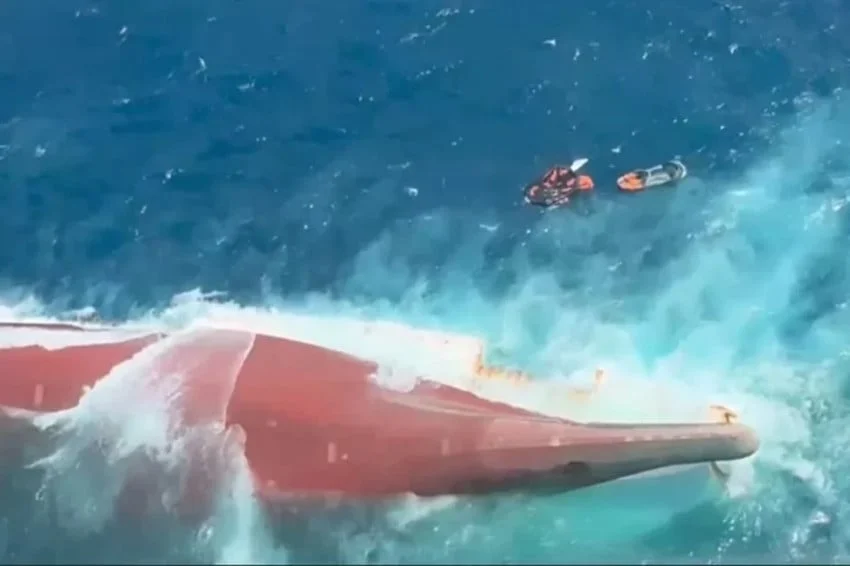
The search and rescue operation for the victims of the tragic sinking of KM Virgo Transport 8 faced a major setback today as the National Search and Rescue Agency, widely known as Basarnas, officially cancelled the deployment of its specialized underwater diving teams. The decision, announced by Basarnas leadership on Monday, September 14, 2026, was driven entirely by deteriorating meteorological conditions at sea that posed immediate threats to the safety of rescue personnel.
The suspension affects a multi-agency diving contingent that had been placed on high alert and assembled at the staging area. The team comprised elite personnel from the Indonesian Air Force’s Rapid Reaction Force Command, known as Korpasgat, as well as specialized marine divers from the Indonesian Navy, alongside Basarnas’s own dedicated underwater search unit. Despite the comprehensive readiness of these elite assets, the sheer unpredictability and hostility of the marine weather at the disaster zone forced commanders to prioritize human safety above immediate underwater deployment.
Chief of Basarnas, Air Marshal Mohammad Syafii, addressed the media regarding the difficult operational adjustments. Due to conditions that were deemed entirely unviable for safe diving operations, the authorities had to hold back the specialized personnel. However, the suspension of physical diver deployment does not mean the cessation of underwater search efforts. Instead, the agency is pivoting toward advanced technological solutions to bypass the limitations imposed by adverse weather and hazardous sea states.
Integration of Naval Technology for Subsurface Search
With traditional deep-sea diving rendered temporarily impossible by heavy swells, high winds, and poor underwater visibility, Basarnas has coordinated the deployment of specialized naval hardware to scan the depths of the shipwreck site. The primary asset designated for this critical phase is the Indonesian Navy vessel KRI Canopus, a specialized hydrographic and oceanographic research ship equipped with advanced sonar and subsurface scanning capabilities.
According to Air Marshal Syafii, KRI Canopus was already underway, navigating toward the precise coordinates where KM Virgo Transport 8 went down. Maritime tracking and operational projections placed the vessel’s estimated time of arrival at the disaster zone by the morning of Tuesday, September 15, 2026.
The integration of KRI Canopus into the rescue framework represents a strategic shift from manual underwater exploration to remote sensing technology. The vessel possesses sophisticated side-scan sonar, multibeam echo sounders, and remotely operated underwater vehicles designed to map the seabed, detect anomalies, and locate structural components of the sunken vessel, as well as potential targets of interest, without placing human divers at direct risk in hostile currents. Authorities harbor strong optimism that once the vessel arrives and commences operations, the underwater search phase will achieve significant breakthroughs despite the ongoing surface weather challenges.
The Scale of the Tragedy: Casualties and Missing Persons
The sinking of KM Virgo Transport 8 stands as one of the most severe maritime disasters in recent regional history, generating widespread concern and mobilizing a massive national emergency response. Statistical updates concerning the passenger manifest and rescue outcomes paint a grim picture of the ongoing crisis.
Out of the hundreds of individuals on board when the vessel encountered catastrophic failure, official rescue tallies confirm that 108 people have been successfully rescued, sustaining varying degrees of physical trauma, exhaustion, and exposure. Medical triage units established at nearby coastal evacuation points have been working around the clock to provide emergency stabilization, psychological support, and transportation to regional hospitals for the survivors.
Regrettably, recovery teams have pulled six deceased victims from the water, officially confirming their identities and returning them to grieving families. The most agonizing aspect of the tragedy, however, remains the staggering number of unaccounted-for individuals. Current operational data indicates that 129 people are still officially listed as missing, driving an urgent, relentless race against time for surface search vessels, aerial spotters, and now, the incoming technological assets of the Indonesian Navy.
Chronology of the Disaster and Immediate Aftermath
To understand the complexity of the ongoing rescue operations, maritime authorities have pieced together the timeline leading up to and following the disaster of KM Virgo Transport 8.
The sequence of events began days prior to the incident, as KM Virgo Transport 8 departed from its origin port carrying a heavy load of passengers and cargo across a maritime route known for unpredictable weather patterns and strong oceanic currents. Mid-voyage, the vessel encountered a severe maritime storm characterized by towering waves and torrential rainfall, which critically compromised the structural integrity and stability of the ship.
Emergency distress signals were transmitted by the crew as the vessel began taking on water rapidly, eventually leading to its catastrophic capsize and sinking. The speed at which the disaster unfolded left little time for an orderly evacuation, plunging passengers and crew directly into the treacherous open sea.
Upon receiving the mayday alerts, Basarnas immediately activated its emergency response protocols, dispatching multi-agency rescue vessels, patrol boats from the Marine Police, and aircraft for aerial reconnaissance. The initial days of the operation were marked by frantic surface sweeps, resulting in the rescue of the 108 survivors and the initial recovery of bodies. However, as search efforts transitioned from surface rescue to subsurface recovery for those trapped within the hull or scattered across the deep seabed, logistical hurdles—culminating in the recent weather-induced suspension of divers—have continuously tested the resilience of the rescue coalition.
Official Responses and Inter-Agency Coordination
The complexity of the KM Virgo Transport 8 tragedy has necessitated unprecedented levels of cooperation among various branches of the Indonesian military, civilian rescue agencies, and local government bodies. The coordination effort is managed from a central command post established to streamline communications, allocate logistical resources, and manage public information transparency.
The involvement of Korpasgat and the Indonesian Navy underscores the seriousness with which the state is treating the disaster. Military leadership has placed all available defense assets stationed in the region at the disposal of Basarnas. Defense analysts note that this seamless cooperation between civil search authorities and military defense branches is crucial for handling large-scale mass casualty incidents in remote maritime zones.
Furthermore, local government authorities and regional disaster management agencies have mobilized social support structures, setting up crisis centers for families of the victims. These centers provide continuous updates, psychological counseling, and accommodation for relatives waiting for news at designated ports of arrival. The psychological toll on the families of the 129 missing individuals has prompted calls from public advocacy groups for sustained, unyielding efforts until every possible avenue of search and recovery is fully exhausted.
Broader Implications for Maritime Safety and Regulation
Beyond the immediate human cost and the operational hurdles faced by search teams, the sinking of KM Virgo Transport 8 has ignited a fierce national conversation regarding maritime safety standards, passenger manifest accuracy, and regulatory enforcement across Indonesian waters.
Maritime safety experts have pointed out that incidents of this magnitude frequently expose systemic vulnerabilities within domestic shipping operations, including issues related to vessel overloading, adherence to weather warning advisories, and the availability of adequate life-saving appliances on board commercial transport vessels. Questions have been raised regarding whether the vessel operated within its certified passenger capacity and if all safety protocols were rigorously checked prior to departure.
In the wake of the tragedy, lawmakers and transportation oversight committees have announced plans to launch comprehensive investigations into the operational background of KM Virgo Transport 8 and the regulatory oversight bodies responsible for port clearances. The findings from these forthcoming inquiries are expected to shape future maritime legislation, potentially leading to stricter enforcement of safety mandates, mandatory technological upgrades for passenger vessels, and harsher penalties for operators who compromise passenger security in the face of adverse weather warnings.
As operations transition into their next critical phase with the arrival of KRI Canopus, the nation watches with bated breath. The combined deployment of advanced sonar technology and unwavering human resolve remains the last best hope in the ongoing quest to bring closure to the victims, the survivors, and the families of the countless souls still missing beneath the waves.