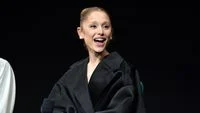
The trajectory of a global pop icon is rarely a linear path of unadulterated success; rather, it is often a complex tapestry woven with professional pressures, shifting allegiances, and the constant navigation of industry power dynamics. Recently, Ariana Grande, the Grammy-winning vocalist and actress, provided a candid look into the internal struggles she faced during the height of her career, specifically highlighting a lack of safety and trust while working under her former management team, which included high-profile talent manager Scooter Braun.
Speaking on the podcast Las Culturistas, Grande detailed how the transformative period surrounding her involvement in the film adaptation of Wicked (2022–2024) served as a catalyst for a profound professional and personal pivot. Her comments, which echo sentiments shared in earlier interviews, underscore a significant departure from the environment she occupied for the better part of a decade.
The Anatomy of a Professional Breakup
Ariana Grande’s relationship with Scooter Braun was, for years, considered one of the most successful partnerships in the music industry. Braun, known for his work with Justin Bieber and Demi Lovato, oversaw Grande’s ascent from a Nickelodeon star to a global music powerhouse. However, in August 2023, reports emerged that the two had parted ways, ending a decade-long collaboration.
The separation was not merely a contractual shift; it represented a fundamental realignment of Grande’s creative autonomy. In her recent remarks, Grande described the atmosphere under her previous team as one that hindered her artistic expression. "I was not feeling safe to create," she explained, noting that the relationships surrounding the production, promotion, and release of her music were fraught with tension.
For an artist whose instrument is deeply tied to her physical and emotional state, this lack of security had tangible consequences. "When you are in a safe environment, your body feels it, your instrument feels it," she told the podcast hosts. This realization has been the cornerstone of her recent work, particularly her transition into the role of Glinda for the Wicked franchise and the release of her latest musical projects.
A Chronology of Change: From Tensions to Transformation
The timeline of this transition offers insight into how long-standing professional dynamics can deteriorate under the weight of industry pressures.
- 2013–2023: A decade of close collaboration between Grande and Braun, marked by multiple studio albums, record-breaking tours, and international stardom.
- August 2023: Official confirmation that Grande has parted ways with SB Projects and Scooter Braun.
- November 2024: Grande speaks to The New York Times, characterizing her past relationship with music as "broken" due to the influence of her previous team.
- June 2024: Clarification of the business relationship; while Braun is no longer her manager, Grande’s team confirms continued cooperation with HYBE (which acquired Braun’s Ithaca Holdings) for specific business ventures, including her R.E.M. Beauty brand.
- Late 2024: Grande shifts exclusively to the management of Brandon Creed of Good World Management, signaling a new era of administrative and creative oversight.
The Psychological Cost of Pop Stardom
The industry implications of Grande’s disclosure are significant. The "dangerous" side of realizing one’s dreams—a phrase used by Grande in her New York Times interview—highlights a systemic issue within the entertainment sector: the potential for burnout and psychological strain when the boundaries between personal identity and commercial product become blurred.
Grande’s admission that her former team contributed to a state where she felt "not safe" to create is a stark critique of the traditional management-artist relationship. In many cases, managers act as the primary gatekeepers of an artist’s career, controlling everything from recording schedules to public image. When that relationship loses its foundation of trust, the artist’s creative output often suffers.
Research into the mental health of high-profile entertainers suggests that a lack of agency is a primary driver of industry-related anxiety. By pivoting to a management structure that emphasizes collaboration and safety—such as her work with Brandon Creed—Grande is attempting to reclaim the narrative of her own career. She has described her current tour, The Eternal Sunshine Tour, as a "healing experience," suggesting that the environment in which an artist operates is just as important to their longevity as the music they produce.
Official Responses and Industry Dynamics
When contacted regarding Grande’s comments on the podcast, representatives for Scooter Braun did not immediately provide a detailed rebuttal, adhering to the standard industry practice of minimizing public disputes between former high-profile partners. However, the optics of the situation remain a subject of intense industry analysis.
The transition to Brandon Creed is viewed by many as a strategic move toward a more artist-centric management style. Creed, who has a reputation for fostering long-term relationships with artists, provides a contrast to the high-intensity, conglomerate-focused approach associated with large-scale management firms. This shift is consistent with a broader trend in the music industry where artists are increasingly seeking greater control over their intellectual property and creative processes.
Broader Implications for the Entertainment Industry
The case of Ariana Grande is indicative of a larger movement in Hollywood and the music industry: the "artist empowerment" era. Over the past several years, numerous artists—from Taylor Swift’s master recordings dispute to various high-profile management splits—have signaled that they are no longer willing to sacrifice their mental health or creative vision for the sake of traditional industry structures.
The economic reality is also worth noting. While Grande has severed her management ties with Braun, the commercial reality of her brand, R.E.M. Beauty, requires continued engagement with the infrastructure provided by HYBE. This nuance demonstrates that modern pop stars are essentially multi-hyphenate corporations. Disentangling the creative self from the commercial enterprise is a Herculean task, and Grande’s journey through this process offers a roadmap for other artists navigating similar transitions.
Ultimately, Grande’s reflections on the "beauty" of starting over are not just personal anecdotes; they represent a fundamental shift in how successful artists perceive their own worth. By prioritizing a "safe" environment, Grande is signaling that the future of her career will be defined by the quality of her creative relationships rather than just the volume of her commercial success. As she continues to evolve both as a performer and as an entrepreneur, her focus on stability and creative trust will likely remain the primary metric by which she measures her progress in the years to come.
The transition from a high-pressure, potentially restrictive environment to one characterized by safety and collaboration marks a critical juncture in Grande’s life. It suggests that while the industry often demands resilience, the most enduring success is built on a foundation where the artist feels empowered to speak, sing, and create without fear of compromise. In the wake of her recent revelations, the industry will undoubtedly continue to watch how this new chapter unfolds, both on the stage and in the studio.