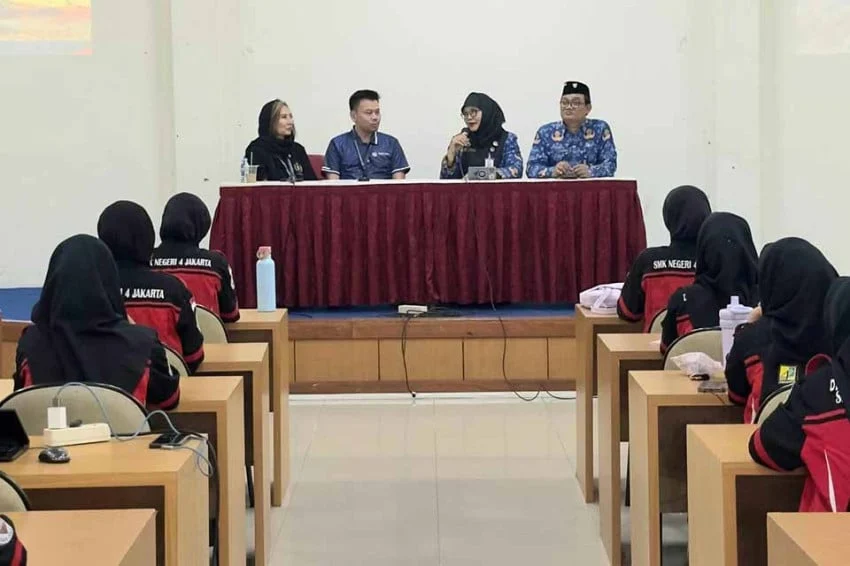
In a strategic move to address the widening skills gap within the Indonesian infrastructure sector, PT Chandra Mitra Strukturindo (CMS), a prominent contractor specializing in design and build services, has officially launched a collaborative initiative with SMK Negeri 4 Jakarta. This partnership, framed under the banner "From Classroom to PT CMS Construction Site," is designed to create a seamless transition for vocational students entering the professional construction industry. By bridging the divide between academic instruction and real-world application, the collaboration seeks to ensure that the next generation of technicians and engineers is equipped with the practical proficiency required to navigate the complexities of modern construction sites.
The timing of this announcement, which coincides with Indonesia’s National Youth Pledge Day (Sumpah Pemuda), underscores the symbolic and practical intent of the initiative: to empower the nation’s youth with the tools and certifications necessary to contribute meaningfully to the country’s burgeoning infrastructure projects.
Addressing the Skills Gap in Vocational Education
The Indonesian government has long prioritized "Link and Match" initiatives, which aim to align the curriculum of vocational high schools (SMK) with the specific demands of the industrial sector. Despite these efforts, a persistent disconnect remains between the theoretical knowledge imparted in classrooms and the rapid evolution of technology and safety standards in the field.
PT CMS has identified this disparity as a critical bottleneck for the industry. By partnering with SMK Negeri 4 Jakarta, a school distinguished by its accreditation as a Center of Excellence and its consistent performance in the national Student Competency Competition (LKS), the company aims to move beyond traditional internships. The goal is to integrate industrial standards directly into the school’s vocational training framework.
Industry experts observe that while vocational students possess foundational technical skills, they often lack familiarity with the rigorous health and safety (K3) protocols, project management methodologies, and advanced digital construction tools that define contemporary firms. This collaboration attempts to rectify that by providing students with direct access to mentors and active project sites.
The Chronology of the Strategic Partnership
The collaboration between PT CMS and SMK Negeri 4 Jakarta was formalized following a series of assessments conducted by the firm. Recognizing that the construction sector is increasingly moving toward digitalization—including Building Information Modeling (BIM) and modular construction—the company sought an educational partner that could demonstrate a high level of agility and academic rigor.
- Phase One (Assessment): PT CMS evaluated the current curriculum at SMK Negeri 4 Jakarta, identifying key areas where industry-specific training could be injected, particularly in structural engineering and site management.
- Phase Two (Formalization): The partnership agreement was signed, establishing a framework for regular workshops, guest lecturing sessions, and supervised field visits.
- Phase Three (Implementation): The "From Classroom to PT CMS Construction Site" program was launched, serving as the operational arm of the partnership. This phase allows students to spend designated hours observing and participating in real-time construction workflows.
- Phase Four (Evaluation): The program includes a feedback loop where PT CMS provides input on the school’s curriculum, ensuring that the learning modules remain relevant to market trends.
Why SMKN 4 Jakarta?
The selection of SMK Negeri 4 Jakarta was not coincidental. As a designated Center of Excellence, the school serves as a benchmark for vocational education in the capital. Its curriculum is frequently audited to ensure it meets the requirements of the Ministry of Education, Culture, Research, and Technology. Furthermore, the school’s track record in the LKS national competition indicates a student body that is not only competent but also driven by competitive excellence.
By leveraging the existing infrastructure of the school, PT CMS can focus its resources on specialized training modules—such as the nuances of structural integrity, material efficiency, and the professional ethics required in high-stakes construction environments.
The Role of Industry-Academic Integration
The significance of this partnership extends beyond mere corporate social responsibility. In the broader context of the Indonesian economy, the construction sector is a vital engine for growth. However, growth is often hampered by the scarcity of skilled labor capable of executing complex structural designs.

According to data from the Central Statistics Agency (BPS) and the Ministry of Public Works and Housing, the construction industry consistently ranks among the top contributors to national GDP. Yet, the productivity of this sector is intrinsically tied to the quality of its workforce.
The integration of professional standards into the education system serves several functions:
- Safety Compliance: By emphasizing K3 (Health and Safety) protocols early in their education, students reduce the risk of accidents once they enter the workforce.
- Technological Literacy: Exposure to PT CMS’s design-build methodologies ensures students understand the interplay between architectural planning and structural execution.
- Professional Readiness: The program acts as a pipeline, allowing PT CMS to identify top-tier talent for future employment, while simultaneously providing students with a clear career trajectory.
Broader Implications for the Construction Industry
The collaboration between PT CMS and SMK Negeri 4 Jakarta mirrors a growing trend among private sector firms in Indonesia to take a proactive role in education. Similar models are being explored by research institutions such as BRIN (National Research and Innovation Agency) and major state-owned enterprises like WIKA, which are focusing on innovation and technological research.
When private contractors invest in vocational training, the impact is threefold:
- Higher Job Placement Rates: Graduates are better prepared for the workforce, reducing the time and cost associated with on-the-job training for new hires.
- Standardization of Practices: As companies share their proprietary methodologies, industry-wide standards for quality and efficiency begin to rise.
- Long-term Economic Resilience: A steady supply of skilled labor ensures that large-scale infrastructure projects can be completed on time and within budget, which is critical for national development goals.
Challenges and Future Outlook
While the partnership is a positive development, the success of such initiatives often hinges on long-term sustainability. The challenge lies in ensuring that the collaboration remains dynamic. Construction technology changes rapidly; therefore, the training modules provided by PT CMS must be updated regularly to reflect new materials, sustainable construction practices, and the increasing role of automation in building.
Furthermore, the scalability of this model is a point of interest for policymakers. If this partnership proves successful in enhancing the competency of SMKN 4 graduates, it could serve as a pilot program for other vocational schools across the archipelago. The Ministry of Education has repeatedly encouraged private entities to adopt vocational schools, offering tax incentives or public recognition for firms that contribute to the quality of vocational training.
Conclusion
The collaboration between PT Chandra Mitra Strukturindo and SMK Negeri 4 Jakarta represents a pragmatic approach to one of Indonesia’s most pressing educational and industrial challenges. By bridging the classroom with the construction site, the initiative offers a tangible solution to the talent gap.
As the construction industry continues to modernize, the demand for highly skilled technicians will only increase. Through this partnership, PT CMS and SMKN 4 Jakarta are taking a crucial step toward ensuring that Indonesia’s workforce is not only prepared for the jobs of today but is also capable of adapting to the technological demands of the future. The success of this program will likely be measured by the professional performance of its participants and the potential for this "Link and Match" model to be replicated across the wider national landscape.
As Indonesia continues to pursue its ambitious infrastructure agenda, the success of such micro-level partnerships becomes the backbone of macro-level national progress. By investing in human capital, PT CMS is effectively building the foundation for the future of the nation’s built environment, one student at a time.