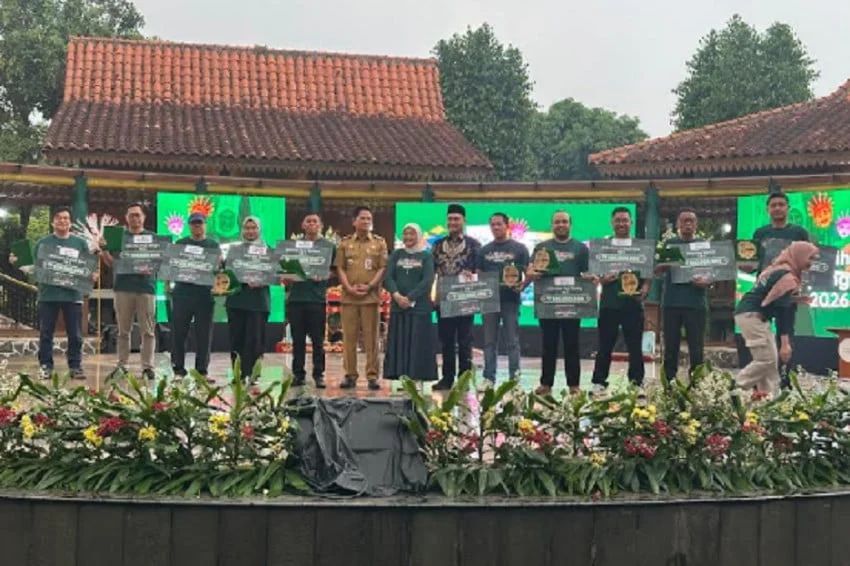
The 2026 Bebersih Kampung program has officially concluded its latest evaluation phase, awarding 10 Rukun Warga (RW) across the Special Capital Region (DKI Jakarta) with Rp100 million each. This financial recognition serves as a testament to grassroots dedication in maintaining environmental cleanliness and fostering active community engagement in sustainable waste management. The grand prize distribution event took place at the iconic Setu Babakan cultural zone in Jagakarsa, South Jakarta, on Tuesday, October 27, 2026, marking a significant milestone in the capital’s ongoing battle against urban waste accumulation.
The high-profile ceremony was jointly presided over by the Founder of the 2026 Bebersih Kampung Program, Ida Fauziyah, who also serves as a member of the House of Representatives (DPR), alongside South Jakarta Mayor Syafrin Liputo. Their presence underscored the collaborative approach required between legislative figures, municipal authorities, and local communities to tackle complex urban environmental challenges.
The Genesis of Bebersih Kampung and the Urban Waste Crisis
Urban waste management has historically been one of Jakarta’s most persistent administrative challenges. With millions of residents generating thousands of tons of domestic waste daily, municipal infrastructure often faces immense strain. Recognizing that top-down governmental interventions alone are insufficient to resolve this systemic issue, community leaders and policymakers conceptualized the Bebersih Kampung initiative.
During the event, Ida Fauziyah emphasized that the core objective of the program is not merely to clean up physical spaces, but to cultivate a long-term cultural shift in how citizens perceive and handle household waste. She noted that while the Provincial Government of DKI Jakarta has continuously deployed advanced waste processing facilities, increased operational budgets, and deployed sanitation personnel, the root of the problem lies in public awareness and individual responsibility.
"We initiated this movement alongside our colleagues because the issue of waste, particularly in Jakarta, is an urgent matter that can no longer be delayed," Ida stated during an interview with journalists on Tuesday. "The Provincial Government has undertaken numerous efforts, but what must be continuously nurtured is community awareness."
The initiative operates on the premise that sustainable cleanliness begins at the hyper-local level—specifically within the scope of Rukun Warga (RW) and Rukun Tetangga (RT). By incentivizing neighborhoods through substantial grants, the program encourages communities to develop innovative waste reduction, sorting, and recycling mechanisms tailored to their specific local conditions.
Ceremony and Recognition at Setu Babakan
The selection of Setu Babakan in Jagakarsa as the venue for the award ceremony held both symbolic and practical significance. Known as a designated Betawi cultural village, Setu Babakan represents the intersection of community heritage and environmental preservation.
On Tuesday morning, local neighborhood leaders, community volunteers, and municipal officials gathered to celebrate the achievements of the 10 winning RW units. Each winning community underwent a rigorous evaluation process that spanned several months, assessing criteria such as waste reduction metrics, active participation rates in neighborhood clean-up drives (kerja bakti), the establishment of local waste banks (bank sampah), and the aesthetic maintenance of public spaces.
South Jakarta Mayor Syafrin Liputo praised the resilience and proactive attitude of the winning communities. He highlighted that the Rp100 million prize awarded to each RW is intended to be reinvested into local environmental infrastructure, such as upgrading waste management facilities, procuring composting equipment, or enhancing green open spaces within their respective neighborhoods.
"The Rp100 million reward is a form of profound appreciation from us, but more importantly, it is seed capital for these communities to further strengthen their environmental programs," Syafrin noted during the proceedings. He added that the municipal government remains committed to scaling up such collaborative models across other sub-districts in South Jakarta.
Chronology and Evaluation Process of the 2026 Initiative
The journey toward the October 27 award ceremony was the culmination of a meticulously planned municipal campaign launched earlier in the year. The chronology of the Bebersih Kampung 2026 program reflects a structured approach to grassroots mobilization:
- Phase 1: Socialization and Registration (Early 2026): The initiative was officially announced to public audiences, inviting RW administrations across DKI Jakarta to register their neighborhoods. Participating communities received preliminary guidelines on establishing independent waste-sorting systems and organizing routine community clean-ups.
- Phase 2: Implementation and Monitoring (Q1–Q3 2026): For several months, participating neighborhoods executed their respective waste-reduction strategies. Municipal inspectors and program coordinators conducted unannounced spot checks and periodic evaluations to monitor community engagement, cleanliness levels, and the functionality of local waste banks.
- Phase 3: Shortlisting and Auditing (September 2026): Out of hundreds of competing RWs, a panel of environmental experts, municipal representatives, and program founders narrowed the field down to the top 20 finalists. These finalists underwent intensive auditing regarding their waste diversion rates and community participation statistics.
- Phase 4: Final Selection and Awarding (October 27, 2026): The final 10 winning RWs were officially announced, culminating in the festive presentation of awards at Setu Babakan, Jagakarsa.
Broader Socio-Economic Implications
The success of the Bebersih Kampung program extends beyond aesthetic improvements and immediate waste reduction. Environmental analysts point out that community-driven sanitation initiatives generate profound socio-economic and public health benefits for urban populations.
First, by decentralizing waste management to the RW level, the burden on Jakarta’s primary landfill site—Bantar Gebang in Bekasi—is significantly alleviated. When households actively sort organic and inorganic waste at the source, recyclable materials are diverted to local waste banks, generating economic value for residents through the circular economy. Organic waste, meanwhile, can be processed into compost for urban farming initiatives, thereby contributing to local food security.
Second, improved neighborhood sanitation directly correlates with public health outcomes. Cleaner drainage systems and proactive waste collection mitigate the risk of vector-borne diseases such as dengue fever, which traditionally pose a seasonal threat during the rainy months in densely populated urban centers like Jakarta.
Finally, programs like Bebersih Kampung foster social cohesion. Neighborhood cleanup drives require collective participation, breaking down social barriers and strengthening community solidarity among residents from diverse socio-economic backgrounds.
Looking Ahead: Scaling Grassroots Environmentalism
As the 2026 edition of Bebersih Kampung concludes its primary award cycle, organizers and local government officials are already looking toward the future. The high level of enthusiasm demonstrated by participating neighborhoods indicates a growing appetite for structured environmental stewardship among Jakarta residents.
Ida Fauziyah expressed optimism that the momentum generated by the 10 winning RWs will inspire neighboring communities to adopt similar practices. Plans are currently under discussion to expand the scope of the program in subsequent years, potentially introducing new categories such as zero-waste household recognition and technological integration for local waste tracking.
Ultimately, the initiative at Setu Babakan serves as a compelling reminder that while major policy decisions and infrastructural investments from the provincial government are vital, the ultimate realization of a clean, sustainable Jakarta depends heavily on the daily choices and collective action of its people.