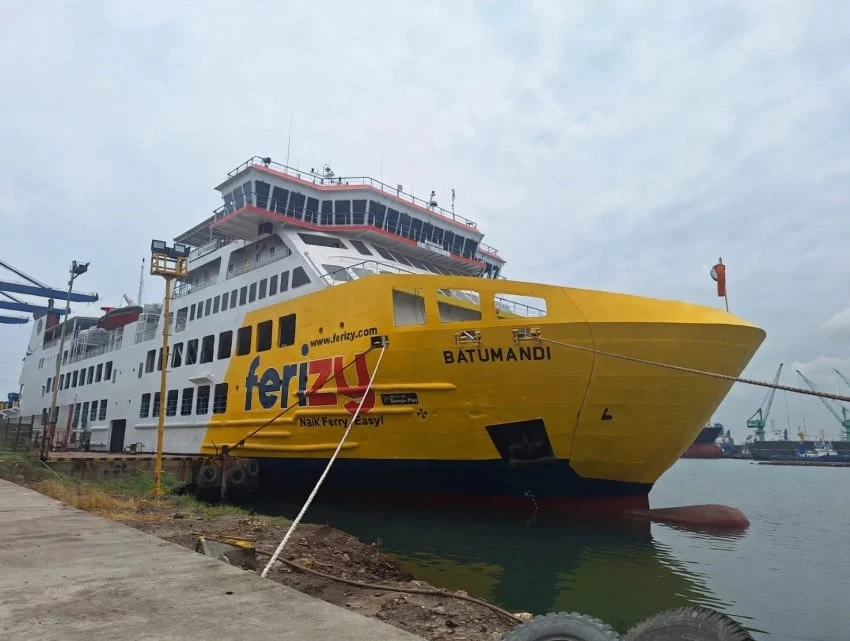
The maritime industry in Indonesia has once again been forced to confront the critical issue of vessel safety following a harrowing maritime incident in the vital waters of the Sunda Strait. PT Biro Klasifikasi Indonesia (Persero), widely known as BKI, has officially initiated a thorough and meticulous technical review of the documents and historical operational records associated with the passenger-ferry KMP Batu Mandi. This decisive action comes directly in the wake of a sudden and alarming fire outbreak that engulfed the vessel while navigating the busy shipping lanes near Merak Besar Island, located off the coast of Cilegon in Banten province. The incident, which sent shockwaves through the national transportation sector, occurred on October 20, 2026, prompting immediate emergency responses from maritime authorities, search and rescue teams, and port operators.
As the state-owned classification society entrusted with upholding maritime safety standards, BKI holds a pivotal responsibility in examining the structural integrity, mechanical history, and regulatory compliance of Indonesian flagged vessels. The ongoing technical audit covers a broad spectrum of documentation, including the ferry’s active classification status, a comprehensive chronological history of its statutory and voluntary surveys, and the validity of its operational certifications. By diving deep into these records, BKI aims to establish an unambiguous, data-driven foundation that can shed light on the vessel’s condition leading up to the disaster, while simultaneously providing accurate, verified technical insights to government regulators, law enforcement agencies, and maritime stakeholders.
Chronology of the Sunda Strait Disaster
To fully understand the gravity of the technical review currently being undertaken by BKI, it is essential to examine the sequence of events that unfolded on that fateful afternoon in late October 2026. KMP Batu Mandi was operating along one of Indonesia’s most economically vital maritime corridors, connecting the principal island of Java to Sumatra through the bustling Merak-Bakauheni ferry route. The Sunda Strait is notoriously busy, serving as a primary artery for passenger transit, logistics, and heavy commercial freight, making safety protocols on this route paramount to national commerce.
On October 20, 2026, the vessel was making its routine crossing when signs of an onboard fire suddenly emerged. According to initial field reports, thick plumes of black smoke began billowing from the ship’s interior spaces, triggering immediate panic among the hundreds of passengers on board. The ship’s crew activated emergency protocols, signaling distress to nearby vessels and the Merak Port Traffic Control. The swift intervention of joint rescue teams—comprising the National Search and Rescue Agency (Basarnas), the Indonesian Navy, the Water Police, and port tugboats—prevented what could have been a catastrophic loss of life. An intensive evacuation operation was successfully launched, pulling hundreds of terrified passengers and crew members away from the burning hull and transferring them safely to the Merak Port terminal, where medical triage and psychological support units were standing by.
Official Stance and Scope of BKI’s Investigation
Addressing the public and maritime stakeholders for the first time since the disaster, Arief Budi Permana, the Director of Classification Operations at BKI, issued a formal statement clarifying the exact mandate and boundaries of the organization’s ongoing technical assessment.
"Sehubungan dengan insiden tersebut, BKI melakukan penelaahan terhadap dokumen dan rekam jejak teknis kapal yang relevan, termasuk status klasifikasi, riwayat survei, serta sertifikasi yang berada dalam lingkup kewenangan BKI," stated Arief during a press briefing in Jakarta. Translated for international and technical contexts, this emphasizes that BKI’s primary focus is to scrutinize every relevant piece of paper and digital file that defines the vessel’s operational legacy under their purview.
Arief further elaborated that this meticulous document review is an indispensable procedural step. It guarantees that any information disseminated to governmental bodies, the Ministry of Transportation, and the broader public is anchored firmly in verifiable facts rather than speculative assumptions. Furthermore, the leadership and staff of BKI extended their deepest sympathies and professional concern to all passengers, crew members, and their families who were directly impacted by the terrifying ordeal. The organization underscored its humanitarian hope that every survivor would receive the necessary medical care, trauma counseling, and logistical support to recover from the incident.
Understanding the Mandate of a Classification Society
To appreciate the significance of BKI’s intervention, one must understand the unique role that a classification society plays within the maritime ecosystem. Unlike flag state regulators or port state control officers who enforce statutory laws, a classification society establishes and maintains technical standards for the design, construction, and periodic survey of marine vessels and offshore structures.
PT Biro Klasifikasi Indonesia (Persero) stands as the sole national classification society of Indonesia. Established to ensure that domestic vessels meet rigorous engineering and safety benchmarks, BKI acts as an independent verifier. Its surveyors evaluate ship hulls, propulsion systems, electrical networks, and safety gear to confirm they comply with established rules.
However, industry experts note an important boundary in BKI’s current mandate regarding KMP Batu Mandi. While the audit of classification records, survey histories, and certification statuses falls squarely within BKI’s institutional jurisdiction, Arief Budi Permana explicitly clarified that this technical review does not, by itself, determine the definitive root cause of the fire. Establishing the exact catalyst—whether electrical failure, mechanical malfunction, human error, or combustible cargo ignition—remains the collaborative duty of specialized marine accident investigators, such as the National Transportation Safety Committee (KNKT / Komite Nasional Keselamatan Transportasi) and law enforcement forensic teams. BKI’s role is to provide the foundational data that these investigators need to build an accurate picture of the vessel’s structural and mechanical readiness.
Broader Implications for Indonesian Ferry Safety
The unfortunate incident involving KMP Batu Mandi has once again thrust the spotlight onto the broader state of domestic ferry safety in the Indonesian archipelago. As an island nation heavily reliant on ro-ro (roll-on/roll-off) ferries and passenger vessels to bridge its vast geographic expanses, Indonesia faces immense logistical challenges in maintaining fleet safety standards across thousands of maritime routes.
The Merak-Bakauheni route, in particular, handles millions of passengers and vehicles annually. The high frequency of trips required to meet continuous economic demand places extraordinary wear and tear on maritime assets. Consequently, maritime safety advocates and policy analysts are calling for a comprehensive review of operational aging trends within the domestic fleet. Older vessels require heightened maintenance vigilance, stricter adherence to fire suppression system testing, and more frequent, unannounced statutory audits.
Following the KMP Batu Mandi fire, industry observers anticipate that the Ministry of Transportation, alongside BKI and the Directorate General of Sea Transportation, will face increased pressure to tighten oversight mechanisms. This could manifest in several ways:
- Enhanced Mandatory Safety Audits: Implementing more rigorous pre-departure safety checks, particularly concerning engine room fire suppression systems, electrical wiring integrity, and cargo deck ventilation.
- Stricter Enforcement of Passenger Capacities: Ensuring that emergency evacuation drills are routinely practiced by crews and that life-saving appliances are maintained far beyond baseline regulatory minimums.
- Accelerated Digitalization of Vessel Records: Integrating classification records with real-time port clearance systems to prevent vessels with questionable maintenance histories from securing voyage permissions.
Economic and Operational Repercussions
Beyond the immediate human toll and the vital safety concerns, maritime accidents of this magnitude inevitably generate ripple effects throughout regional logistics and supply chains. The temporary disruption of ferry services along the Sunda Strait corridor causes immediate bottlenecks for commercial trucking, goods distribution, and passenger mobility between Java and Sumatra.
Logistics associations have frequently highlighted how crucial the Merak-Bakauheni crossing is for the national distribution of agricultural goods, consumer products, and industrial raw materials. When a major vessel like KMP Batu Mandi is removed from active service due to catastrophic fire damage, the remaining fleet must absorb the surplus traffic, often resulting in extended port queues, delayed freight schedules, and increased operational costs for transport companies.
Furthermore, shipping operators across Indonesia are likely to experience heightened scrutiny from insurance underwriters. Maritime insurance premiums for domestic ro-ro ferries could see an upward adjustment as underwriters re-evaluate risk exposure following high-profile incidents like the Merak fire. This economic pressure provides an indirect yet powerful incentive for shipowners to invest proactively in advanced fire-detection technology, crew safety training, and top-tier maintenance regimens certified by bodies like BKI.
Next Steps in the Investigation and Recovery Process
As the technical review by PT Biro Klasifikasi Indonesia progresses, all eyes remain fixed on the official findings that will eventually emerge from the collaborative investigative efforts of BKI, KNKT, and marine authorities. The documentation review will systematically cross-reference the maintenance logs submitted by the vessel’s operators against the actual physical state of the ship post-fire.
For BKI, this incident serves as both a profound test of its auditing integrity and an opportunity to reinforce its commitment to the safety of Indonesian waters. By maintaining transparency, sharing technical data responsibly, and upholding uncompromising standards during its document and survey history analysis, BKI aims to restore public confidence in domestic maritime transit.
Ultimately, the fire aboard KMP Batu Mandi must serve as a critical catalyst for structural reform within the national shipping industry. Only through a relentless commitment to rigorous technical oversight, stringent safety enforcement, and proactive accident prevention can the Indonesian maritime sector ensure that passengers traversing the nation’s vital waterways can do so with absolute confidence in their safety and well-being.