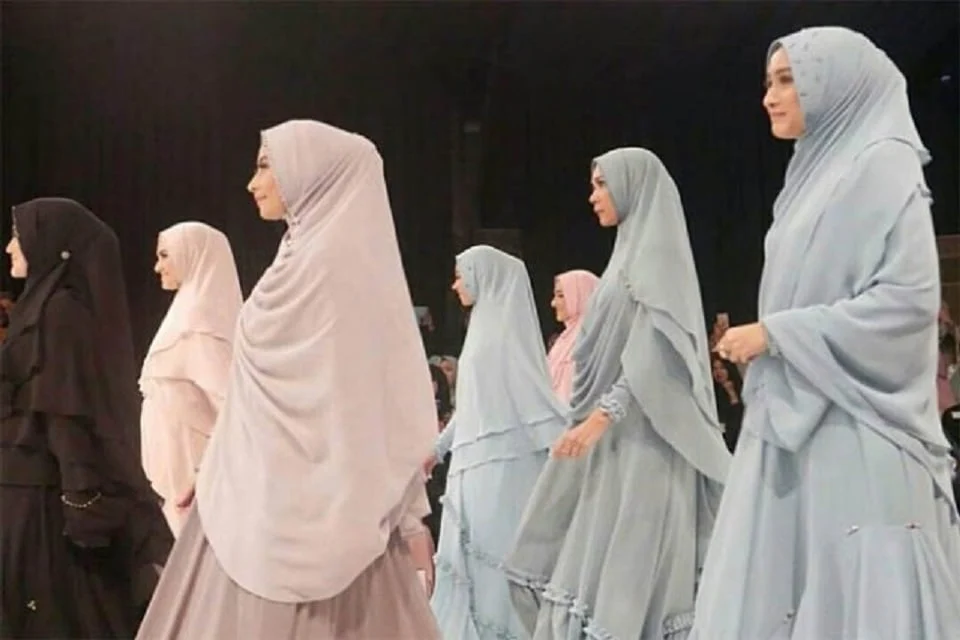
In an era defined by the rapid proliferation of social media platforms and the relentless evolution of global fashion trends, the discourse surrounding the Islamic concept of tabarruj has gained significant renewed urgency. For millions of Muslim women, the challenge of navigating personal expression while adhering to the foundational principles of modesty has become a complex negotiation between modern lifestyle aspirations and the theological framework of the faith. At its core, tabarruj refers to the act of displaying beauty, adornment, or physical allure in a manner that exceeds the boundaries set by Islamic jurisprudence, particularly when in the presence of those who are not mahram (non-related members of the opposite gender).
The intersection of digital identity and religious observance has transformed the visibility of women’s attire from a private or localized communal matter into a global public display. As influencers and everyday users curate their online presence through meticulously staged photographs and short-form videos, religious scholars are increasingly calling for a critical re-evaluation of the intention behind these digital footprints. The central concern is not the act of dressing well or personal grooming—both of which are encouraged in Islamic tradition as reflections of cleanliness and gratitude—but rather the shift toward using appearance as a primary vehicle for securing validation, attention, and social capital.
Theological Foundations and the Qur’anic Context
The prohibition against tabarruj is rooted in the foundational texts of Islam, most notably in Surah Al-Ahzab, verse 33. The verse serves as a historical and spiritual touchstone, directing women to maintain a sense of decorum that stands in stark contrast to the practices of the pre-Islamic Jahiliyah era. The Qur’anic injunction, “And do not display yourselves as [was] the display of the former times of ignorance,” is interpreted by classical and contemporary exegetes as a safeguard for the dignity of women.
Islamic scholars, such as those cited in the theological analysis Mukhalafaat Nisaiyyah by Abdul Lathif bin Hajis Al-Ghamidi, argue that tabarruj is not merely an aesthetic concern but a moral one. The act of drawing excessive attention to one’s physical features is viewed as a disruption to the social order and an erosion of the sanctity of private life. In the modern context, this translates to the digital sphere; the constant pursuit of "likes" or engagement based on physical appearance is seen as a deviation from the principle of haya (modesty), which is considered a defining characteristic of faith.
The Digital Paradox: Modesty in the Age of Social Media
The rise of the "modest fashion" industry has created a paradox. While the industry provides a wider range of clothing options that conform to traditional definitions of coverage—such as loose-fitting garments and headscarves—the marketing and consumption of these items often rely on the very aesthetics of tabarruj that the religion seeks to avoid.
Data from global retail reports indicate that the modest fashion market is currently valued in the hundreds of billions of dollars. This economic growth has been heavily driven by social media marketing. However, the distinction between a "modest" garment and a "modest" display has blurred. When a garment is worn in a way that emphasizes the figure or is paired with heavy makeup and elaborate staging to maximize visual impact on platforms like Instagram or TikTok, it often crosses the threshold from functional coverage to performative display.
Sociologists observing this trend note that the "Influencer Economy" rewards high-engagement content, which is frequently correlated with high-visibility imagery. This creates a psychological pressure on Muslim women to present themselves in ways that align with mainstream trends to remain relevant in the digital space. Consequently, the act of self-presentation becomes a commercialized activity, making the religious directive of remaining low-profile increasingly difficult to implement.
Historical Context and the Evolution of Dress Codes
Historically, the interpretation of modest dress has varied across cultures and centuries, yet the core principles—avoiding transparency, avoiding tight-fitting clothing, and avoiding excessive adornment—have remained consistent in scholarly discourse. During the medieval period, the concern regarding tabarruj was often centered on public appearances in marketplaces or during travel. Today, the "public" space is essentially boundless. A photograph uploaded to a social media account is accessible to anyone with an internet connection, effectively removing the traditional protections of private spaces.
The scholarly community has been active in responding to these shifts. Many contemporary Islamic institutions have issued guidelines for digital etiquette, urging women to consider the permanence of the internet and the potential for their images to be misused or misunderstood. These warnings are often accompanied by reminders that the intent of the hijab and modest dress is to pivot the focus of the observer away from the woman’s physical form and toward her intellect, character, and spiritual contributions.
Implications of "Dressed yet Naked"
A frequent reference in Islamic discourse is the prophetic tradition regarding those who are "clothed yet naked." This hadith is often cited to address trends that, while technically covering the skin, fail to adhere to the spirit of modesty. Whether through the use of sheer fabrics, form-fitting silhouettes, or styles designed specifically to attract gaze, this phenomenon is viewed as an abandonment of the protective function of clothing.
In the contemporary context, this goes beyond just clothing. It includes the use of digital filters that alter one’s appearance, the curation of luxurious environments that signal status, and the behavioral cues in videos that are designed to maximize viewership through flirtatious or alluring body language. Experts in religious ethics suggest that the implication of this behavior is a gradual desensitization to the value of privacy. When a woman’s identity is constructed through the external validation of strangers, the internal sense of self-worth is often compromised, leading to a cycle of constant modification of one’s appearance to meet the shifting demands of digital algorithms.
Broader Societal and Psychological Impact
The societal implications of this trend extend beyond the individual. As the lines between modesty and performance blur, the cultural understanding of what it means to be a "modest woman" is redefined by popular culture rather than religious authority. This can lead to a sense of alienation among those who hold to more traditional interpretations, as they may feel pressured to adopt modern digital habits to participate in communal life.
Psychologically, the preoccupation with outward appearance—even within a framework of "modesty"—can foster high levels of anxiety and self-objectification. Research in digital psychology has repeatedly shown that women who engage heavily in self-presentation on social media are more prone to body dissatisfaction and social comparison. When these pressures are filtered through a religious lens, they can also cause spiritual distress, as individuals may feel conflicted between their religious identity and the requirements of modern social participation.
Toward a Balanced Approach
Islamic scholars advocate for a balanced approach that does not require total withdrawal from modern society or the total abandonment of beauty. The teachings emphasize that grooming, wearing clean clothes, and maintaining an elegant appearance are not prohibited. The crucial differentiator is the niyyah (intention). Is the appearance intended to honor oneself and express gratitude to the Creator, or is it intended to solicit validation and gaze from the public?
The consensus among many educators in the field is that digital literacy for Muslim youth must include a module on "digital ethics." This involves teaching women how to navigate social media without becoming commodities. Practical suggestions often include:
- Limiting Public Exposure: Being selective about what is shared online and limiting the audience for personal images.
- Refocusing Content: Shifting the focus of content creation from physical appearance to skills, knowledge, community service, or intellectual discourse.
- Self-Reflection: Regularly questioning the motive behind a post: "Am I posting this to share a benefit, or to receive praise for my appearance?"
Conclusion: The Responsibility of the Modern Muslimah
The challenge of tabarruj in the 21st century is a reflection of the broader struggle to maintain authentic identity in an increasingly performative world. While the tools of communication have changed, the fundamental principles of self-respect, dignity, and modesty remain unchanged. As society continues to move toward deeper integration with digital platforms, the responsibility lies with the individual to act as a guardian of her own dignity.
The warnings issued by religious scholars regarding tabarruj are not intended to restrict the agency of women, but rather to protect them from the ephemeral and often hollow nature of digital validation. By grounding their sense of self in spiritual conviction rather than external appraisal, Muslim women can successfully navigate the complexities of the modern era, demonstrating that true beauty and strength lie in the preservation of one’s integrity, even when the world is watching. In the final analysis, the choice to prioritize substance over shadow remains one of the most powerful assertions of identity in a digital landscape that often prizes the latter above all else.