Jakarta — In a definitive policy shift regarding national energy sovereignty, Indonesia officially reduced its natural gas exports to neighboring Singapore starting Saturday, October 24, 2026. The move marks a tangible enforcement of the government’s newly prioritized stance on natural resource management, signaling that export volumes will henceforth be tied to diplomatic alignment, mutual respect, and domestic energy security imperatives.
The policy execution was confirmed by Djoko Siswanto, Head of the Special Task Force for Upstream Oil and Gas Business Activities (SKK Migas), on the heels of robust directives issued by the Ministry of Energy and Mineral Resources (ESDM). The recalibration of cross-border energy flows affects a total volume of 31 Billion British Thermal Units per Day (BBTUD), drawn from two primary offshore and onshore pipeline networks. As Indonesia increasingly prioritizes domestic industrialization, downstream development, and fair international partnerships, long-standing energy export agreements are facing rigorous scrutiny.
Chronology of the Policy Shift
The reduction of gas exports to Singapore did not happen in a vacuum; it is the culmination of escalating strategic reviews within Indonesia’s energy sector. The timeline leading up to the October 24 enforcement highlights a methodical tightening of energy diplomacy:
- Early 2026 and Prior: Indonesia and Singapore maintained decades-long energy trade relationships, primarily through offshore pipeline networks connecting the Natuna fields and South Sumatra to Singaporean power plants and industrial hubs. However, domestic demand for natural gas within Indonesia began surging, driven by national programs promoting clean energy transition and downstream industrial processing.
- Late October 2026 (Subroto Award Forum): Minister of Coordinating for Downstream and Energy Transition and Minister of Energy and Mineral Resources, Bahlil Lahadalia, delivered a stern warning regarding international energy trade. He stated unequivocally that Indonesia would begin halting or scaling back natural gas exports to nations that fail to demonstrate adequate diplomatic and economic respect toward Indonesia’s national interests.
- October 23, 2026: On the sidelines of the prestigious Subroto Award 2026 ceremony, SKK Migas Head Djoko Siswanto operationalized the Minister’s directive. He announced that the cuts would take effect immediately the following morning, outlining the exact technical breakdown of the volume reductions.
- October 24, 2026: The volume cuts officially went live, reducing baseline export quantities by 31 BBTUD. This event marks the first major punitive or readjustment measure targeting a specific trading partner under the Bahlil Lahadalia energy doctrine.
Breakdown of the Export Reductions
According to technical disclosures provided by SKK Migas, the 31 BBTUD reduction is sourced from two critical geographical pipelines that have historically supplied energy to Singapore’s domestic grid and industrial complex:
- Natuna Offshore Pipeline: A reduction of 15 BBTUD has been implemented from the gas fields located in the Natuna region. These offshore assets have long served as a vital cross-border energy artery in the South China Sea basin.
- Sumatra Onshore Pipeline: An additional reduction of 16 BBTUD has been enforced from fields connected via South Sumatra transport infrastructure.
Despite these immediate cuts, complete cessation is not immediate due to binding bilateral contracts. Long-term pipeline export contracts governing Indonesian gas sales to Singapore are scheduled to expire progressively and in a phased manner by 2028. Consequently, policymakers face a delicate balancing act between enforcing immediate geopolitical leverage and honoring legacy contractual obligations until their natural expiration dates.
Official Statements and Government Stance
The decision to trim gas supplies stems from a broader ideological transformation in Jakarta’s approach to natural resource diplomacy. Under the administration’s vision for downstream integration and energy transition, raw commodities and energy resources must primarily serve domestic value creation.
Minister Bahlil Lahadalia’s public warnings earlier in the week laid the political groundwork for SKK Migas’ technical actions. Lahadalia emphasized that Indonesia is no longer willing to function merely as a resource hinterland for external economies without receiving reciprocal diplomatic deference and equitable economic value. While Singapore remains the primary and sole nation targeted with immediate export reductions following the announcement, the Ministry has made it clear that the policy applies universally to all export destinations.

SKK Migas Head Djoko Siswanto reiterated this stance during his post-Subroto Award briefing. "Starting tomorrow [Saturday, Oct 24], we are reducing gas exports to Singapore. From Natuna, 15 BBTUD, and from Sumatra, 16 BBTUD," Siswanto stated. When questioned whether other countries faced similar immediate reductions, Siswanto confirmed that Singapore is currently the sole recipient of this specific enforcement action, though ongoing contract reviews remain standard procedure for all foreign energy commitments.
Implications for Singapore’s Energy Security
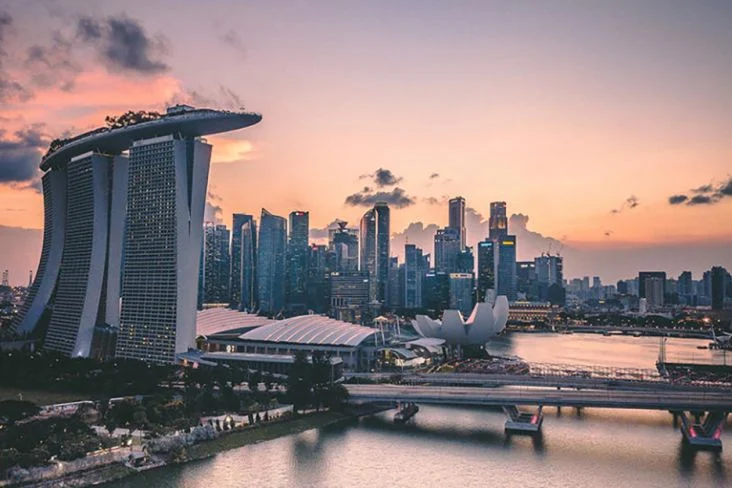
Singapore relies heavily on imported natural gas to generate electricity, powering roughly 95% of its power grid. Historically, a significant portion of this gas has been imported via pipelines from neighboring Indonesia and Malaysia, alongside liquefied natural gas (LNG) shipments sourced globally.
While a reduction of 31 BBTUD represents a manageable fraction of Singapore’s total daily energy consumption, the timing and geopolitical undertones of the cut introduce strategic uncertainties for Singaporean energy planners. Singapore has been actively diversifying its energy mix by ramping up LNG terminal capacities, investing in regional power grids (such as solar imports from regional neighbors), and increasing energy efficiency.
Nevertheless, any abrupt disruption or phased reduction in pipeline gas forces Singaporean utilities to pivot more rapidly toward spot-market LNG procurement. This exposes the city-state’s power generators to global price volatility, especially amid ongoing geopolitical tensions in the Middle East and Europe that routinely rattle international gas markets.
Broader Economic and Geopolitical Impact
For Indonesia, the redirection of 31 BBTUD of natural gas away from export pipelines aligns with domestic strategic objectives. The domestic market obligation (DMO) policies and the escalating needs of local petrochemical plants, fertilizer factories, and urban gas grids require a reliable and expanding supply of natural gas. By curtailing exports, Indonesia ensures that transitional energy resources remain within national borders to fuel domestic industrial hubs.
Furthermore, this policy pivot highlights a rising trend across the Global South: resource nationalism. Developing nations rich in critical minerals, oil, and gas are increasingly leveraging their natural wealth to demand fairer terms of trade, greater technology transfer, and stronger geopolitical respect from traditional economic partners.
As the countdown toward the complete expiration of remaining pipeline contracts in 2028 continues, market analysts will closely monitor whether Singapore and Indonesia can renegotiate terms or if bilateral energy trade will permanently contract. For now, Jakarta has sent an unmistakable signal that Indonesian natural resources will be managed strictly under the prism of national dignity and domestic economic primacy.