In a dramatic shift that underscored the volatility of the modern equity markets, the world’s six most prominent billionaires experienced a staggering collective decline in net worth on Thursday, October 22, 2026. According to data provided by Forbes, the net worth of these industry titans contracted by approximately 130 billion dollars—a figure equivalent to 2,326 trillion Indonesian Rupiah—as investor sentiment shifted sharply against the technology sector. The sell-off, which rippled across global exchanges, was primarily driven by deep-seated concerns regarding the long-term return on investment (ROI) for the massive capital expenditures currently being funneled into artificial intelligence (AI) infrastructure.
The individuals impacted by this market correction represent the vanguard of the global technology and aerospace industries: Elon Musk, Jeff Bezos, Larry Page, Sergey Brin, Michael Dell, and Mark Zuckerberg. Their portfolios, heavily weighted toward tech giants including Tesla, SpaceX, Amazon, Alphabet (Google), Dell Technologies, and Meta, suffered as institutional and retail investors alike reacted to earnings reports and broader macroeconomic warnings.
The Catalyst: Investor Skepticism Toward AI Spending
The primary engine behind this market recalibration is a mounting skepticism regarding the "AI gold rush." Over the past two years, technology companies have committed hundreds of billions of dollars to the construction of data centers, the procurement of high-end graphical processing units (GPUs), and the development of large language models. While these investments were initially cheered as the cornerstone of future productivity, the market has begun to demand tangible evidence of profitability.
Investors are increasingly questioning whether the revenue growth generated by AI-integrated services is sufficient to offset the ballooning operational costs. On Thursday, this narrative reached a tipping point, leading to a coordinated retreat from stocks that had previously enjoyed high valuation multiples based on their AI potential.

Elon Musk and the SpaceX-Tesla Nexus
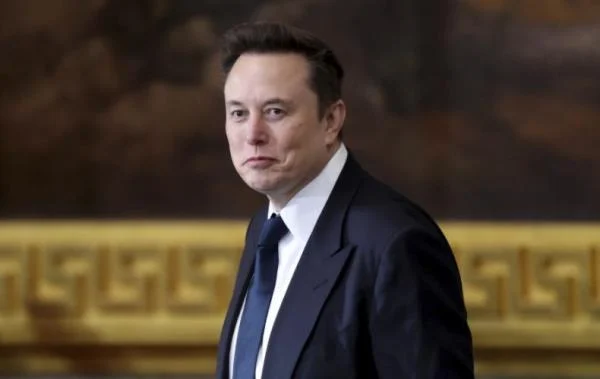
The most significant portion of the losses was shouldered by Elon Musk. His personal wealth plummeted by an estimated 74 billion dollars—roughly 1,338 trillion Rupiah—bringing his total net worth to approximately 914.7 billion dollars. This contraction was largely attributed to a nearly 9 percent decline in the valuation of SpaceX, a company that has otherwise seen robust operational growth.
Despite SpaceX reporting a remarkable 161 percent year-over-year revenue growth, market analysts pointed to a widening cash flow gap, estimated at 35 billion dollars. This liquidity concern was exacerbated by recent signals from Musk himself, who has openly entertained the possibility of a strategic merger between SpaceX and Tesla. While proponents of such a merger argue that it would create a vertically integrated powerhouse capable of dominating both the energy and aerospace sectors, the market reacted with caution, fearing that such a move could dilute the focused innovation cycles of both entities.
Simultaneously, Tesla shares saw a 2 percent decline during the Thursday trading session. This dip occurred despite a positive earnings surprise, with the electric vehicle manufacturer reporting 1.5 billion dollars in free cash flow for the third quarter of 2026. The disconnect between Tesla’s solid operational performance and its stock price movement highlights a broader trend: in a market dominated by AI-focused pessimism, even strong fundamental performance is being overshadowed by broader macroeconomic fears.
Broader Implications for the Tech Sector
The decline of these six individuals is not merely a personal financial setback; it is a bellwether for the health of the broader technology index. When the architects of firms like Meta (led by Zuckerberg) and Google (led by Page and Brin) see their net worths diminish, it reflects a reduction in market capitalization that impacts pension funds, institutional portfolios, and individual retirement accounts globally.
The sector is currently undergoing a "valuation reset." During the 2024-2025 period, tech stocks were priced for perfection, with investors baking in aggressive AI-driven revenue targets. As we move into the final quarter of 2026, the reality of deployment challenges—such as energy constraints, regulatory hurdles, and the difficulty of integrating AI into legacy software—is dampening that enthusiasm.

Chronology of the Sell-Off
The events of October 22 did not occur in a vacuum. The following timeline outlines the build-up to the market correction:
- Q1-Q2 2026: Technology firms continue aggressive capital expenditure (CapEx) spending, with industry analysts raising questions about the "utility" phase of AI.
- Early October 2026: Several mid-cap tech firms report earnings that highlight rising power and cooling costs for data centers, leading to a cooling of investor sentiment.
- October 21, 2026: Reports emerge regarding a potential restructuring of Musk’s corporate portfolio, including the SpaceX-Tesla merger rumor, creating uncertainty.
- October 22, 2026: Market opening sees a significant "risk-off" sentiment. By the closing bell, the collective net worth of the six identified billionaires has dropped by 130 billion dollars as the Nasdaq and other tech-heavy indices post significant losses.
Expert Analysis and Market Outlook
Financial analysts are divided on whether this event represents a temporary correction or the beginning of a sustained downturn.
"The market is moving from a phase of speculative exuberance to one of analytical rigor," says Sarah Jenkins, a senior equity analyst at a global investment firm. "Investors are no longer satisfied with the promise of AI. They want to see how these trillions of dollars in infrastructure are translating into margin expansion. When companies like Amazon or Alphabet report their next round of earnings, the focus will not be on the number of GPUs they own, but on the bottom-line contribution of their cloud-based AI services."
The case of Michael Dell and Dell Technologies is particularly illustrative. As a key hardware provider for the AI boom, Dell’s stock is highly sensitive to corporate spending trends. A cooling in the hardware upgrade cycle for enterprise data centers would disproportionately impact their valuation, explaining why the company was among the group of six hit hardest during the recent trading volatility.
Official Responses and Future Considerations
While none of the companies involved have issued formal statements addressing the specific fluctuations of their CEOs’ personal wealth, representatives for these firms have consistently pointed to the long-term vision of their respective business models.

For Musk, the focus remains on the rapid scaling of the Starship program and the integration of autonomous driving technology into the Tesla fleet. For the leadership at Meta and Alphabet, the focus remains on maintaining dominance in the digital advertising market while transitioning their search and social platforms into "AI-first" experiences.
However, the pressure is mounting. As interest rates remain steady and the global economy faces inflationary pressures, the "cost of capital" is higher than it was in the early 2020s. This makes the high-burn-rate model of AI development increasingly difficult to sustain without a clear path to profitability.
Conclusion: A New Era of Scrutiny
The loss of 130 billion dollars in a single day of trading serves as a stark reminder of the volatility inherent in an economy driven by intangible assets and future projections. For the world’s wealthiest individuals, the events of October 22 are a fluctuation in an otherwise upward trajectory of immense wealth accumulation. For the average investor, however, it serves as a signal to exercise caution.
As the market approaches the end of 2026, the narrative of the "AI Revolution" will be tested against the cold reality of financial reports. Whether the current dip in the fortunes of these six billionaires is a minor bump on the road to a more automated future or the bursting of a speculative bubble remains to be seen. What is clear is that the market’s patience is wearing thin, and the era of unchecked investment in artificial intelligence is rapidly giving way to an era of intense scrutiny and the demand for proven financial performance. The coming months will be critical in determining whether these tech giants can justify their massive valuations or if the market is headed for a broader, more painful correction.