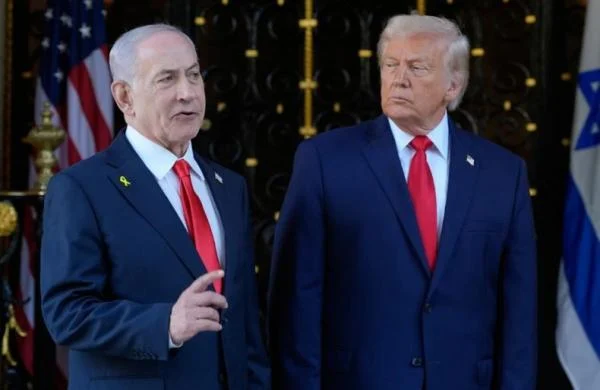
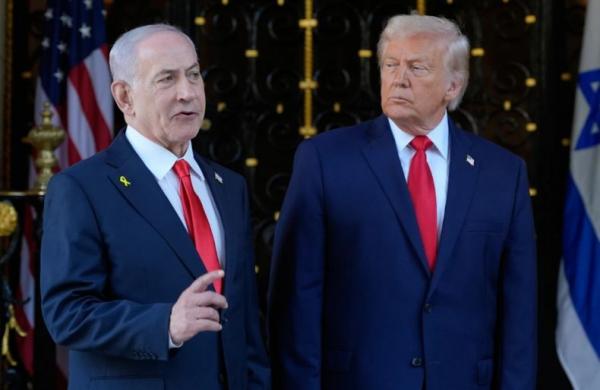
The longstanding strategic alliance between the United States and Israel is entering a period of unprecedented uncertainty, as Prime Minister Benjamin Netanyahu has explicitly warned his cabinet and the Israeli public to prepare for a future without the substantial military aid that has defined the relationship for decades. In a candid interview with Israel’s Channel 10, the Prime Minister signaled that the era of multi-billion dollar American defense subsidies is approaching a definitive conclusion, urging the nation to pivot toward economic self-reliance and prepare for potential international financial pressures.
This declaration represents a stark departure from the traditional diplomatic rhetoric that has characterized the U.S.-Israel partnership. For decades, the United States has served as Israel’s primary military benefactor, providing approximately $3.8 billion annually under a 10-year Memorandum of Understanding. Netanyahu’s comments suggest that the convergence of domestic political shifts in the United States and the ongoing, intense military operations in the Gaza Strip have created a new reality where Israel can no longer bank on the continuity of such support.
The Shifting Dynamics of the U.S.-Israel Alliance
The foundation of the U.S.-Israel security relationship has historically been built on shared strategic interests and a broad, bipartisan consensus in Washington. However, the intensity of the conflict in Gaza has placed significant strain on this consensus. As images of the humanitarian catastrophe in the Palestinian territories have dominated global media, a growing segment of the American political establishment—particularly within the progressive wing of the Democratic Party—has become increasingly vocal in its opposition to continued, unconditional military transfers.
Netanyahu’s assessment is that this opposition is not a temporary aberration but a fundamental shift in the American political psyche. "If you think we will continue to receive what I have secured twice, and that is tens of billions of dollars of American aid for the defense budget, prepare yourself and get used to facing the reality that it will not happen," Netanyahu stated. He emphasized that the geopolitical landscape is evolving, and Israel must internalize that "America has changed."
Economic and Strategic Implications
Beyond the immediate loss of military funding, the Prime Minister’s directive to his government to prepare for potential economic and banking sanctions signifies a growing concern within the Israeli establishment regarding international isolation. The threat of sanctions, whether originating from the U.S. or through international bodies influenced by shifting Western foreign policies, could pose a existential challenge to Israel’s economy.
Israel’s defense budget is intricately linked to U.S. support, particularly in the procurement of high-end military hardware such as the F-35 fighter jets, advanced missile defense systems like Iron Dome, and precision-guided munitions. A cessation of these funds would force a radical restructuring of Israel’s defense strategy. It would necessitate either a massive increase in domestic taxation to fund indigenous arms production or a reduction in the military’s operational scope.
Financial analysts suggest that if the U.S. were to curtail or attach strict conditions to its aid, the ripple effect would be felt in Israel’s credit rating and investment climate. The threat of sanctions—even if speculative at this stage—creates an environment of instability that investors typically shun, potentially hindering the growth of Israel’s high-tech sector, which has been a pillar of its economic prosperity.
Chronology of the Strained Relationship
The trajectory of this cooling relationship can be traced back to the onset of the current conflict. Following the events of October 7, the U.S. initially provided unwavering support, including the deployment of carrier strike groups to the region as a deterrent against wider escalation. However, as the humanitarian toll in Gaza surged, the Biden administration—and members of the U.S. Congress—began to exert pressure on the Netanyahu government to adhere to international humanitarian law and allow for increased aid flow into the territory.
- October 2023: The U.S. provides immediate military support and diplomatic cover for Israel’s initial response to the Hamas-led attacks.
- Early 2024: Mounting domestic pressure in the U.S. forces the White House to issue more frequent public critiques regarding the conduct of the war.
- Mid-2024: Legislation is introduced in various U.S. forums aimed at placing conditions on military aid, reflecting a broader disillusionment with the status quo.
- Late 2024: Netanyahu acknowledges the shift, publicly preparing his government for the "new reality" of diminished American patronage.
Analyzing the "New Reality"
The declaration by Netanyahu is a tactical acknowledgment of a structural change. By framing the end of aid as an inevitability, the Prime Minister is attempting to manage expectations within his own coalition and the Israeli defense establishment. If the public is prepared for the withdrawal of support, the political shock of such a move is mitigated.

Furthermore, this pivot suggests that Israel may be looking to diversify its strategic partnerships. While the U.S. remains the preeminent global power, Israel has increasingly sought to deepen ties with other nations in the Indo-Pacific, Europe, and even within the Abraham Accords framework to hedge against the risks of a more isolationist or critical United States.
However, replacing the U.S. is a formidable task. No other nation possesses the industrial capacity or the political will to match the military and intelligence cooperation that the U.S. has provided to Israel for the last half-century. The loss of this support would be a watershed moment in the history of the Middle East.
Official Responses and International Reaction
While the White House has yet to issue a formal rebuttal to Netanyahu’s specific claims regarding the end of aid, official spokespersons have consistently maintained that the commitment to Israel’s security is "ironclad." Yet, in diplomatic circles, the "ironclad" language is increasingly being interpreted with a caveat: the U.S. supports Israel’s right to defend itself, but not necessarily the specific policies or strategies currently being employed by the Netanyahu government.
International observers note that the Prime Minister’s comments serve a dual purpose. Domestically, they bolster his image as a leader who is willing to confront reality and act independently of foreign masters. Internationally, they serve as a warning to the U.S. administration that Israel is prepared to act in its own perceived self-interest, even if that means operating outside the parameters of American policy.
The Path Forward
The warning from the Prime Minister highlights a period of profound transition. Whether this transition leads to a more self-sufficient Israel or an Israel that finds itself vulnerable to regional adversaries remains a subject of intense debate among security analysts.

The integration of advanced military technologies, such as artificial intelligence and autonomous systems, is likely to become a central pillar of Israel’s future defense posture, as these technologies offer a way to maintain military superiority without the astronomical costs associated with traditional large-scale military hardware. Nevertheless, the reliance on U.S. political protection at the United Nations and other international forums is a diplomatic asset that cannot be easily replicated.
As the political landscape in Washington continues to shift, the world will be watching to see how the Netanyahu government navigates these turbulent waters. The "end of an era" is rarely a singular event but rather a slow, grinding process of recalibration. For Israel, the challenge will be to manage this transition without compromising its fundamental security objectives in a neighborhood that remains as volatile as ever.
The coming months are expected to be defined by a delicate dance of diplomacy, where both the U.S. and Israel will attempt to manage their differences while recognizing that their fates have been, and in many ways remain, inextricably linked. Whether this relationship can survive the current political pressures or will fundamentally fracture is the central question of the current geopolitical era. For now, the message from the top of the Israeli government is clear: the safety net is being withdrawn, and the nation must learn to walk on its own.